DHI Hair Transplant in Turkey
Hair restoration has changed significantly over the last three decades. Improvement in surgical instruments, implantation techniques, and graft handling has resulted in increased graft survival and aesthetical results. One of the currently most widely recognized techniques is Direct Hair Implantation (DHI).
The concept of DHI emerged in the early 1990s after the development of the Choi Implanter Pen by physicians in South Korea. Although the surgical tool has been available for several years, its advantages were revealed later because of physicians' gaining experience in follicular unit transplantation. Overtime, DHI has become a certain type of the implantation technology focusing on protecting the grafts, precise angle control, and minimal invasive method of implantation.
Nowadays, DHI hair transplant in Turkey is one of the most frequently requested surgeries among international patients. Performed by the experienced medical team, the technique offers a number of clinical advantages.
First, the technique does not inflict serious tissue trauma. Second, follicular units are safely transferred to the recipient area without extra damage. Finally, DHI enables the control over the direction, angle, and depth of implantation and therefore allows achieving the natural-looking appearance.
What is DHI Hair Transplant?
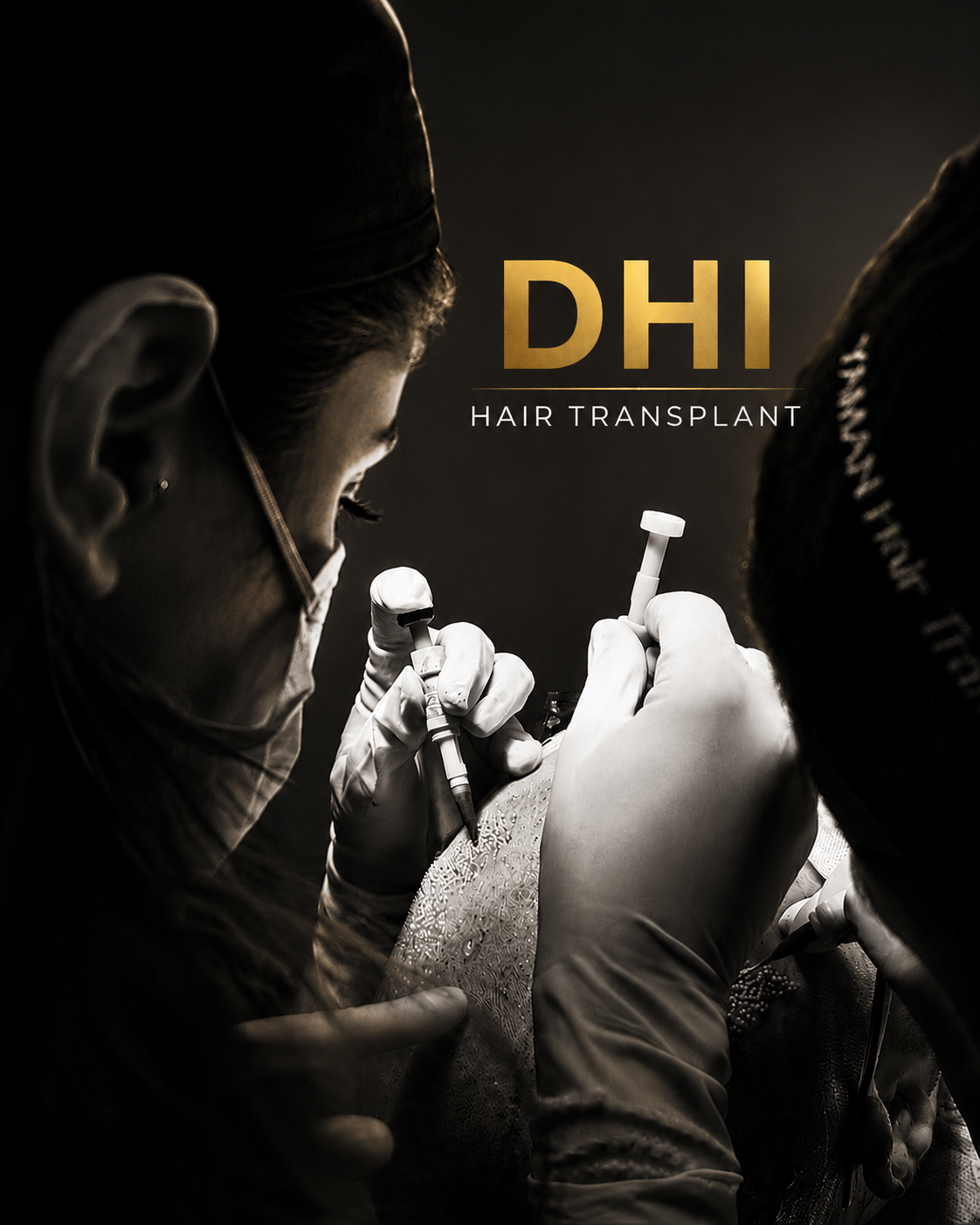
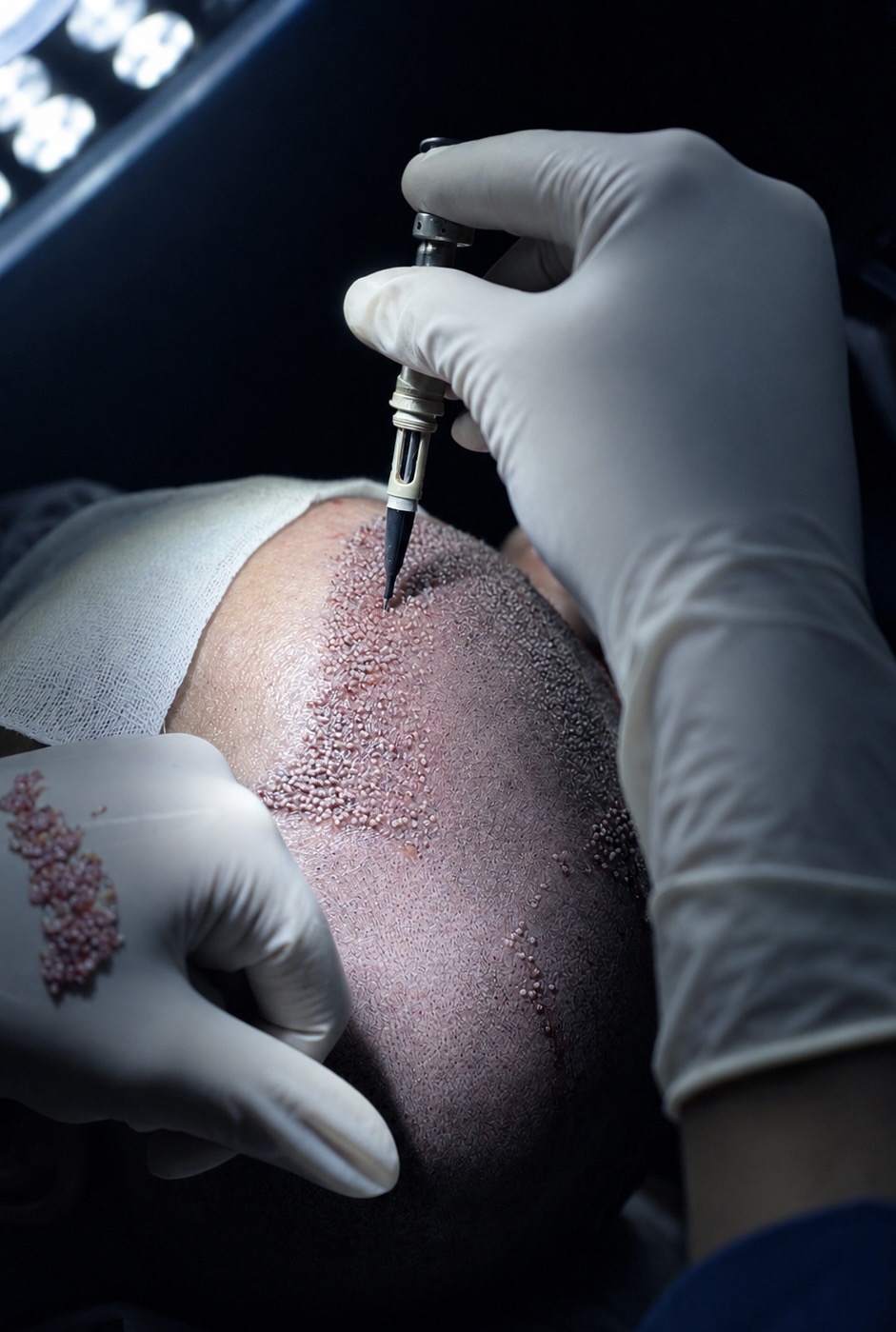
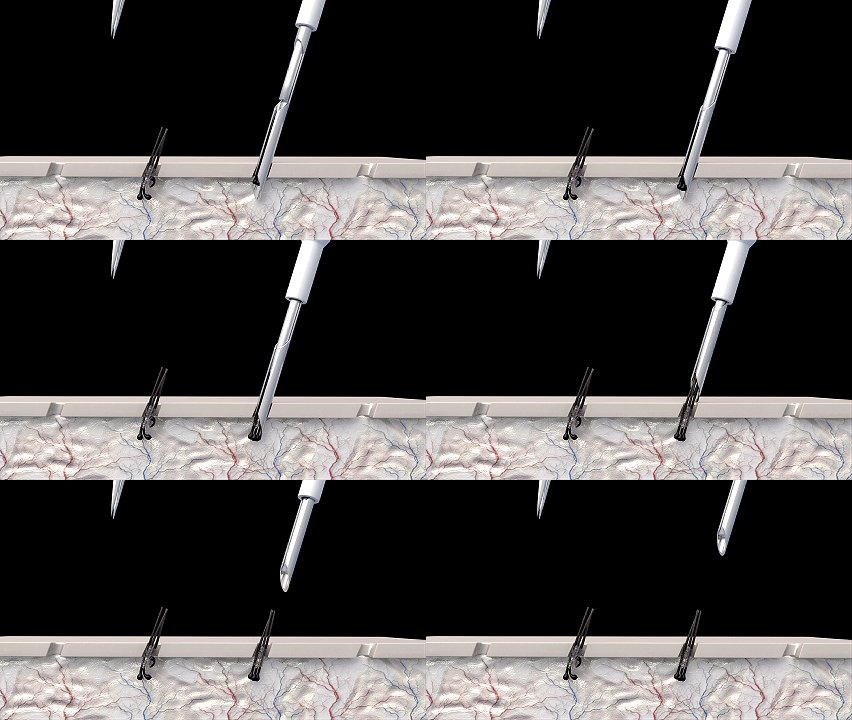
A DHI hair transplant is a surgery based on transferring the harvested hair follicles directly into the recipient area with a special implanter pen. During the surgery, the graft is kept safe in the hollow chamber of the device and thus does not undergo any unnecessary manipulations during the process of implantation.
Although DHI hair transplant is commonly used to describe the whole procedure of Hair Follicle transplantation, DHI is only a part of it. Before follicular units are transferred into the recipient area, the follicles are extracted by a certain method, such as FUE or FUT in selected cases.
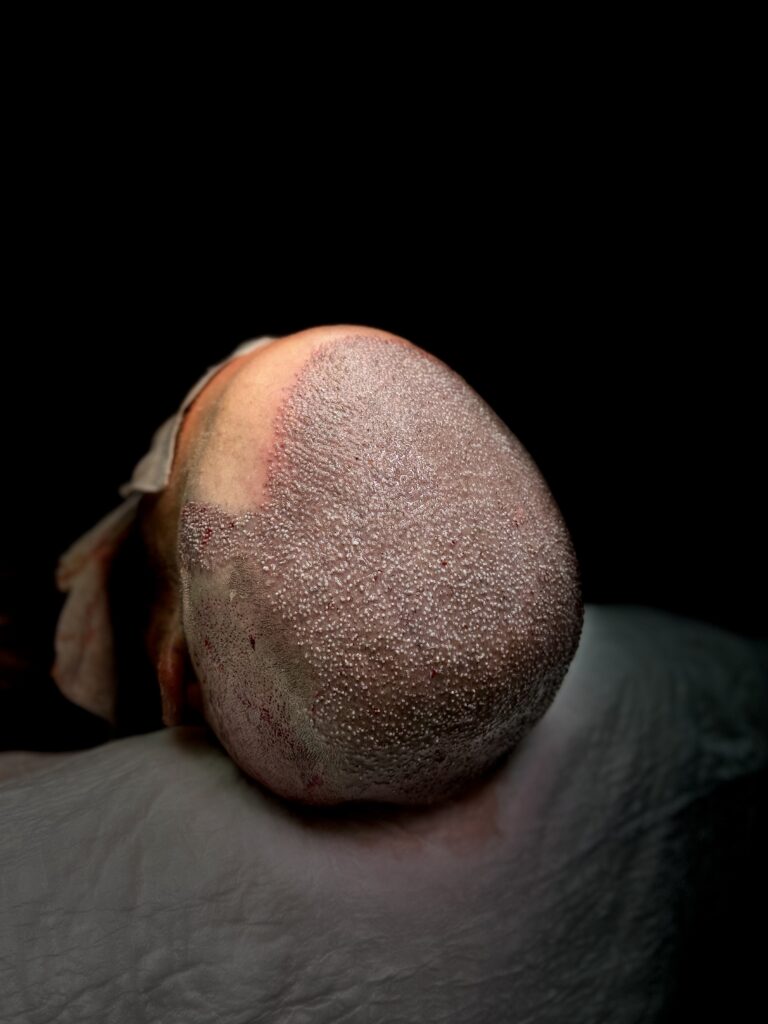
The follicular units are then transferred into the recipient area with the implanter pen. The implanter creates small recipient sites that do not exceed its diameter and thus, do not harm tissues. This minimally invasive approach may promote faster healing and support natural-looking results.

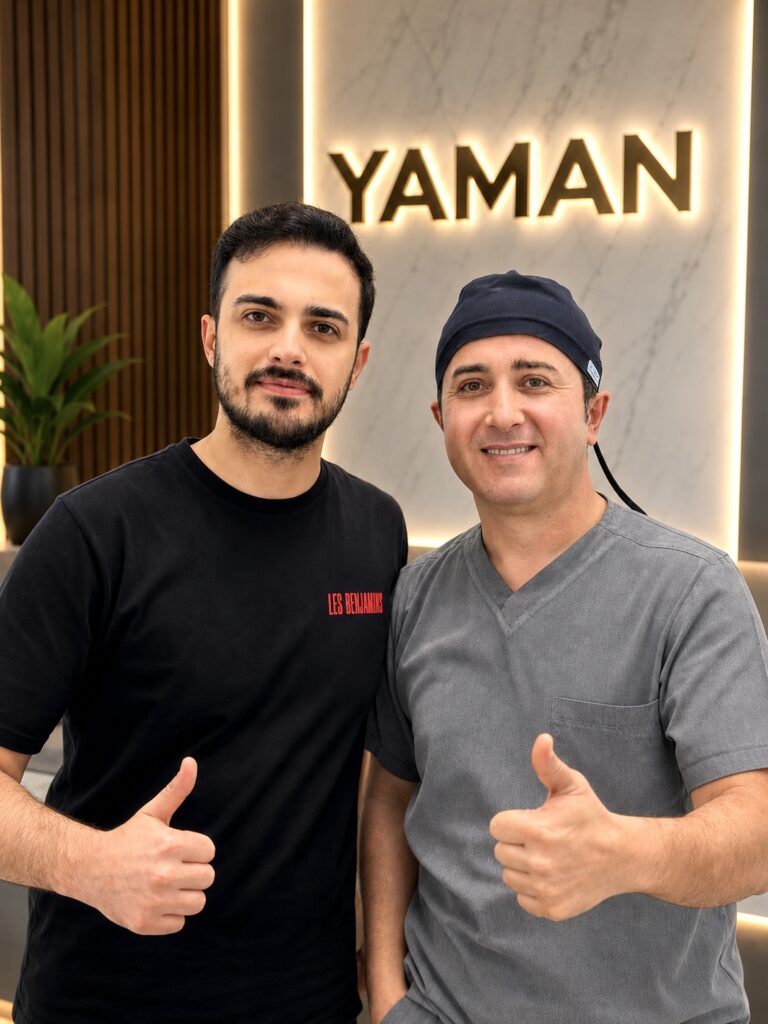
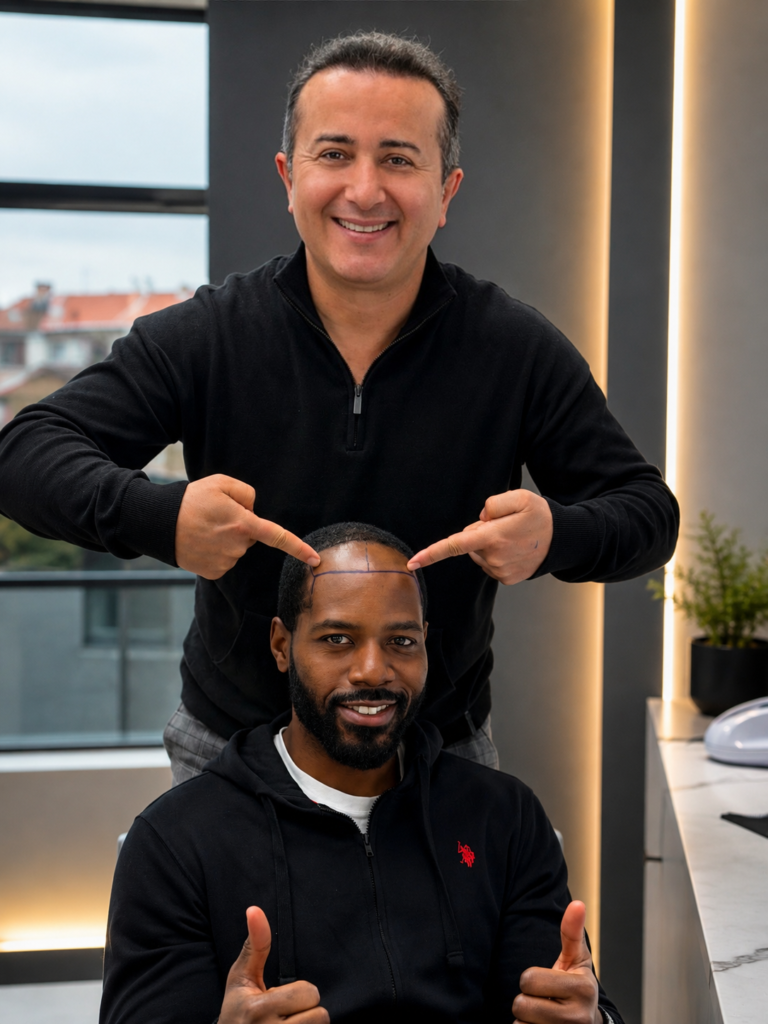
Hair Transplant In Turkey By Dr. Resul Yaman
Trusted by patients from the United States, United Kingdom, Canada, Australia, Germany and other European countries.
How Does DHI Hair Transplant Work?
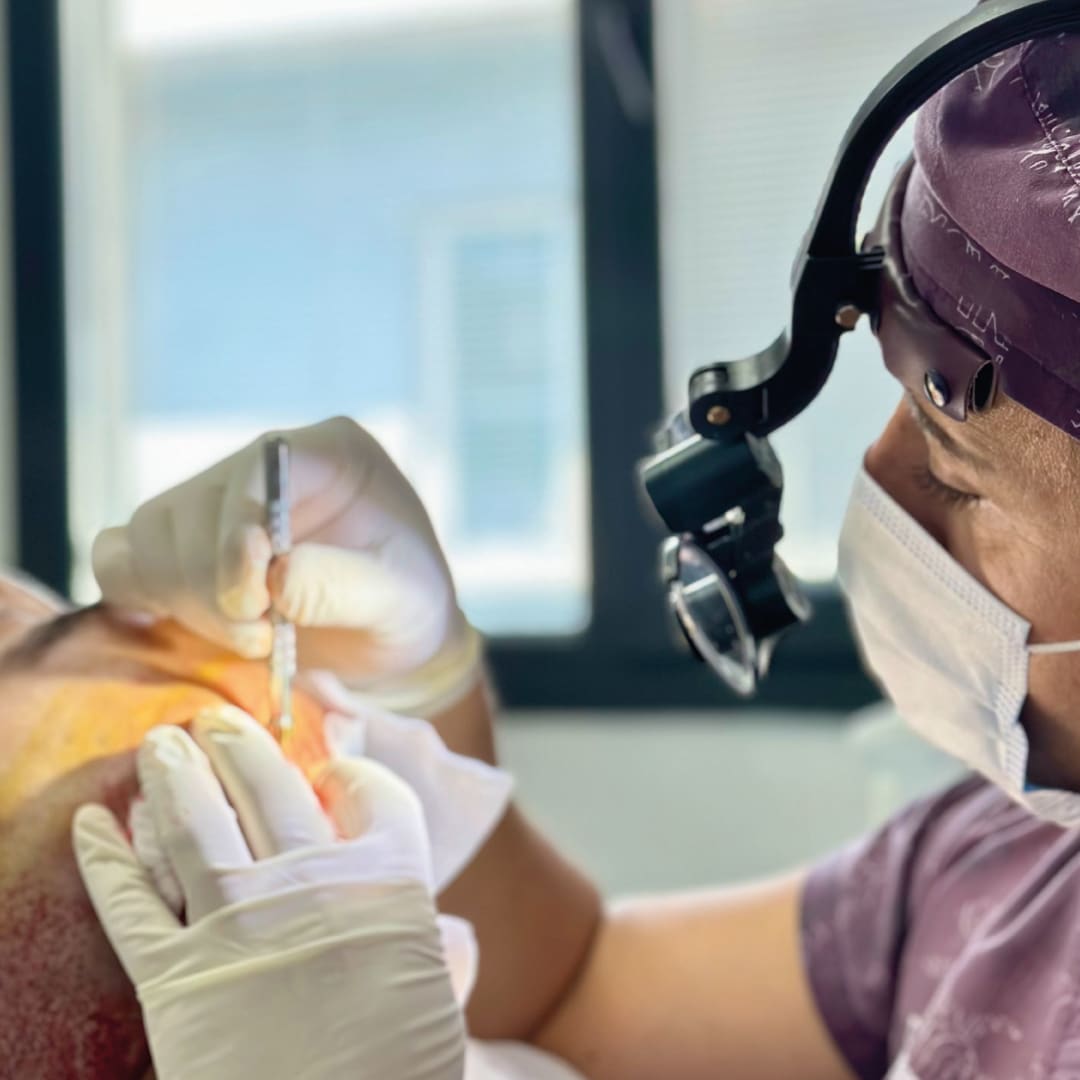
Direct Hair Implantation is the method that uses a pen-shaped surgical tool called implanter pen. Each harvested follicular unit is gently inserted into the hollow needle of the device. In most of the clinics, two or three assistants prepare the follicles while an expert performs the implantation. In this way, the time of extra exposure of the grafts to the air is reduced.
When the graft is placed inside the implanter, the expert inserts the needle into the recipient area at the desired angle and depth. The sliding plunger moves the follicular unit from the implanter to the recipient area. The follicle goes into the scalp in a single controlled movement without the use of forceps.
Choosing the Right Implanter Diameter
Modern DHI systems are produced in various diameters from 0.7 mm to 1.1 mm. The choice of the correct diameter is essential since the characteristics of hair vary among individuals. The thickness of the hair, the size of follicular units, the ethnicity of the patient, and the number of hairs in each follicular unit should be considered.
Fine single hair grafts need smaller implanter pens. The larger follicular units are, the larger implanter is needed. Choosing the matching graft and implanter diameter helps to avoid unnecessary tissue injury and improve the accuracy of implantation.
The implantation strategy differs depending on the recipient area. The frontal hairline area usually receives fine single hair follicular units. Therefore, physicians prefer using smaller implanter in this area. Mid-scalp and the crown receive thicker follicular units. For this reason, larger pens are preferable in this case.
Why Implantation Expertise Matters
The successful hair follicle implantation depends on many factors but the main one is the experience of the surgeon who performs the procedure. All grafts must enter the scalp at the right angle, direction, and depth.
Any small deviations may influence the further growth of hair. An experienced specialist constantly adjusts these factors during the procedure according to the treatment plan and the patient's natural hair characteristics.
Sterilization and Patient Safety
Most modern Choi implanter pens are single-use devices. Some systems allow limited reuse after being validated to be sterile. Regardless of the device, strict sterilization remains essential for patient safety and infection control. Every clinic must follow the established standards of hygiene when preparing reusable surgical instruments.
Get Free Consultation
Benefits of DHI Hair Transplant
Follicular unit implantation offers a number of advantages when performed by the experienced medical team. The majority of these advantages is achieved due to controlled implantation and minimal invasiveness of the procedure.
Safe Graft Implantation
The implanter pen protects the follicular unit from deformation during the implantation procedure. The graft does not suffer from the pressure of the forceps as it happens when other methods are applied. This controlled mechanism helps increase the chances of high graft survival.
Minimal Invasive Implantation
The implanter creates recipient sites that correspond to the diameter of the device, usually, 0.7 mm – 1.1 mm. Recipient sites are smaller in comparison to incisions made for the forceps implantation procedure. Minimal tissue trauma may promote faster healing and reduced scarring.
Different Implanter Sizes for Different Hair Types
Different hair types are accommodated by the implanter pens of different diameters. Small implanter pens are used for fine follicular units and larger implanter pens are used for thicker follicular units. This flexibility allows surgeons to adapt the implantation technique to the patient's hair characteristics.
Faster Healing
Smaller incisions usually imply less tissue trauma. Patients report having a more comfortable recovery period and faster return to daily routine.
Controlled Implantation Depth
Modern implanter systems allow the practitioner to control the depth of each graft implantation depending on the length of each follicular unit. Appropriate depth placement helps to transfer follicular unit into the proper tissue layer.
Reduced Risk of Tissue Complications
Minimizing tissue trauma is helpful in protecting the local blood circulation of the recipient area. This reduces the risk of complications connected with poor circulation, such as necrosis, though proper patient selection and surgery are necessary.
Angle and Direction Control
DHI allows to control the angle and direction of each graft during the implantation procedure. These features play an important role in creation of the natural-looking hairline, especially, in the frontal and temples area.
Ergonomic Implanter Design
The pen-shaped design allows the practitioner to have a good control over the procedure. The ergonomic structure of the device helps to insert the follicular units in the proper way throughout the whole procedure.
The Perspective of Dr. Resul Yaman about Minimally Invasive Implantation
According to Dr. Yaman, reducing tissue trauma is the key principle of modern hair restoration. As an illustration, he calculates the total incision length in case of various implantation methods.
For instance, if a conventional forceps technique requires 1.5 mm recipient site for each of 2,000 grafts, the total incision length is approximately 3,000 mm. In contrast, 0.9 mm DHI implanter requires 1,800 mm of recipient sites for the same number of grafts. According to our doctor, this difference corresponds to minimally invasive nature of DHI hair transplant in Turkey.
Limitations of DHI Hair Transplant
Just like every hair restoration technique, DHI also has some limitations. The knowledge of them helps patients set reasonable expectations before surgery.
Longer Procedure Time
One expert usually performs the implantation stage of the procedure. Thus, long sessions usually require more time in comparison to standard forceps implantation.
Higher Treatment Cost
DHI requires more equipment, the skilled personnel, and implanter devices. These features make the procedure more expensive than some others.
Technical Difficulties of Dense Implantation
Implantation of very densely packed follicular units may be difficult in case of very soft or very firm scalp tissue. In this case, inserting one follicular unit may accidentally affect the adjacent unit during the procedure.
Technical Requirements of Low-Angle Implantation
The frontal hairline and temples require very low angle of implantation. Thus, the procedure requires high level of technical skills as the skin offers higher resistance to the implantation. Dr. Resul Yaman developed the Yaman Implanter to overcome this problem by allowing low-angle implantation while preserving natural hair direction.
Special Considerations for Afro Hair Transplantation
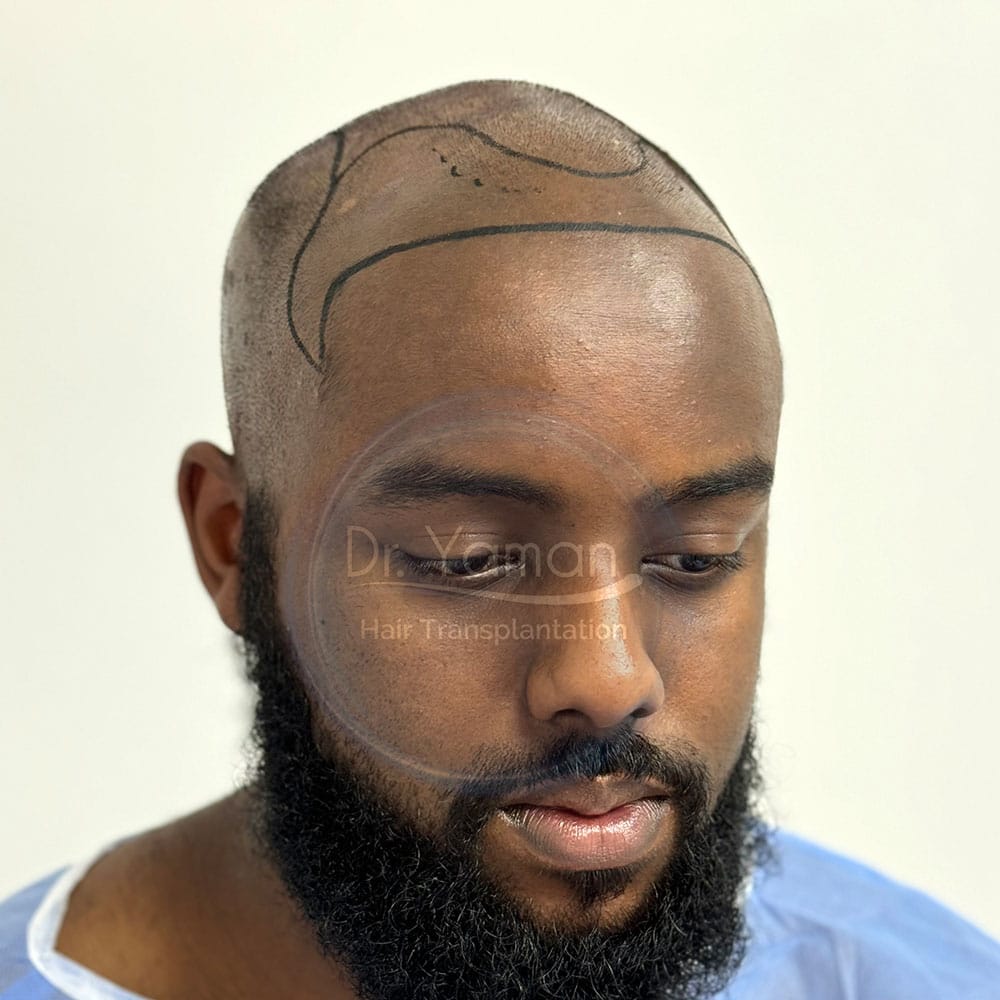
Curliness of follicles makes them difficult to load in the standard hair implant pen. However, experienced teams with special training can perform DHI hair transplant Turkey in selected patients with Afro hair.
Yaman Hybrid Transplantation with DHI
Having started his hair replacement practice in 2009, Dr. Yaman obtained experience in using different hair restoration techniques as they evolved. Along with the evolving techniques, he adopted the method of DHI implantation as he noticed the consistent graft protection and high graft survival in his practice.
While changing the technique, he noticed that the standard Choi implanter pen might be difficult to use in order to create low-angle implantation in the frontal hairline and temples area. To solve this problem, he developed the Yaman Implanter that keeps the principle of graft insertion of the conventional implanter pen but has non-cutting tip.
The Yaman Implanter is produced in different diameters. Those of 0.7 mm and 0.9 mm are used for the frontal area. Before performing implantation in the frontal hairline area, the surgeon makes incisions in the area using sapphire blades. It helps to keep natural direction of hair, facilitates macro and micro irregularities, and reduces the risk of postoperative formation of pimples.
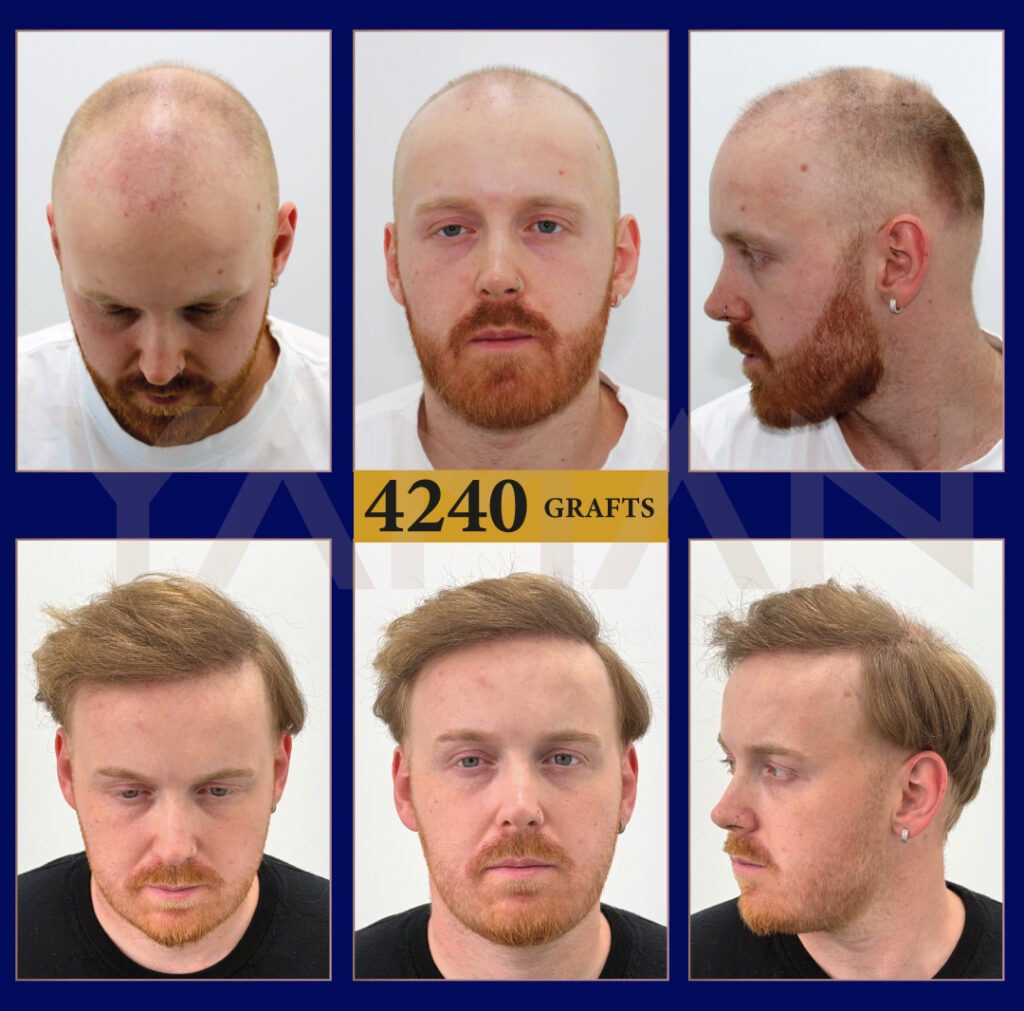
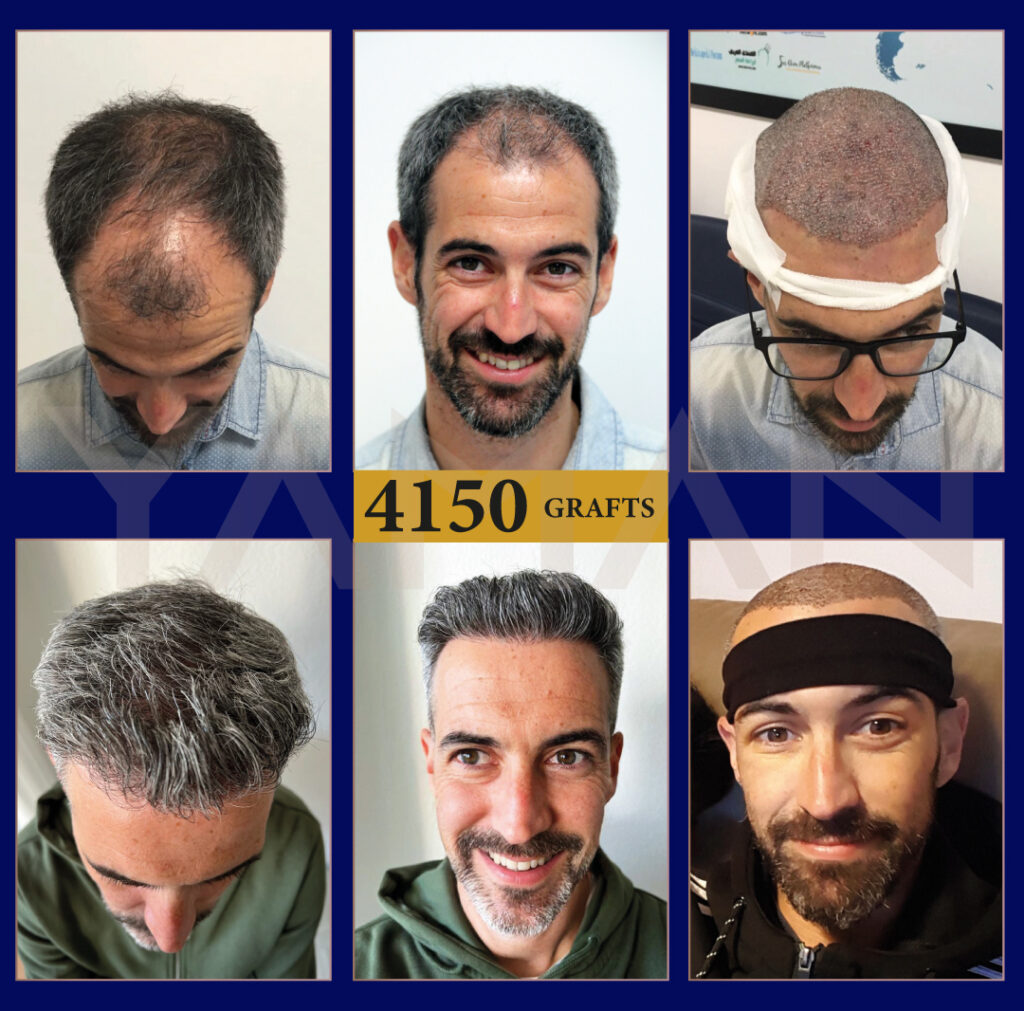
In the crown area, where these modifications are not critical, the standard Choi implanter is usually used. With this hybrid method, the clinic regularly performs up to 4,000-4,500 graft surgeries in a day.
DHI Compared with Other Hair Transplant Techniques
The knowledge of the differences between hair transplant techniques helps patients to make their choice more accurately. Before comparing these methods, Dr. Yaman notes that it is more appropriate to see them as the different steps in the evolution of hair restoration procedure and not as the competing procedures.
According to Dr. Yaman, modern DHI implantation is an important step forward since it emphasizes the protection of the graft, minimally invasive nature of the procedure, and precise graft placement.
DHI vs FUT Hair Transplant
DHI and FUT hair transplants refer to different steps of the hair restoration procedure. FUT (Follicular Unit Transplantation) is the harvesting procedure, while DHI is the procedure of the implantation.
In FUT, the strip of the scalp is removed from the donor area and dissected into follicular units and then implanted with the use of DHI or conventional forceps implantation.
DHI vs FUE Hair Transplant
Both techniques involve the extraction of follicular units with the help of FUE method. The main difference is the procedure of implantation. In case of DHI, the follicular units are implanted directly into the scalp with the help of Choi implanter pen. In case of classic FUE implantation, recipient sites are created first and then the follicular units are placed with the help of forceps.
The difference influences the size of recipient sites. Usually, recipient sites in case of FUE are bigger as they are created with the help of forceps, often ranging from 1.3 mm to 1.8 mm. In case of DHI, the recipient sites created with the help of implanter are usually correspond to its diameter, 0.7 mm – 1.1 mm.
Classic FUE implantation may require several surgeons to place follicular units simultaneously. Thus, it is more rapid and inexpensive. By contrast, DHI implantation usually is performed by an expert. Though the procedure takes longer, it allows controlling the angle, direction, and depth of the implants.
DHI vs Sapphire FUE Hair Transplant
The main difference between Sapphire FUE and DHI is the procedure of implantation and not the procedure of graft extraction.
In case of Sapphire FUE, recipient sites are created with the help of sapphire blades first. Then, the follicular units are placed into the recipient area with the help of forceps. The blades are extremely sharp and create clean incisions. There is variety of the available diameters of these blades, usually, from 0.7 mm to 1.8 mm. Choosing appropriately sized blade is important since smaller recipient sites usually preserve more of tissue and therefore facilitate faster healing.
DHI procedure is different from conventional one in that the grafts are not placed with the help of forceps but directly into the recipient area with the implanter pen. It helps to keep follicular units during the implantation and to minimize unnecessary manipulations with the grafts.
In our clinic, the hybrid method of implantation is used in the frontal hairline and temple areas. Recipient sites are created first with 0.7-0.8 mm sapphire blades and then the grafts are implanted with the help of Yaman Implanter without forceps.
Clinical Application of Hair Follicle Implantation
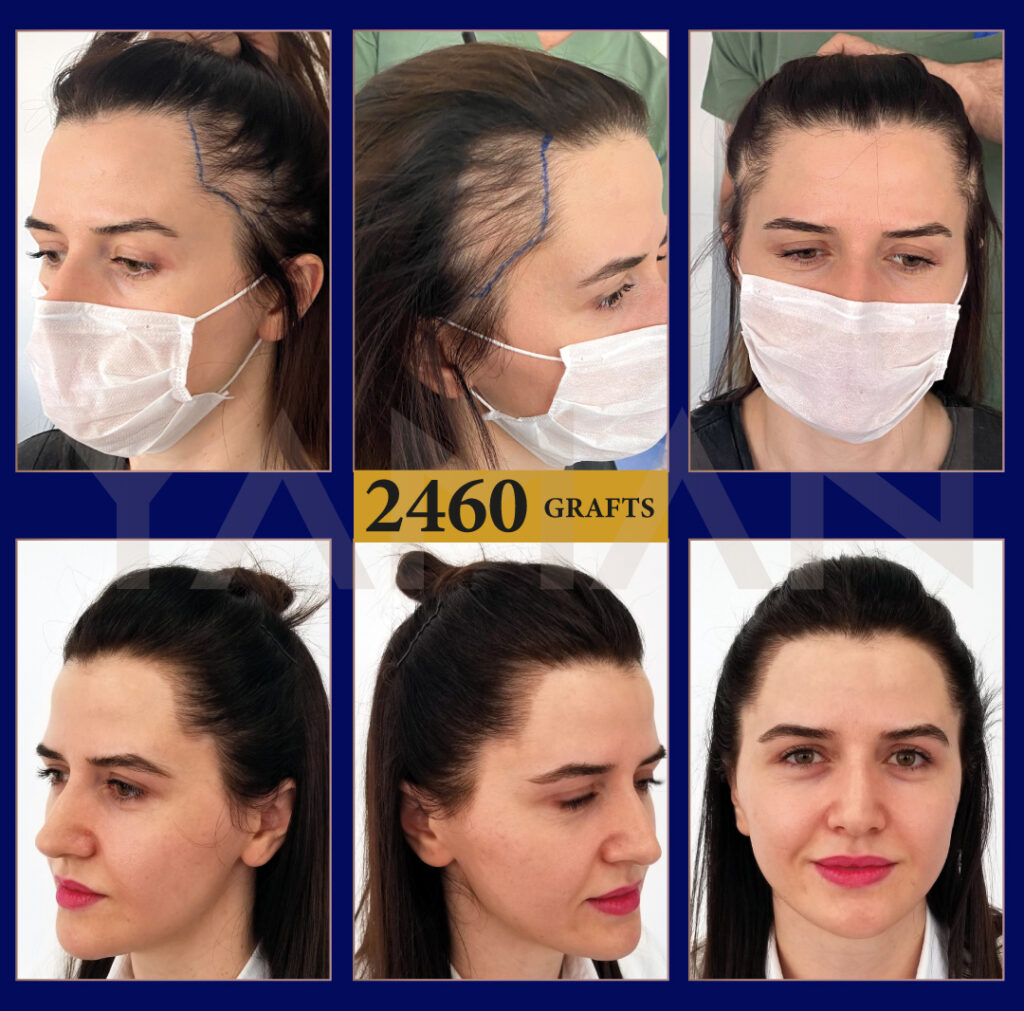
Since DHI is the procedure of implantation and not graft extraction, this technique can be used for many hair restoration surgeries. It is especially suitable for female hair transplantation, as the follicular units can be implanted without the complete shaving of the scalp. This is why DHI is considered to be a preferred technique for women who want to maintain their current hairstyle.
DHI is also commonly used for eyebrow transplantation and scar revision, where precise graft placement is essential. Although DHI can be more challenging in Afro hair transplantation because of the natural curl of the follicles, experienced surgeons and well-trained implantation teams can successfully adapt the technique to appropriately selected patients.
Recovery After DHI Hair Transplant
Recovery after DHI hair transplantation is faster since the procedure is minimally invasive. The detailed information about the recovery process, instructions for the postoperative period and healing periods is provided in our comprehensive guide to Hair Transplant in Turkey by Dr. Resul Yaman.
According to the clinical observations of our doctor, the recovery after DHI is faster compared to conventional forceps implantation. The time of hair growth is different among patients, but in general, the recovery process is more comfortable.
Possible Side Effects and Safety Considerations
As any surgical procedure, DHI hair transplantation has some risks. However, these risks can be minimized with the help of the proper patient selection, sterile surgery and experienced medical team. That is why choosing a reliable clinic is crucial for the success of the procedure.
Detailed discussion of the postoperative recovery period, potential complications, and aftercare recommendations are provided in our guide to Hair Transplant in Turkey.
DHI Hair Transplant Cost in Turkey
Although DHI hair transplant has been used for many years, its popularity has increased significantly in recent years. One of the reasons of this is that patients recognize the advantages of minimally invasive procedure and natural-looking results. However, these characteristics make hair follicle implantation more expensive than some conventional implantation methods.
There are several factors influencing the price of the DHI procedure. First of all, the procedure requires additional personnel to prepare the follicles while an experienced practitioner performs the implantation. Since DHI procedure requires advanced technical skills for precise control over the angle, direction, and depth of the implantation, the expert must have these skills.
The implanter pens are usually single-use devices or need to be sterilized before reuse, which also adds to the overall price. Finally, DHI implantation procedure takes longer time in comparison to classic forceps implantation and limits the number of grafts implanted during a single session. DHI hair transplant packages in Turkey start from around $2,500, though more complex surgeries or surgeries carried out by the highly-experienced surgeons can cost considerably more. Some clinics also offer DHI hair transplant cost Turkey on a per-graft basis, usually from $2 to $5 per graft.
Frequently Asked Questions
01 How long does a DHI hair transplant procedure take?
The duration of the hair replacement procedure differs depending on the number of grafts that are being transplanted. Usually, it is between 6-8 hours.
02 Is the DHI hair transplantation procedure painful?
During the Direct hair implantation procedure, the patient is given local anesthesia which makes him insensitive during the whole surgical process. After the surgery, slight soreness or tenderness is felt for a couple of days but it subsides after prescribed medication.
03 How many grafts can be transplanted with DHI?
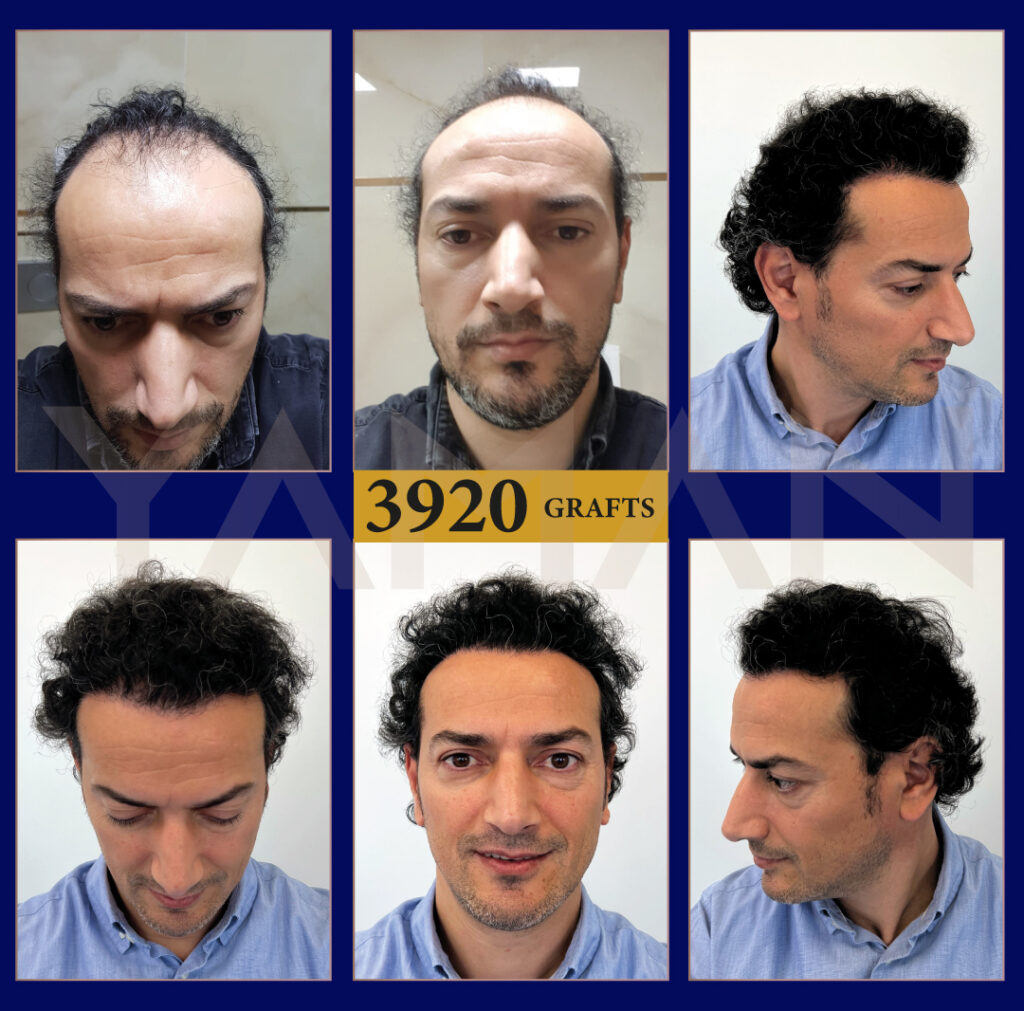
The total number of grafts to be transplanted varies depending on the donor density, hair characteristic and recipient site area of the patient. In many cases, 2,000 to 4,500 grafts are transplanted per session.
04 Are the transplanted hair follicles permanent after the DHI hair restoration?
Yes. The hair follicles are normally taken from the donor region which is known to be genetically resistant against androgenetic alopecia. As a result, the transplanted hair is expected to be long-lasting.
05 When can I start wearing my hat after the DHI?
In many cases, wearing of a loose hat is normally permitted after a couple of days depending on the instructions provided by the surgeon. But tight hats which can cause pressure on the grafted areas shouldn't be worn.
06 Does smoking and alcohol consumption have effects on the recovery after DHI?
Yes. Smoking will lead to poor blood flow, whereas alcohol consumption may increase swelling and interfere with the recovery process. Both of them should be avoided before and after the procedure.
07 When can I start exercising after DHI?
Normal walking is usually allowed after a few days. But the strenuous exercises like weight lifting, swimming and contact sport should be done after 2 to 4 weeks. Since each patient's recovery process is unique, it is necessary to consult a doctor.
08 Will the existing hair follicles be affected by DHI?
If the procedure is carried out by an expert, then the existing hair follicles won't be affected. But sometimes shock loss of the surrounding hair can occur in many patients which is temporary.
09 Is the DHI method suitable for women?
Yes. Women with suitable donor hair and localized hair thinning can opt for this procedure as it fits well for women since they won't need to shave off the hair in their heads completely.
10 Is DHI used for beard and eyebrow transplantation?
Yes. DHI procedure is quite common in beard and eyebrow transplantation as a result of precision involved in this process which enables the physician to control angle, direction and location of the individual hair follicles.
11 Can DHI be done for someone who had FUE or FUT?
Yes. Those people who have undergone FUE or FUT can also qualify for direct hair implantation. Eligibility depends on the remaining donor hair, scalp condition, and overall treatment goals.
12 Can DHI be performed without shaving the hair?
Yes. Unshaven dhi hair transplantation can be done depending on various conditions like the number of grafts and hair length among others.
13 Can I have a DHI hair transplant if I have Norwood 6 or Norwood 7 hair loss?
Yes, patients with advanced hair loss, such as Norwood 6 or 7, may still be suitable candidates for DHI hair transplantation. Patients can undergo mega sessions where transplantation will occur in two to three consecutive days or two sessions with the second one happening after at least one year since the first transplantation. In case needed, the doctors may use beard or body hair as a secondary donor source.
14 Is DHI more beneficial than FUE in case of beard grafts used as the donor source?
Yes. Beard hair usually consists of bigger follicles than scalp hair, and during the extraction, the use of forceps may cause trauma to facial tissue. DHI procedure allows for the grafting of hair using an implanter that makes DHI more convenient than FUE when beard-to-scalp transplantation takes place.
15 Is DHI more effective for crown hair transplantation?
In most cases, yes. Crown region has denser scalp tissue, which means that recipient sites should be created carefully and precisely. Implantation of grafts using forceps in such tissues may be difficult and can cause more follicle manipulation. The DHI technique allows controlled implantation with minimal handling, helping achieve natural hair direction and potentially improving graft survival in the crown.
References
https://pubmed.ncbi.nlm.nih.gov/33599101/
https://pmc.ncbi.nlm.nih.gov/articles/PMC10349607/
https://pmc.ncbi.nlm.nih.gov/articles/PMC12950522/
https://pubmed.ncbi.nlm.nih.gov/12174065/
https://pmc.ncbi.nlm.nih.gov/articles/PMC3764754/
https://pmc.ncbi.nlm.nih.gov/articles/PMC6967169/
https://www.americanhairloss.org/the-real-risks-of-hair-transplant-surgery-what-patients-need-to-know/
DHI Hair Transplant Blog
Turkey Hair Transplant Package for DHI
Millions of people visit Turkey every year for hair loss treatment. The Turkey hair transplant package stands out worldwide for...
What Can You Do for a Bad Hair Transplant?
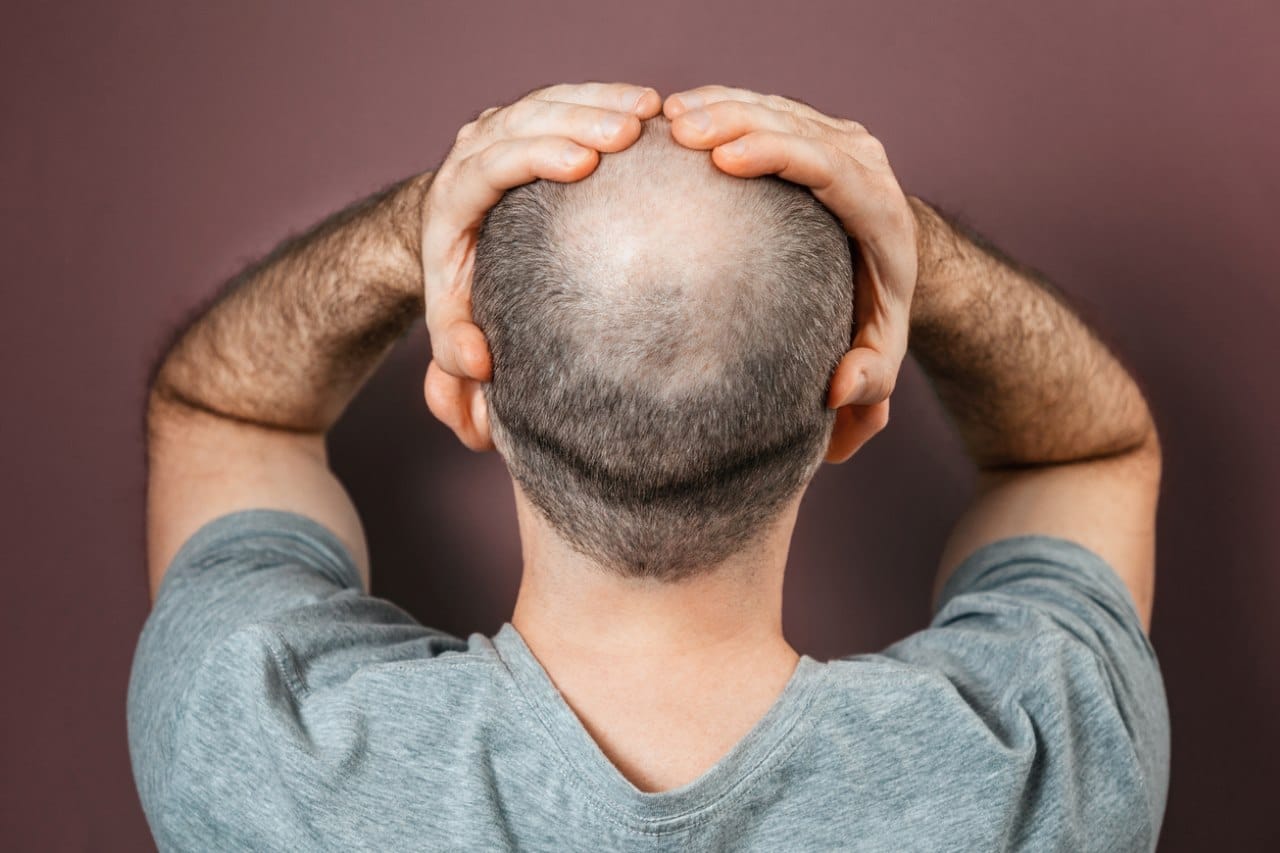
Hair plantation is a safe procedure with high success rates and in some rare cases there may be bad hair...
When to get a DHI Hair Transplant?
If your hair loss started at your younger age, you may wonder when to get a DHI hair transplant. Even...
Does DHI Work on Afro?
Individuals want to know, "Does DHI work on afro hair?" because curly hair textures, especially afro-textured hair, are among the...
Get DHI Hair Transplant Turkey Reviews
If you are considering hair restoration in Turkey and are doing research on this subject, DHI hair transplant Turkey reviews...
Which Medical Conditions Allow for DHI Hair Transplant?
You can have a DHI hair transplant for most conditions, but some things determine the candidacy of the procedure. Hair...
Contact Us