
Classic FUE Hair Transplant

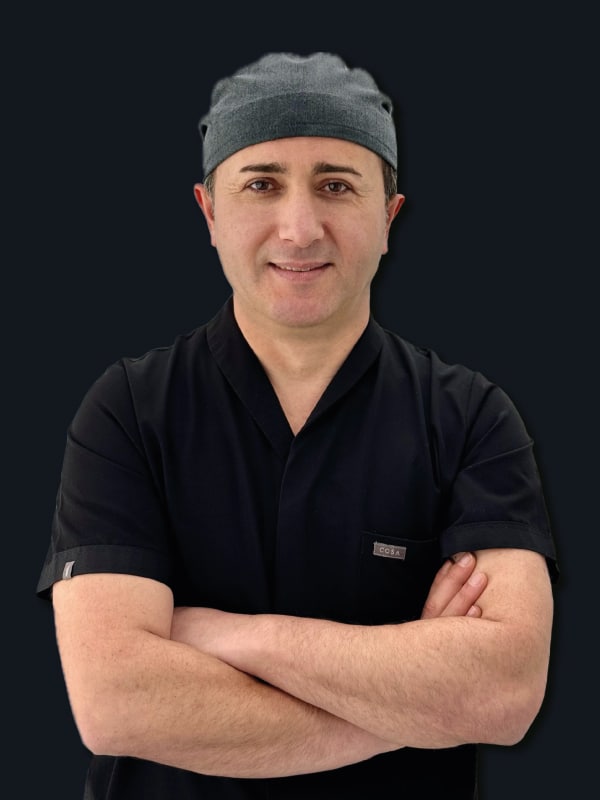
Dr. Resul Yaman
Medically reviewed by Dr. Resul YAMAN, MD

Founder of Yaman Surgical Medical Center in Istanbul.
Dr. Yaman has over 17 years of clinical experience in hair restoration and specializes in advanced hair transplant techniques and natural hairline design.

February 16, 2023
In this post
F

FUE means follicular unit extraction and is mainly a graft harvesting technique. Nowadays, FUE extraction is applied during the harvesting step of several hair transplant techniques, including DHI hair transplant, robotic hair transplant, and Yaman Implanter hybrid technique. FUT is the main hair restoration technique that does not apply FUE for graft extraction.

01

Classic FUE hair transplant is characterized by individual harvesting of grafts from the donor area with the help of punches. The implantation process traditionally involves the application of forceps. Therefore, classic FUE is the technique in which motorized punch extraction is followed by forceps implantation[1].

1940s Early Development

The history of FUE starts from the first attempts of hair restoration at the 1940s. During the procedure, large manual punches were used. Attempts of hair restoration in burn-affected and hair loss areas were included in the initial procedures. The development of micro-motorized punches in the 1990s allowed increasing popularity of FUE in hair restoration.

1940s 1990s

FUE Extraction Techniques

Follicular unit extraction can be divided into four approaches:

01 Motorized FUE extraction;
02 Manual punch FUE extraction;
03 Robotic punch FUE extraction;
04 FUE extraction with the use of Dr. Resul Yaman's modified low-speed micro-motor technique.

In each approach, follicular grafts are individually extracted from the donor region with the help of punches. Nowadays, the size of modern micro-punches is about 0.5 mm. In contrast to FUT that involves the removal of a skin strip from the donor area, FUE distributes extraction across the donor surface. This feature allows increasing the capacity of harvesting.

01

Motorized FUE Extraction

Motorized FUE uses a micro-motor fitted with a punch selected according to the thickness of the hair follicle and the quality of the tissue. The diameter of the punch ranges from 0.5 to 1.2 mm. The sharp device cuts around the follicular unit and separates the graft from its connections with the surrounding tissues[2]. This technique allows quick harvesting and helps collect a sufficient number of grafts.
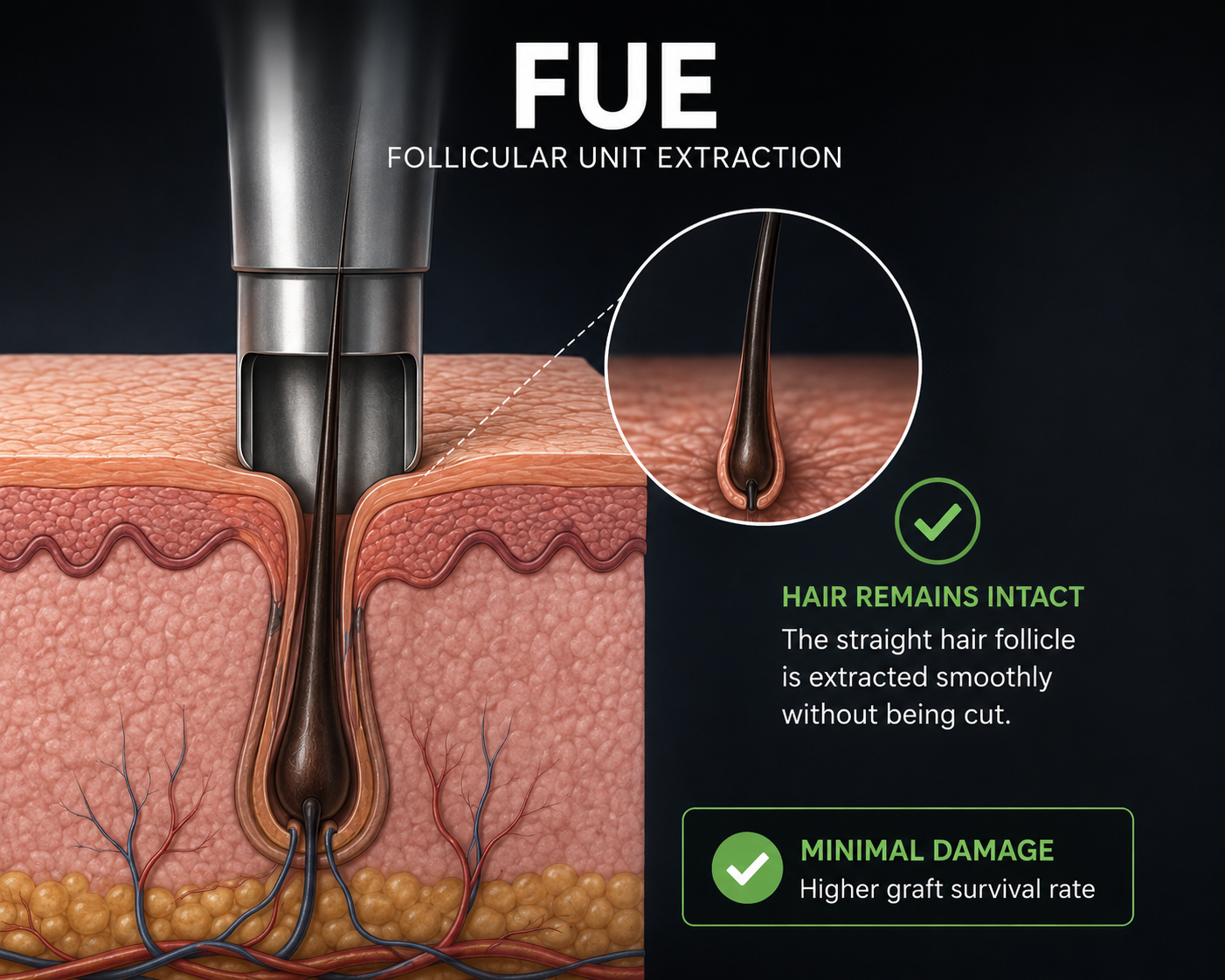
It is necessary to consider the natural exit angle of the hair follicle during the harvesting. The punch should follow this direction. In case the device enters with the incorrect angle, it can transect the hair shaft and remove the follicle without complete graft.

The harvested grafts are placed into a holding solution. Then, they are transferred to the recipient area through the selected implantation technique.

Follicular unit extraction is not a completely scar-free method. The micro-scars appear after the procedure. Therefore, the patient's donor area should be carefully examined before surgery. The doctor should assess the susceptibility of patient's skin to keloid formations. For patients with keloid-prone skin, it is necessary to choose the smaller punch size.

02

Manual Punch FUE Extraction

Manual punch FUE uses the punch that is attached to the manual handle. The diameter of the device ranges from 0.5 to 1.1 mm. Due to the lower speed of extraction, the expert can perform the procedure more slowly and carefully. The lower speed of extraction also decreases the potential risk of damage to the grafts and donor tissue.

Motorized punches allow harvesting more grafts during the same time due to their higher speed. However, the risk of appearance of the patchy donor area may be increased. The manual follicular unit removal allows reducing the risk of overharvesting, but the number of collected grafts may be considerably lower than during the motorized follicular unit removal.

03

Robotic Punch FUE Extraction

Robotic FUE uses punches attached to a robotic instrument. The diameter of the punch varies from 0.7 to 1.1 mm. First, the specialist determines the follicles that should be harvested using the system. Then, the robotic arm cuts around the follicles and collects them using the suction to the chamber.

According to the explanation of Dr. Resul Yaman, this technique has not achieved the graft numbers of the hand-made extraction yet. However, this method may allow reducing the number of technicians who are needed during the procedure. Robotic FUE is the promising technique for current and future hair restoration surgeries.

04

Dr. Resul Yaman's Modified Low-Speed Micro-Motor Technique

In 2012, Dr. Resul Yaman developed the low-speed modified micro-motor methodology by decreasing the rotation speed of the motor. This technique aims to combine the sharpness of motorized punch with the slower and more controlled harvesting associated with manual punch FUE. Decreasing the speed allows reducing the risks related to the high-speed extraction while keeping the controlled harvesting.

Why is the Donor Examination Important?

Detailed examination of the donor area is an important stage of FUE planning. The doctor should evaluate the thickness of patient's hair and determine the appropriate diameter of the punch. The device selection should be adjusted to the characteristics of hair. The thick hair may require the thicker harvesting- punch. The Asian hair requires the different punch size and type from the standard hair. Afro hair may require the special configuration of the punch.
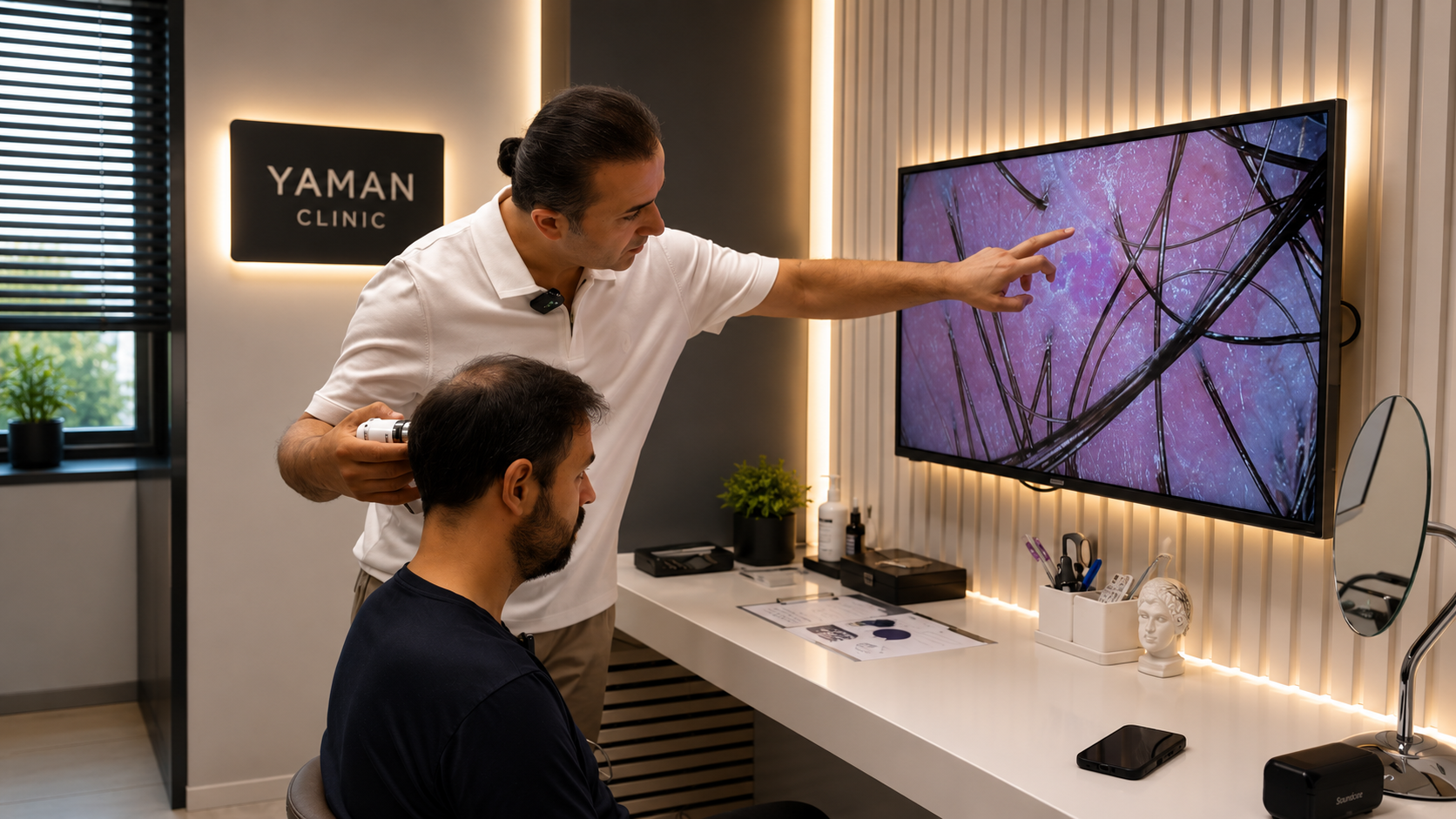
FUE is not a completely scar-free technique. Micro-scars appear after follicular unit removal. Hence, before operation, it is essential to examine the patient's donor area and identify if his skin is keloid-prone. For keloid-prone skin, it is necessary to choose the smaller harvesting- punch size.

How Is Implantation Performed in Classic FUE?

Hair implantation techniques have been diversifying with the time. They include classic forceps implantation, DHI Choi implantation, Yaman hybrid implantation, and robotic implantation.

Classical FUE involves the implantation of grafts with the help of forceps. After harvesting, the steel blades are used for creating the recipient-site channels. Then, the grafts are inserted into these channels with forceps. Thus, classic FUE hair transplant combines micro-motorized punch extraction, steel-blade channel creation, and forceps implantation.

Advantages of Classic FUE

The main advantage of classic FUE hair transplant is speed during implantation. For example, the implantation of 4,000 grafts with the help of DHI implanter may take approximately four to four and a half hours. The same number of grafts can be implanted with forceps in about two to two and a half hours with the experienced team. This faster process is one of the main characteristics that distinguish classic forceps-based FUE from implantation methods involving implanter pen.

Disadvantages of Classic FUE

In the classic forceps FUE, the incisions are made using the steel blades. While using forceps for placing the grafts, it is necessary to make the incisions with the specific size; for example, it is difficult to place the grafts with forceps with 1 mm blades, so the blades 1.5–1.8 mm are needed.
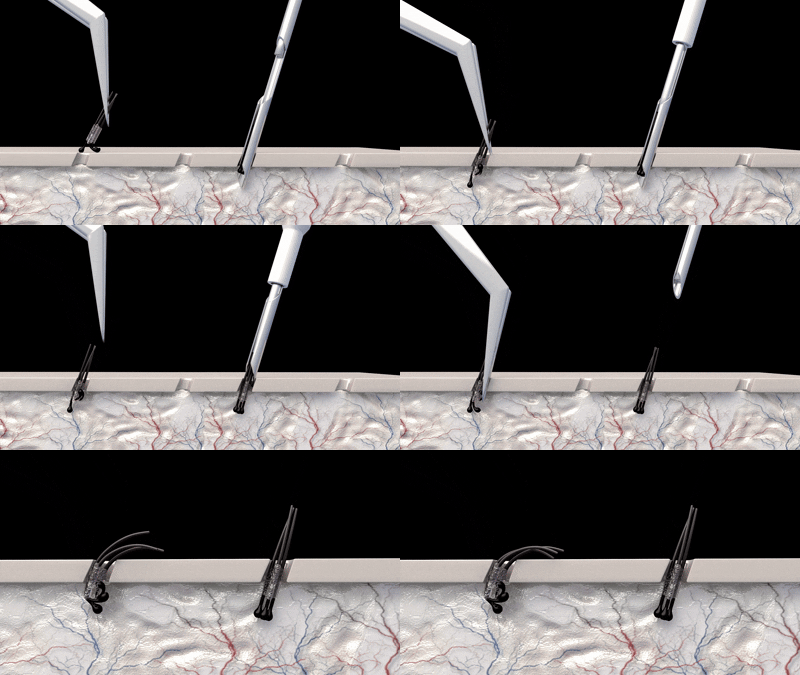
The length of the total incision size while performing the 4,000-graft procedure with the help of 1.8 mm blades reaches 7,200 mm. This feature increases the tissue trauma and the healing time. The forceps may compress a follicular unit or damage the graft while placing it into the recipient channel. Such trauma negatively affects the graft survival.

Another potential concern involves the speed of motorized extraction. The fast rotation of the punch may cause the damage to the graft. The larger devices may create the visible scars on the occipital region. Without proper dilution of the donor area, the uneven density of hair may form due to some areas being less dense and others being more dense.

The punch depth is also an important factor. In case the device goes too deep into the subcutaneous tissue, it may affect the underlying nerve structures and cause the permanent localized numbness.

The donor-site trauma may cause the shock loss in which the existing hair shed temporarily after the procedure. The prolonged motor operation may cause heating and affect the surrounding follicles.

The direction of hair follicle growth is especially important during harvesting. The punch should follow the natural exit angle of the follicle. The wrong trajectory of the punch causes the transection of the hair shaft. Such incorrect implementation causes permanent damage and reduces the hair density in the donor area. Therefore, classic FUE should be performed only by the experienced doctor and surgical team.

Can Classic FUE Be Used for Different Hair Types?

The harvesting and implantation methods should be adjusted according to the hair characteristics and treatment area. The DHI implantation may not be appropriate for very fine and curly Afro hair.

In the cases when the low angle of implantation is needed, for example, during the eyebrow transplantation, it may be necessary to make the channels and place the grafts using forceps. However, the trauma to the skin and grafts that forceps cause during the insertion should be taken into account. Therefore, it is better to place the grafts into the created channels using DHI implanter.

The harvesting of beard and body hair can also be performed with the help of classic FUE extraction. The manual beard extraction with the help of punch is possible, but the motorized extraction is used more often. Body hair can similarly be extracted one by one with a motorized FUE technique.

What are the differences between Classic FUE and FUT?

The main difference between classic FUE and FUT is in the way of harvesting of the donor grafts. In FUE, follicular grafts are harvested individually. In FUT, the strip of the skin with follicular units is removed from the safe donor area and then prepared for transplantation[3].

While using classic follicular unit extraction, the wider donor area is used instead of the strip of skin. This fact increases the amount of harvestable grafts. During the FUT procedure, the thin strip of the skin is needed to be removed from the donor area of the patient so that the incision could be closed with the bringing together of its edges. Since the strip includes the limited number of grafts, it limits the number of grafts that can be harvested. In FUE, the scars are minimal and invisible. For example, the 0.8 mm micro-opening created during the extraction contracts to 0.4 mm after healing. In FUT, the linear scar is formed. Its size and appearance depend on the softness, tension, and structural properties of the patient's skin.

What are the differences between Classic FUE and DHI?

The principal difference between classic FUE and DHI is connected with the implantation stage. For the classic FUE, the recipient channels are needed, which are large enough for forceps placement. The size of the channel varies from 1.5 to 1.8 mm. This fact increases the tissue trauma and healing time. The trauma to the grafts caused by forceps during their placement can affect the graft survival.

In DHI, the implanter with the average diameter of 1 mm is used. This fact minimizes the size of recipient-site injury. Since the graft travels through the implanter tube before entering the scalp, the tube decreases the exposure of graft to the external environment. This minimizes the graft trauma during implantation and supports graft survival.

There are also the differences in equipment and number of personnel needed during the treatment. FUE equipment is sterilizable and reusable in the following procedure, which allows minimizing the equipment cost. The DHI equipment is made for the particular patient, so the equipment costs are increased. For the classic follicular unit extraction technique, the team consisting of two persons is enough. In direct hair implantation, at least three people are needed; thus, the cost of the treatment is increased with the DHI method.

Therefore, the healing period of the classic FUE procedure is longer than the healing period of DHI due to the large size of recipient incisions. This healing may last longer in patients with sensitive skin.

Cost of Classic Forceps FUE

The classic FUE hair transplant is usually cheaper than other hair restoration techniques. The main reasons for its lower cost are that it is more widely performed than other techniques and has been used for many years. Many more people are skilled in this technique. Besides, the sterilizable equipment is used in this procedure, which decreases the equipment costs. Finally, fewer staff members are needed during the operation.

How to Avoid Overharvesting in FUE Method?

Avoidance of overharvesting begins with the choice of the adequate punch size according to the characteristics of the patient's hair. Unnecessarily large punch may increase the risk of the excessive donor extraction[4]. High speed of the motorized extraction sometimes makes the control more difficult. Dr. Yaman emphasizes that it is necessary to avoid high rotation speed and to give more time for the controlled harvesting.

It is necessary to distribute the donor dilution across the wide enough area. The areas around the ears and side regions are the areas with the higher risk of overharvesting, so it is necessary to minimize the number of follicular unit removal per square centimeter in these regions.

The occipital region is especially suitable for harvesting since the natural hair exit angles are lower. The hair located above the extraction site can hide the extraction points. The side regions have larger hair angles; therefore, the extraction points are harder to cover.

Graft harvesting should not be concentrated inside a sharply defined rectangular area. Doing so can create a noticeable density difference between the harvested and untouched regions. Instead, harvesting should gradually decrease toward the outer boundaries to create a transition zone. Careful donor dilution and distributed extraction are therefore essential for maintaining a balanced donor appearance.

FAQs About Classic FUE Hair Transplant

What does FUE stand for?

FUE stands for follicular unit extraction. It means mainly the graft harvesting technique in which follicular units are individually extracted from the donor area using the punches. After the extraction, the harvested grafts can be implanted using various techniques, depending on the chosen methodology.

What is classic FUE hair transplant?

Classic FUE is the combination of individual graft extraction with the use of punches and forceps-based implantation. The traditional technique involves the motorized punch extraction, steel-blade channel creation, and forceps graft placement during the implantation.

Is FUE totally without scars?

No, FUE creates the micro-scars in the sites of operation. Nevertheless, their size is significantly less compared to the linear scar, which appears after FUT. Visibility of the scars depends on the punch size, donor planning, skin specifics, and extraction distribution in the donor area.

Is the Classic FUE procedure painful?

It is carried out with the use of the local anesthesia; thus, the patient does not feel any pain and discomfort during the stages of extraction and implantation. Some mild soreness and tightness after the procedure can appear but it can be easily managed with the use of the recommended painkillers.

What is the difference between motorized and manual punch FUE?

Motorized FUE uses the micro-motor to rotate the punch, which allows harvesting the grafts faster. Manual punch FUE works slower but it allows making the harvesting more controlled. However, manual method allows extracting less follicular units during one procedure.

What is robotic FUE extraction?

In this case, the punches are installed in the robotic device. The physician determines the follicles by the system while the robotic arm surrounds them and extracts them to the chamber.

Why is the hair exit angle important during FUE?

The punch should follow the natural hair exit angle. Incorrect trajectory of the punch may transect the hair shaft, damage the graft, and reduce the number of usable hair.

What is overharvesting in FUE?

The extraction of too many follicular units from the donor site is called overharvesting. It may cause the visible thinning, patchiness, or even donor depletion. These issues can be prevented with donor assessment, punch selection, extraction distribution, and transition zone.

Are the results of Classic FUE permanent?

Yes, the results are supposed to last forever because the follicles extracted from the back and sides of the scalp are genetically resistant to DHT hormone, which means that they will keep growing forever.

References

[1]

Jiménez-Acosta F, Ponce-Rodríguez I. Follicular Unit Extraction for Hair Transplantation: An Update. Actas Dermo-Sifiliográficas. 2017;108(6):532–537. doi:10.1016/j.ad.2017.02.015.

https://pubmed.ncbi.nlm.nih.gov/28483047/
[2]

Garg AK, Garg S. Donor Harvesting: Follicular Unit Excision. J Cutan Aesthet Surg. 2018;11(4):195–201. doi:10.4103/JCAS.JCAS_123_18.

https://pubmed.ncbi.nlm.nih.gov/30886473/
[3]

Gupta AK, Love RP, Harris JA. Old Friend or New Ally: A Comparison of Follicular Unit Transplantation and Follicular Unit Excision Methods in Hair Transplantation. Dermatologic Surgery. 2020;46(8):1078–1083. doi:10.1097/DSS.0000000000002373.

https://pubmed.ncbi.nlm.nih.gov/32141930/
[4]

Romera de Blas C, Vega Díez D, Ricart Vayá JM, Gómez Zubiaur A. Complications in follicular unit excision hair transplantation: current evidence and practical approaches. Frontiers in Medicine. 2026;13:1750989. doi:10.3389/fmed.2026.1750989.

https://pubmed.ncbi.nlm.nih.gov/41709896/
Written by
Nazlı Defne Konak
Nazlı Defne Konak – Medical Writer & Editor

Nazlı Defne Konak graduated from the Chemistry Department of Hacettepe University. She worked in a microbiology laboratory and completed doctoral-level coursework in the field. For more than 6 years, she has been working as a medical writer and editor, producing medically accurate and patient-focused content on hair transplantation and cosmetic procedures.

Contact Us