Scalp Micropigmentation –Non-Surgical Treatment for Fuller Hair
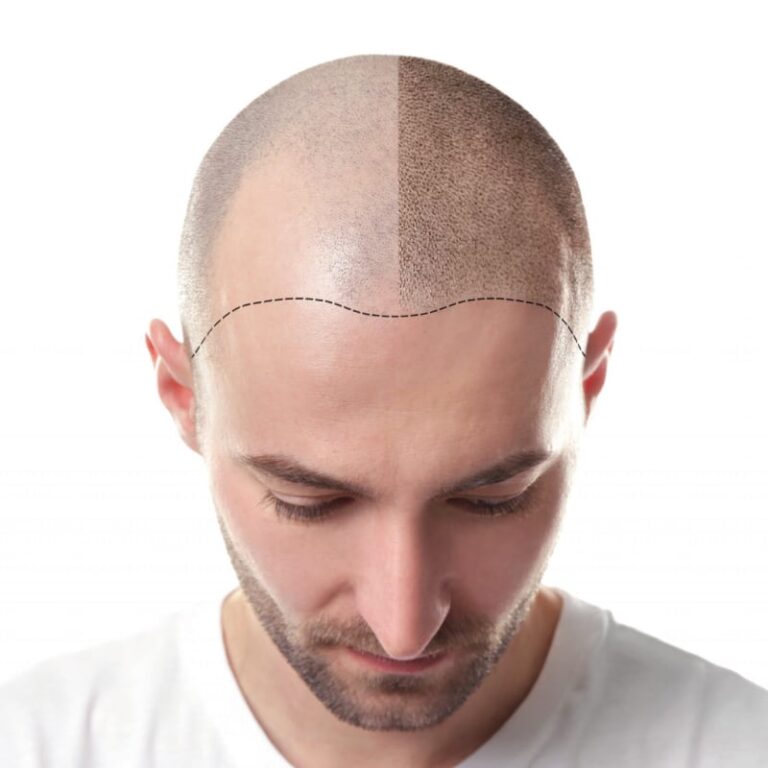
Scalp micropigmentation (SMP) is a non-surgical procedure aimed at creation of the visual effect of fuller hair. SMP involves carefully placing the microdots of pigment in order to achieve the effect of closely cut hair follicles or reduce the contrast between scalp and existing hair. SMP can be used as camouflage for hair thinning, scalp scars, and some types of alopecia.
In contrast to hair transplantation, scalp micropigmentation (SMP) doesn't increase the number of hair follicles. Rather, the procedure provides the cosmetic camouflage via application of pigment in the scalp. Appearance of the result will be determined by the selection of pigment, dot size, its placement and depth, hair characteristics, and the skill of the practitioner.
What is Scalp Micropigmentation (SMP)?
Scalp micropigmentation (SMP) is a non-surgical cosmetic procedure that implies application of the small layered dots of pigment on the scalp of the patient. SMP can be a perfect solution for the creation of the visual effect of a shaved head, increased density of thinning hair, or camouflage of scars and alopecia. The technique of the procedure is based on creation of stippling pattern that visually resembles closely cut hair follicles.[1]
Duration of the effect of the procedure of scalp micropigmentation lasts up to three to five years if correct care and maintenance are conducted. However, the period of pigment retention may vary in individual cases and be influenced by the properties of pigment, placement depth, skin characteristics, and exposure to ultraviolet light.[2]
While anyone can have the procedure of scalp micropigmentation, this treatment is especially beneficial for:
- Cancer patients
- Individuals suffering from baldness, hair loss, or hair thinning
- Patients with scars of FUT hair transplantation
- Those with scars on the scalp
- Patients with sparse hair that want to retain long hair
- Individuals who cannot undergo a hair transplant procedure due to the advanced hair loss
Scalp micropigmentation (SMP) is a cosmetic camouflage technique. It doesn't regenerate hair follicles or biologically increase hair density but creates an optical effect of it.[3]
The Process of Undergoing a Scalp Micropigmentation Treatment
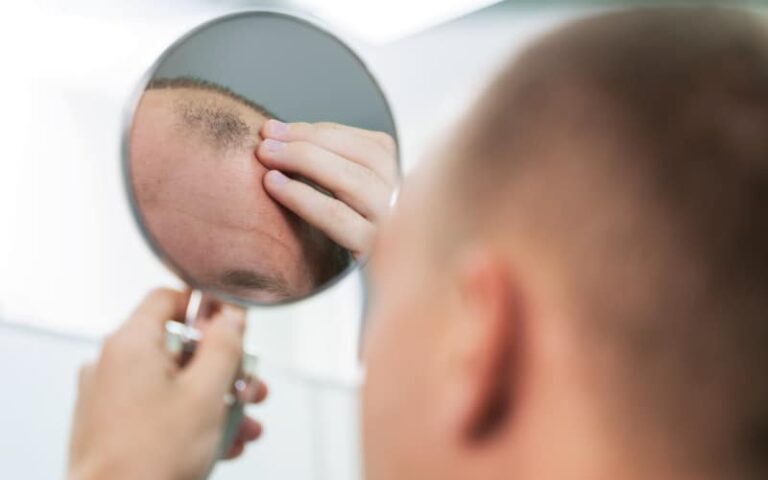
The main idea of SMP treatments lies in the visual imitation of hair follicles. During your scalp micropigmentation procedure, you have two options.
- The first option is to get your head fully shaven.
- The second option is to keep your hair as it is.
If you choose the former option, the practitioner will shave your head and apply small pigment spots onto the scalp. This will result in a two-dimensional appearance that resembles a freshly shaved head. If you choose to preserve your hair, the process will be very similar, except the practitioner will apply small pigments to give your hair a fuller and denser appearance.
The latter option is suitable if you have long hair that you want to keep. The whole procedure is painless and often takes a few sessions, each lasting a few hours. The exact treatment duration and number of sessions will depend on your individual case.
Scalp Micropigmentation and Hair Transplantation
A qualified hair transplant surgeon considers donor capacity of the patient when selecting hairline. If the patient has low donor capacity, high hairline may be chosen. Thus, size of the area that requires coverage by grafts will be reduced.
During micropigmentation, there is no structural limit regarding the height of the visual hairline. Therefore, the hairline is often placed lower than the hairline that would be chosen during hair restoration.
If the person suffering from hair loss decides to undergo hair transplant after SMP and the surgeon uses lower pigmented hairline as the starting point of his transplantation plan, the area that requires recipient coverage will become bigger. In this case, the surgeon won't be able to distribute available grafts on this area and get the natural effect. For this reason, the person suffering from hair loss and planning hair restoration should carefully consider the timing SMP.
Should Hair Transplantation or SMP Be Performed First?
A person thinking about hair transplantation and micropigmentation should have the hair restoration first. Then SMP can be considered after getting the final result of the hair restoration. Usually, one year after hair transplantation, the hair can be grown out and the areas that remain relatively sparse are easily identifiable. Micropigmentation can be performed in these sparse areas.
In this way, it's possible for the surgeon to plan hairline depending on donor capacity of the patient. In addition, it's possible to identify the areas of lower density before performing the pigmentation.
As a result, hair restoration determines the actual hair distribution, while SMP can later be used to camouflage remaining areas of reduced visual density. SMP can also be used to conceal selected scalp scars or other visible irregularities after hair restoration surgery.
Why Can SMP Fade or Change Color Over Time?
Micropigmentation introduces pigment into the scalp rather than using a substance naturally present in the skin. Once the pigment particles enter dermis, they interact with the surrounding connective tissue and immune cells.
Dermal macrophages play a crucial role in pigment capture, retention, release, and recapture, while fibroblasts are able to contain pigment particles and contribute to its stability. Due to the cellular turnover, pigment degradation, lymphatic transport, and other biological processes, the quantity and appearance of the pigment in the skin may change over time.
Therefore, SMP dots can become lighter or change their appearance in time. In some cases, this process can lead to an unnatural appearance. The ultraviolet light can speed up this process and cause fading or color change.
Why is Pigment Size and Depth Important in SMP?
If the procedure of SMP is performed very quickly and involves excessive pigment density, the large points may form. Depositing pigment too deeply may result in the pigment spread in dermis and thus, color changes and blurring of the boundaries over time.
The large points tend to visually merge with nearby points. Even though the main purpose of micropigmentation is the creation of micro-level pigment points that resemble individual hair follicles, merged points can result in unnatural or weird appearance.
That's why the SMP should involve micro-level pigmentation that mimics natural hair follicles. Each individual pigment point should remain separate rather than merge with neighboring points. Proper needle selection, pigment dilution, insertion depth, dot placement, and practitioner's experience are the factors required for obtaining the desired effect. For this reason, selection of experienced team is very important during SMP.
Why Should Tattoo Ink and SMP Pigments Be Distinguished?
If long-term permanence is the goal of micropigmentation, tattoo inks can be used. However, tattoo pigments don't completely disappear over time. Instead, they can fade or change their appearance and produce an undesirable cosmetic effect.
If micropigmentation is performed, non-permanent pigments that gradually disappear over time may therefore be preferred. The repeatable or refreshable options of micropigmentation can be considered periodically.
The objective is to keep the cosmetic effect compatible with the changing hair density, hairline, and hairstyle of the patient rather than creating permanently fixed pigment pattern. Also, the pigment selection is important since pigment composition, concentration, depth, and skin reaction will determine the final effect.
The Effect of Ultraviolet Exposure on SMP
Micropigmentation points not covered by hair are more exposed to ultraviolet light than pigment points under existing hair. Multiple exposures to ultraviolet light can result in the pigment degradation and changes in its appearance. Thus, exposed scalp pigmentation may develop an undesirable appearance over time.
Things to Keep in Mind About Your SMP Treatment
Proper preparation and aftercare are important for the appearance and healing of the treated scalp. The specific recommendations should be given according to the protocol of your individual treatment.
- Take a shower before each SMP procedure, and avoid washing your hair during four days after the procedure. During this time, you shouldn't sweat heavily.
- Each hair pigmentation procedure may take from 4 to 5 hours.
- The number of sessions you'll need will depend on the individual case.
- You will undergo an SMP treatment every few weeks.
- You are not a suitable candidate for an SMP treatment if you suffer from psoriasis, acne, or similar skin conditions on your scalp.
- After your last SMP procedure, you shouldn't visit damp places (sea, pool, sauna etc.) for 28 days and expose your scalp to direct sunlight for 28 days as well.
- You should start moisturizing the treated area four days post-treatment.
SMP is a procedure that requires multiple pigment placements in most cases. Also, the published literature notes the importance of pigment selection, treatment depth, dot placement, and practitioner's experience in the achievement of consistent cosmetic effects[4]. Also, the patients with active scalp diseases should be assessed clinically before having pigmentation.
Dr. Resul Yaman’s Approach to Scalp Micropigmentation
Scalp micropigmentation is not performed at Dr. Resul Yaman Hair Transplant Clinic. However, Dr. Resul Yaman explains the cases when SMP may bring cosmetic benefits to selected patients.
SMP for Donor Area Irregularities
If the donor area has been harvested in an unbalanced way, with lack of preservation of the donor-area distribution, micropigmentation can be considered as a way of improving appearance of the donor area. The patient can undergo the micropigmentation in the donor area after achieving the final result of the hair transplant.
SMP After a Mega Session With Limited Donor Capacity
During the mega-session procedures, there are cases when the donor area doesn't contain sufficient grafts to cover the recipient area. In such cases, number of grafts implanted per cm² in the recipient area will be somewhat lower.
Thus, the recipient area won't be completely covered. In this case, micropigmentation may be recommended as a secondary cosmetic effect for selected patients. SMP doesn't increase the number of grafts that were transplanted. It only provides a cosmetic camouflage effect in the areas of visible scalp.
SMP for Patients Who Prefer a Buzz Cut
Micropigmentation can also be recommended for the patients who have undergone the hair surgery and prefer to have buzz cut hairstyle. Generally, surgical hair restoration is performed with shaving. Depending on the individual case, grafts can be extracted from half of the donor area, more than half, or less than half.
Consider the case when hair transplant surgeon extracts grafts from half of the donor area and thus creates the difference in donor-area density. The extracted grafts are used for coverage of the bald recipient area and increased its visual density.
If the patient wants to retain longer hair, harvested areas can be camouflaged successfully with hair. But if the patient wants to have very short hairstyle, density difference created by harvesting may become visible. In this case, micropigmentation can be considered as the method of camouflage of the density differences in the donor area.
Frequently Asked Questions about Scalp Micropigmentation
What is scalp micropigmentation used for?
Scalp micropigmentation can be used for achieving visual effect of hair follicles. It can camouflage thinning areas, baldness, scalp scars, and some forms of alopecia without increasing the number of actual hair follicles.
Does scalp micropigmentation increase hair density?
No. Scalp micropigmentation does not create additional hair follicles or increase biological hair density of the scalp. The treatment simply decreases the difference between scalp and existing hair by creating optical illusion.
Is it possible to undergo scalp micropigmentation before hair transplant?
If there is an intention to perform hair surgery in the future, scalp micropigmentation is generally not recommended before planning hairline and recipient area.
Is scalp micropigmentation possible after hair transplant?
Yes. The treatment can be performed after the final result of hair transplantation has appeared. This way one can identify all areas where hair density remains low.
Why does scalp micropigmentation fade in time?
The process of fading is connected with biological factors, such as pigment interactions with dermal macrophages, fibroblasts, connective tissue and others. Biological changes, pigment breakdown, cellular transfer and ultraviolet exposure can cause change in pigment coloration.
Why should pigment dots in SMP procedure be very small?
SMP aims to imitate the visual appearance of closely cut follicles. Excessively large or deeply deposited pigment points can spread, merge, or become blurred. Appropriate dot size, depth, spacing, and pigment selection help preserve a natural stippling pattern.
Can SMP improve condition of patients with depleted donor area?
SMP may provide cosmetic camouflage when harvesting has created visible donor-area density differences. It does not restore extracted follicles. Instead, pigmentation can reduce the visual contrast between the scalp and remaining hair in selected cases.
Can people with buzz cuts benefit from SMP after hair transplantation?
Yes. Very short hairstyles can make donor-area density differences more visible after graft extraction. In selected patients, SMP may camouflage these differences and reduce scalp visibility, particularly when surrounding hair is kept extremely short.
References
[1] Rassman WR, Pak JP, Kim J. Scalp Micropigmentation: A Concealer for Hair and Scalp Deformities. Dermatologic Surgery. 2015;41(10):1054–1060. PMID: 25852813. https://pmc.ncbi.nlm.nih.gov/articles/PMC4382144/
[2] Nguyen B, Mervis JS, Romanelli P, Tosti A. Scalp Micropigmentation: A Clinicopathologic Correlation. Skin Appendage Disord. 2022;8(5):412–414. doi:10.1159/000524135. PMID: 36161085. https://pubmed.ncbi.nlm.nih.gov/36161085/
[3] S. Stephanie, et al. Hair camouflage: A comprehensive review. International Journal of Women's Dermatology. 2017 Feb 16;3(1 Suppl):S75-S80. https://pubmed.ncbi.nlm.nih.gov/28492045/
[4] Dhurat RS, Shanshanwal SJS, Dandale AL. Standardization of SMP Procedure and Its Impact on Outcome. J Cutan Aesthet Surg. 2017;10(3):145–149. https://pmc.ncbi.nlm.nih.gov/articles/PMC5782438/