


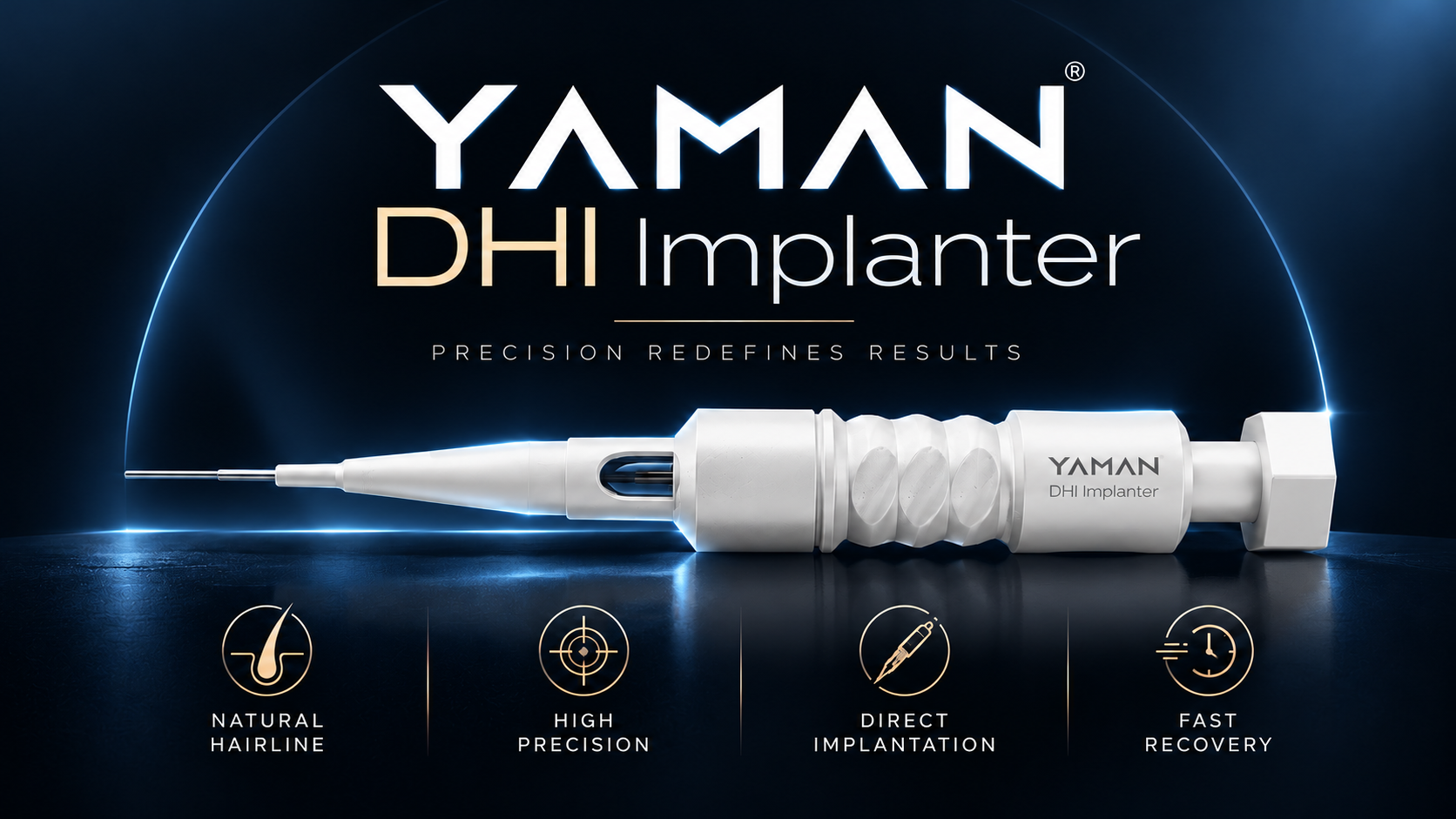
Yaman DHI Implanter: An Innovative Approach to DHI Hair Transplantation
Dr. Resul Yaman has been using the DHI hair transplantation methodology since 2015. He is one of the surgeons in Turkey who uses the DHI technique. Before 2015, he performed hair transplantation using the FUE technique with forceps for graft placement. However, placing grafts with forceps can cause bending, compression, and accidental burial of hair follicles beneath the skin. Throughout his surgical practice, Dr. Yaman observed these challenges and recognized the need for a safer, more controlled mechanism for graft placement. To address this need, Dr. Yaman began using the Direct Hair Implantation (DHI) methodology.
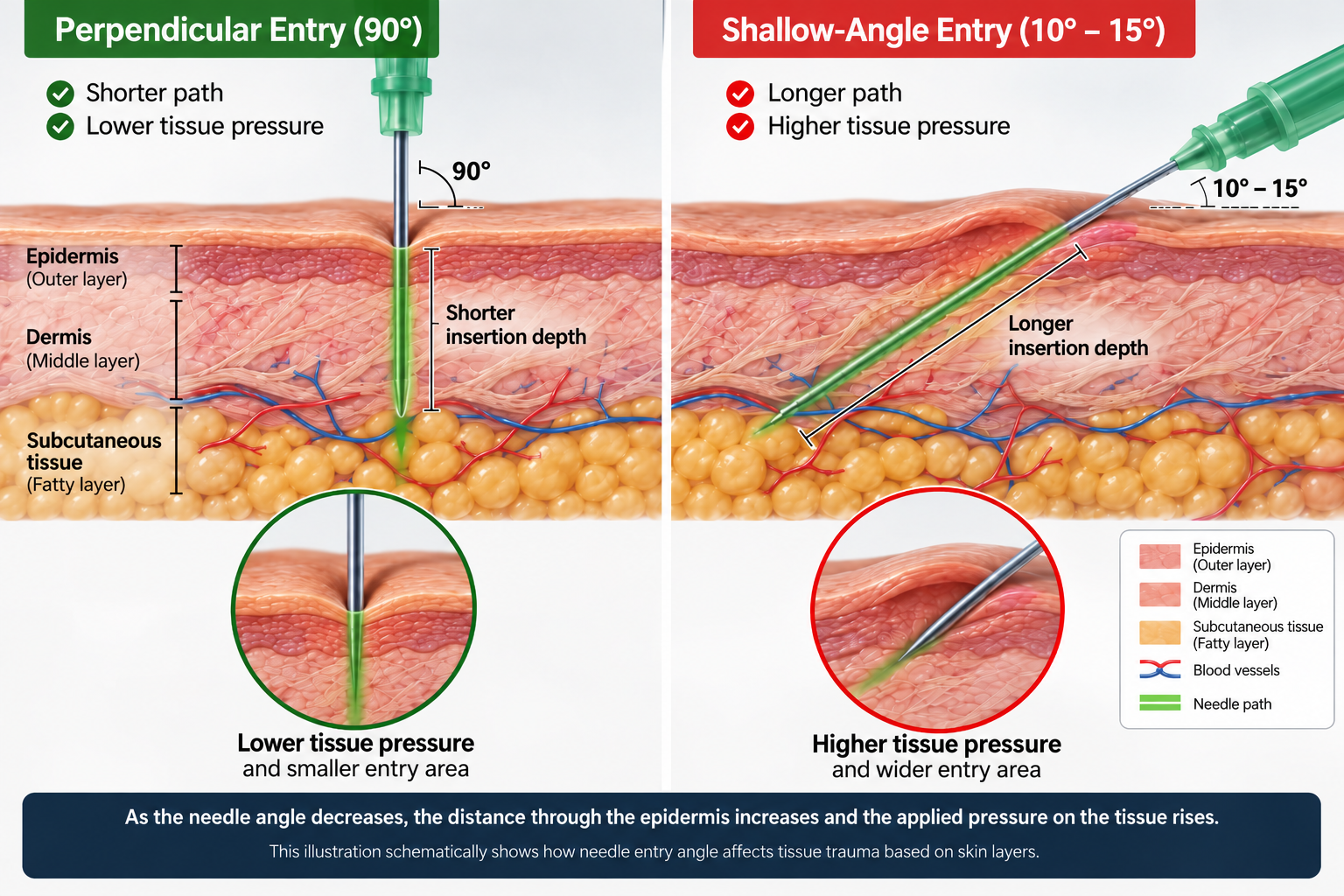
The standard DHI implanter is an ergonomic device designed for efficient use during hair transplantation. Although it generally works well with average scalp skin, its use at low angles can create greater pressure on the surrounding tissue in scalps with particularly soft or firm skin. As a result, this increased pressure can cause dislocation of previously implanted grafts. This creates a challenge when placing grafts close together, as the surgeon may need to work with the implanter at steeper angles to avoid disturbing previously placed grafts.
Nevertheless, in certain areas of the scalp, such as the temples and first 2-3 cm of the frontal region, a low angle is important for successful transplantation. If grafts are not placed at appropriate low angles, the transplanted hair may grow too upright and produce an unnatural appearance. Thus, it is necessary to achieve the right angle in the frontal hairline and the temple area in order to receive a natural looking result and allow the patient to style their hair freely.
For this reason, Dr. Yaman uses his innovated Yaman DHI Implanter in the frontal hairline and temple areas, where low-angle graft positioning is required, while using a standard DHI pen for other parts of the recipient area.
How Did the Yaman DHI Implanter Develop?
To address these challenges, Dr. Yaman considered making incisions in the frontal and temple regions before grafting with the DHI implanter. However, in the standard DHI implanter there is a sharp tip that makes the incision during insertion. Using it for grafting in previously prepared incisions was not the right decision.
Thus, the surgeon had to think of an intermediate design of the device that would place the grafts in the previously made incisions without making any additional cuts. At first, the doctor tried to use the KEEP implanter. However, the absence of the slider mechanism caused many difficulties in this technique both for the surgeon and for the surgical team.
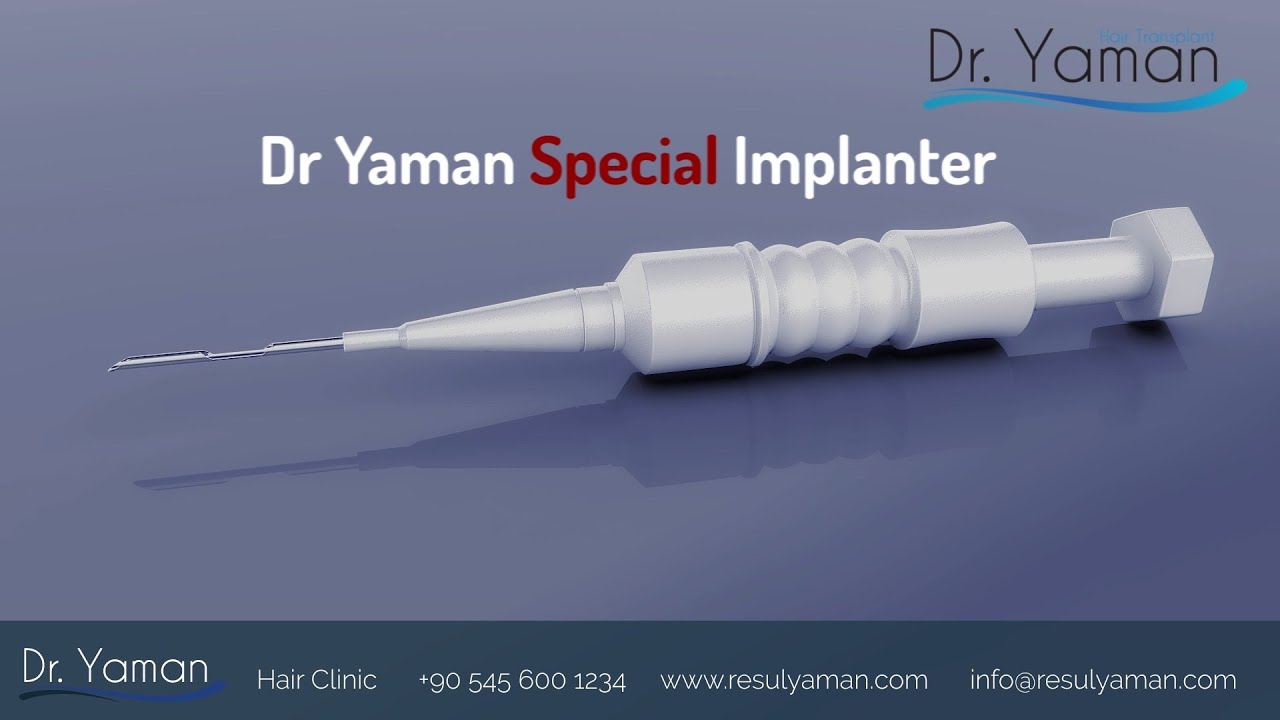
Then, Dr. Yaman changed the mechanism of the standard DHI implanter and developed the Yaman DHI Implanter. This instrument has a blunt tip. Also, the device is produced in various diameters, from 0.7 mm to 1.1 mm. The main feature of this instrument is in the ability to place grafts in previously made micro-incisions with the help of sapphire blades. The surgeon works with the sapphire blades for creating incisions depending on the length of the graft, required depth, and the recipient area. During this process, the hair graft is loaded into a tube within the device and then inserted into the prepared incision.
Selecting the DHI Approach Based on the Recipient Area
Depending on the patient's individual needs, the entire recipient area can be treated using either the standard DHI pen or the Yaman DHI Implanter. Alternatively, the surgeon can work with the Yaman DHI Implanter in selected regions and a standard DHI pen in the remaining parts of the recipient area, depending on the anatomical characteristics of each region.
There are two small differences between the Yaman DHI Implanter and the standard DHI implanter.
The blunt tip requiring the preparation of incisions in advance.
Unlike the standard DHI Choi implanter, the Yaman DHI Implanter has the blunt tip. In this case, it is required to prepare the incisions in the recipient areas in advance before the insertion of the grafts.
A different graft-loading mechanism
In the classic DHI technique, the grafts are loaded into the device through its tip. Two or three team members work as graft loaders during the procedure to prepare the instruments for placement.
In contrast, the Yaman DHI hair transplanter has the groove along the body of the device. This allows a single team member to load the grafts easily into the instrument. The graft is then advanced into the scalp with the help of slider mechanism.
This helps to simplify the process of graft loading and can increase the efficiency of the procedure. Besides, with this design two team members can conduct graft implantation simultaneously in the same patient when it is necessary for the surgical plan and the workflow.
How Does Dr. Resul Yaman Use the Yaman DHI Implanter?
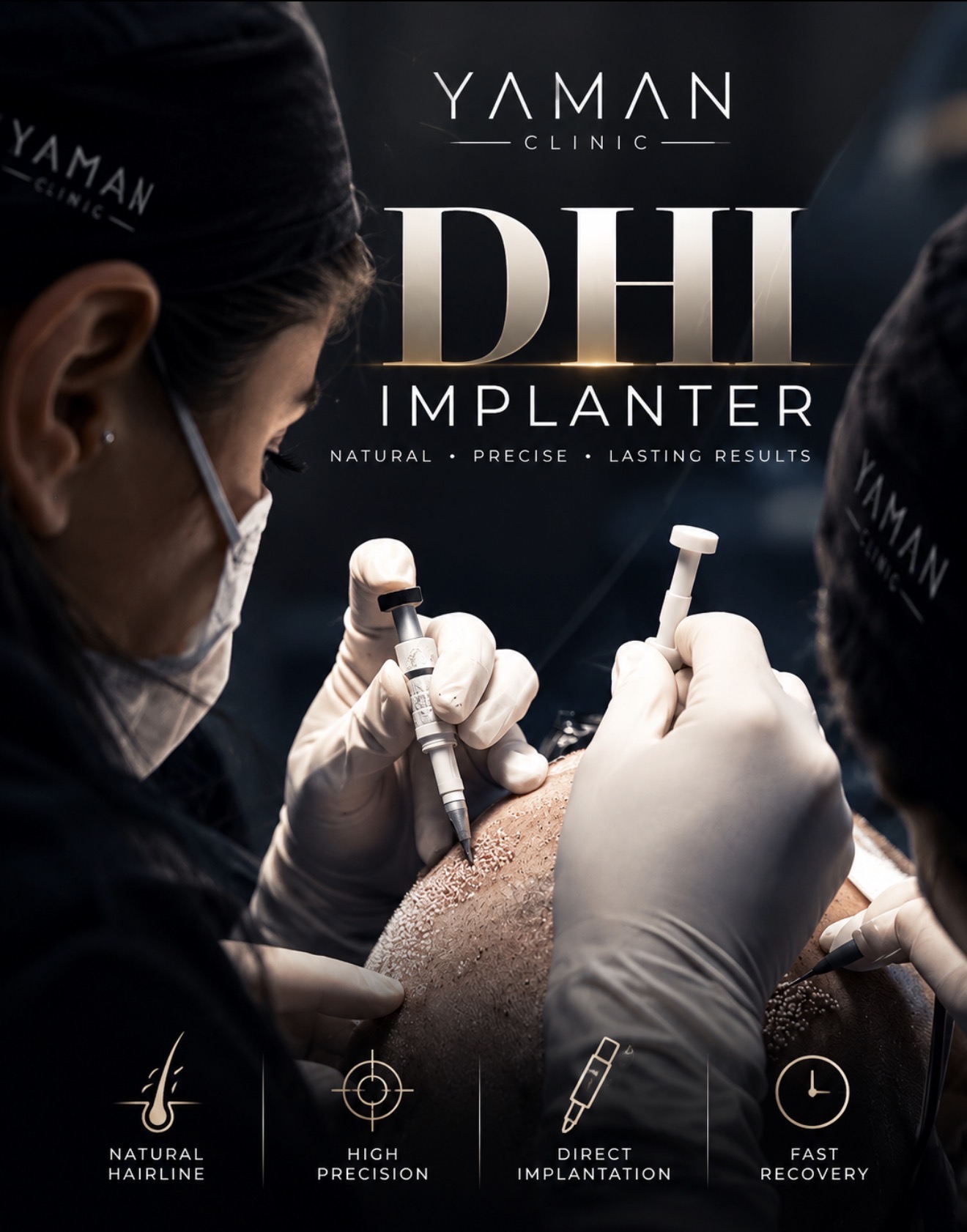
Although Dr. Yaman uses the DHI methodology, he adopts a hybrid approach choosing the method of grafting in dependence on the characteristics of each scalp region. Based on his years of clinical experience, the surgeon does not apply the same hairline design, placement pattern, or technique to every patient. Hair characteristics, scalp structure, skin thickness, and other individual factors vary between patients and can influence the surgical approach.
In the frontal area, the Yaman considers scalp thickness and direction of hair growth when choosing the placement method. The surgeon applies the Yaman DHI Implanter in the temples and first 2-3 cm of the frontal area, where the low-angle placement is especially important.
The preparation of incisions with the sapphire blades before the insertion of the grafts gives the possibility to control the direction and angle of the recipient sites. The blunt-tipped Yaman DHI pen then places the grafts into these sites. In this way, the surgeon can obtain natural hairline transitions and hair direction.
The mid-scalp and crown have a different anatomy and hair growth patterns from the frontal hairline. The placement angles may not be as low as the angles of the frontal and temple regions. For these areas, the doctor uses the standard DHI implanter in case of the direct insertion method. In this case, the instrument makes the recipient site and implants the graft in one step, without the necessity to make incisions previously.
The doctor evaluates the frontal area, midscalp, and crown separately and chooses the method of grafting for each region depending on the characteristics of this area.
The Role of the Yaman DHI Implanter in Creating a Natural Hairline
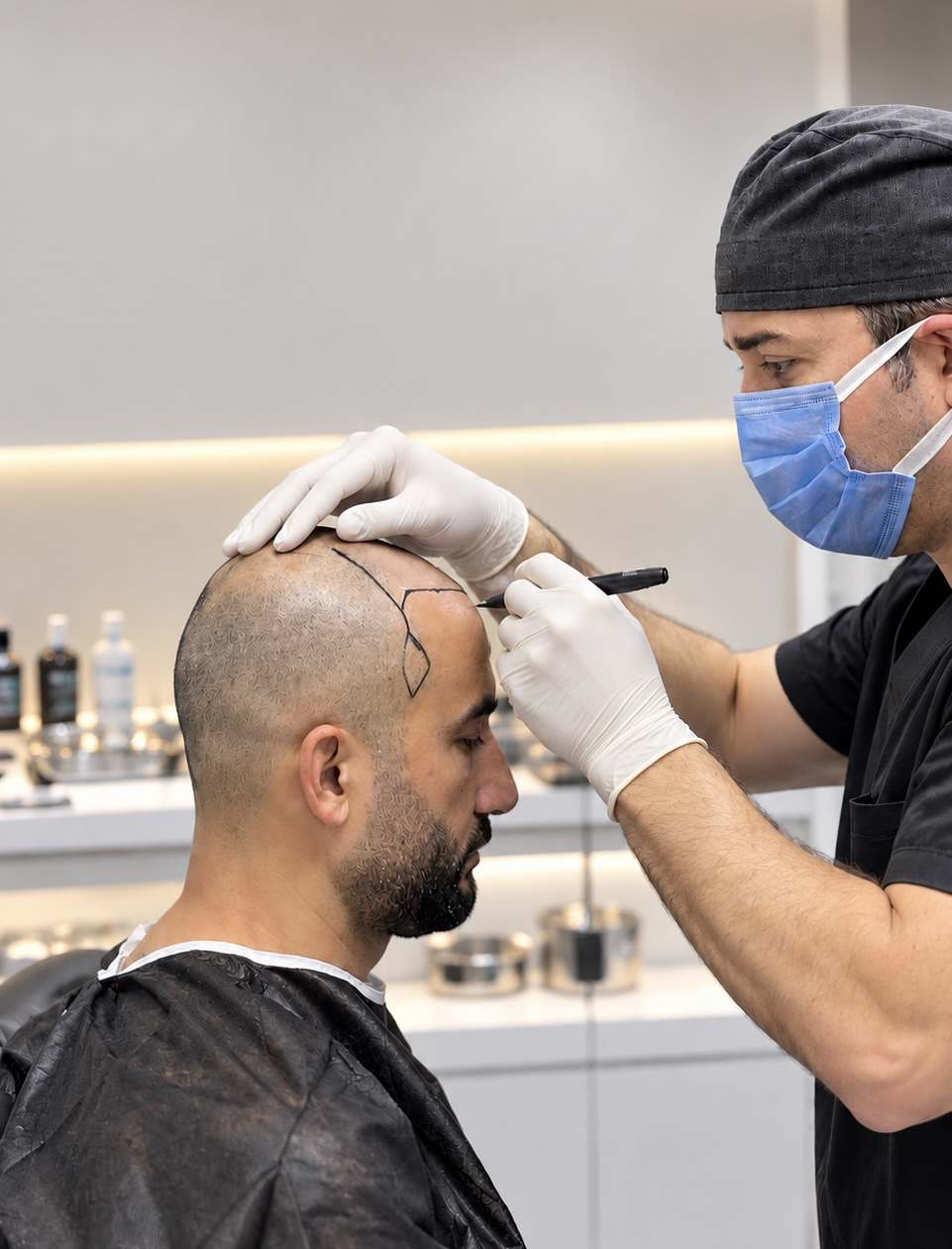
One of the reasons why Dr. Yaman achieves the natural-looking hairline in hair restoration is in the use of the Yaman DHI Implanter for grafting in the frontal and temple areas.
The use of forceps in the transplantation process may increase the risk of damage of the grafts that were repeatedly handled or compressed in the process of insertion. It can also be difficult to insert the grafts into very small recipient sites, such as micro-incisions measuring approximately 0.7-0.8 mm, with the help of forceps.
In this way, the Yaman DHI pen gives the opportunity to insert the graft into the prepared incision with the help of the slider mechanism of the device. In this way, the insertion in the small recipient sites becomes easier and reduce some of the handling difficulties associated with forceps.
Also, the sapphire blades are very sharp and can make the precise incisions. Before using the Yaman DHI hair transplanter, Dr. Yaman prepares the recipient sites with the sapphire blades and establishes the required direction, angle, and depth of the incisions.
Comparing with the incision created directly by the sharp tip of the standard DHI implanter, in this case, the surgeon has the possibility to make recipient sites separately and adjust them according to the required hair growth pattern.
In the crown area, where the requirements to the placement angles are different from the ones for the frontal hairline, using the standard DHI implanter may be more convenient in this regard.
Finally, the surgeon uses the Yaman DHI Implanter as part of his DHI hair transplantation method. With the help of adaptation of the graft placement to the characteristics of each scalp area, he achieves the natural-looking result and has the control over graft directions and placement.

Classic FUE with Forceps vs. Yaman DHI Implanter
| Feature | Classic FUE with Forceps | Yaman DHI Implanter |
|---|---|---|
| Graft placement instrument | Forceps | Yaman DHI Implanter |
| Recipient-site preparation | Separate incisions are prepared before placement | Micro-incisions are prepared before placement for temples and frontal areas |
| Incision requirement | Requires pre-made recipient-site incisions | Requires pre-made micro-incisions |
| Typical incision diameter | Approximately 1.0–1.5 mm | Approximately 0.7–1.0 mm |
| Tip design | Not applicable | Blunt |
How DHI Surgeon Uses Implanters to Achieve Natural-Looking Results
Achieving natural-looking results through DHI hair transplantation requires good surgical planning, proper handling of the grafts, and correct use of the implanter systems. Dr. Resul Yaman is one of the professionals who perform DHI hair transplantations, using both the Yaman DHI Implanter and standard DHI implanters according to the requirements of each case. His approach focuses on creating natural hairlines, appropriate graft placement, and long-term results.
Although Dr. Yaman filed patent and PCT applications for the Yaman DHI Implanter, he preferred to make the operating principles of the device public. Rather than focusing on potential industrial patent revenues, he published a YouTube video explaining the operating principles of his invention in order to promote its widespread use in hair restoration procedures. The doctor subsequently placed less emphasis on pursuing patent-related processes, prioritizing the dissemination of technical knowledge instead.
FAQs: Yaman DHI Implanter
What is the difference between the Yaman Implanter and traditional forceps methods?
The traditional forceps can crush and destroy follicles. The Yaman hair transplanter just inserts the follicles into the scalp providing minimal trauma and therefore high graft survival rate.
Why does Dr. Resul Yaman use sapphire blades with the Yaman Implanter?
The sapphire blades allow Dr. Yaman to prepare precise micro-incisions before graft insertion. In this way, the angle, direction, and depth of grafts in the frontal hairline and temples become controllable.
Does the Yaman Implanter shorten the hair transplant procedure?
Yes, this DHI pen does shorten the hair restoration procedure because it lacks the need for an additional implantation tool, making the procedure faster and reduces the surgeon’s workload.
Does this mechanism developed by Dr Resul Yaman allow obtaining a more natural result in hair transplantation in Turkey?
Yes, this mechanism allows obtaining the natural result of transplantation due to precise specifying of angle, direction, and depth of the grafts. The patient will have the new natural hair that will fit with the existing hair perfectly.
Who is the best candidate for the Yaman Implanter with the DHI procedure?
Anyone without health problems that prevent hair replacement surgery and who has a sufficient donor area is suitable for this procedure. Dr. Resul Yaman has case studies related to each Norwood hair loss stage.
Can the Yaman DHI hair transplanter be used for all scalp areas?
Dr. Resul Yaman applies the DHI placement method depending on each scalp area. He uses the Yaman DHI pen in the frontal hairline and temples, but a standard DHI pen may be better in the midscalp and crown. Keep in mind that depending on the patient's needs, either the Yaman DHI pen or the standard DHI pen can be used for the whole recipient area.

Nazlı Defne Konak graduated from the Chemistry Department of Hacettepe University. She worked in a microbiology laboratory and completed doctoral-level coursework in the field. For more than 6 years, she has been working as a medical writer and editor, producing medically accurate and patient-focused content on hair transplantation and cosmetic procedures.