
Afro Hair Transplant – A Permanent Solution to Hair Loss and a Receding Hairline

afro hair transplant

Dr. Resul Yaman
Medically reviewed by Dr. Resul YAMAN, MD

Founder of Yaman Surgical Medical Center in Istanbul.
Dr. Yaman has over 17 years of clinical experience in hair restoration and specializes in advanced hair transplant techniques and natural hairline design.

February 16, 2023
In this post

For hair transplant surgeons, Afro-American hair generally refers to a curly hair type. Curly hair is quite common for African and Caribbean origin. Therefore, this type of hair has to be differentiated within hair transplantation surgeries. Hair loss is widespread phenomenon among people of African descent all over the world, especially in the USA. Moreover, this problem concerns both men and women.

Afro hair loss can also follow an androgenetic pattern. At the early stages of development of hair transplantation, FUT was the primary method. Afro hair transplant surgery was performed seldom during that period. However, FUE provided additional challenges in extracting this type of hair. The use of punches made extracting curly hair more complicated.

Consequently, Afro hair restoration procedure became rare. The results obtained with it were also considered unpredictable comparing to the results achieved with straight hair. Thus, a common idea appeared that Afro-textured follicles was unsuitable for hair transplant surgery. Fortunately, this idea changed significantly over the last years.

Doctors and technicians have acquired much knowledge regarding curly hair transplantations. In addition, some specific techniques of Afro hair extraction were elaborated. Moreover, special equipment for curly hair was developed. As a result, an experienced clinic can perform this kind of surgery successfully.

Hair Structure

Features of Structure of Afro Hair

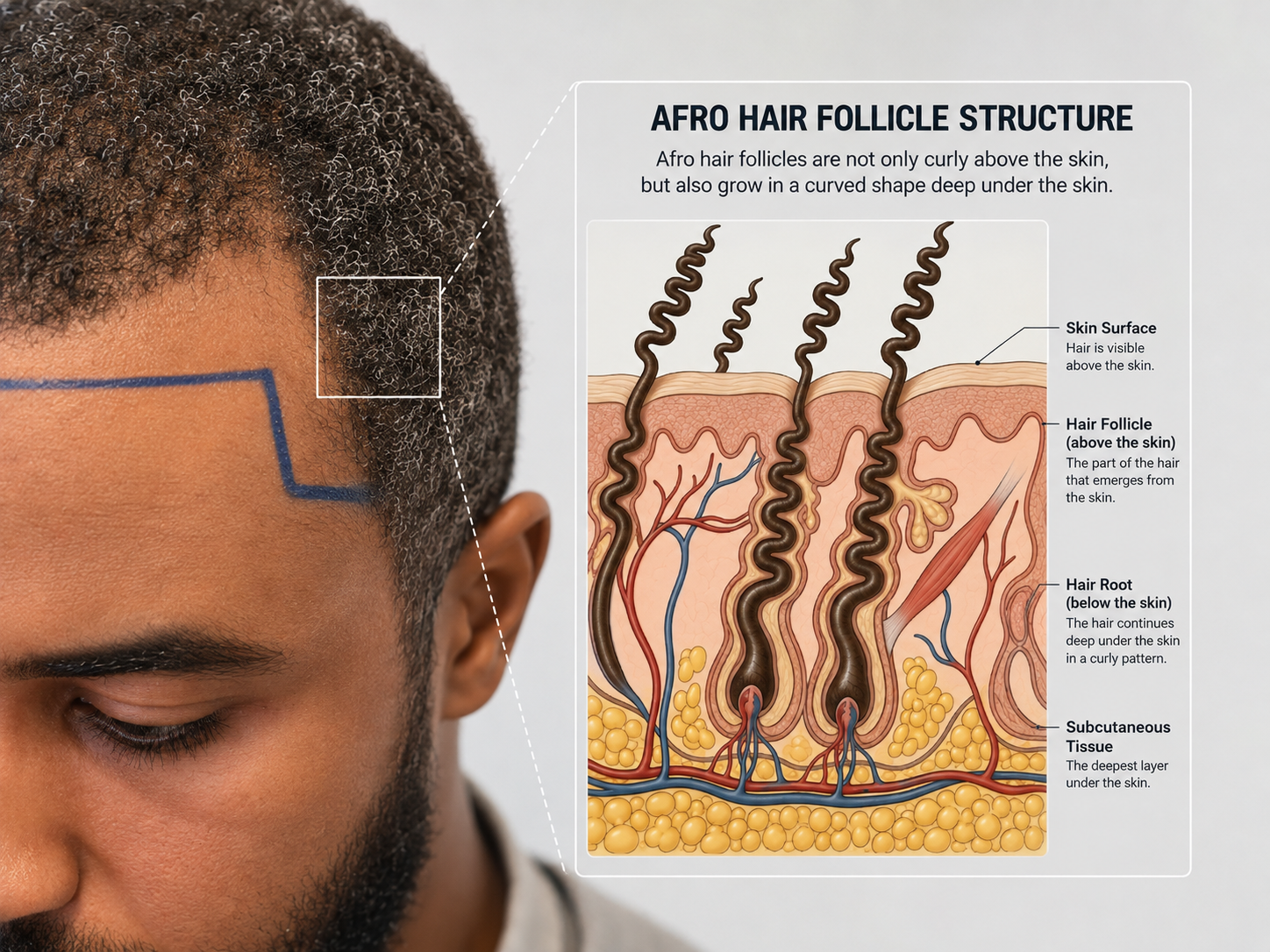
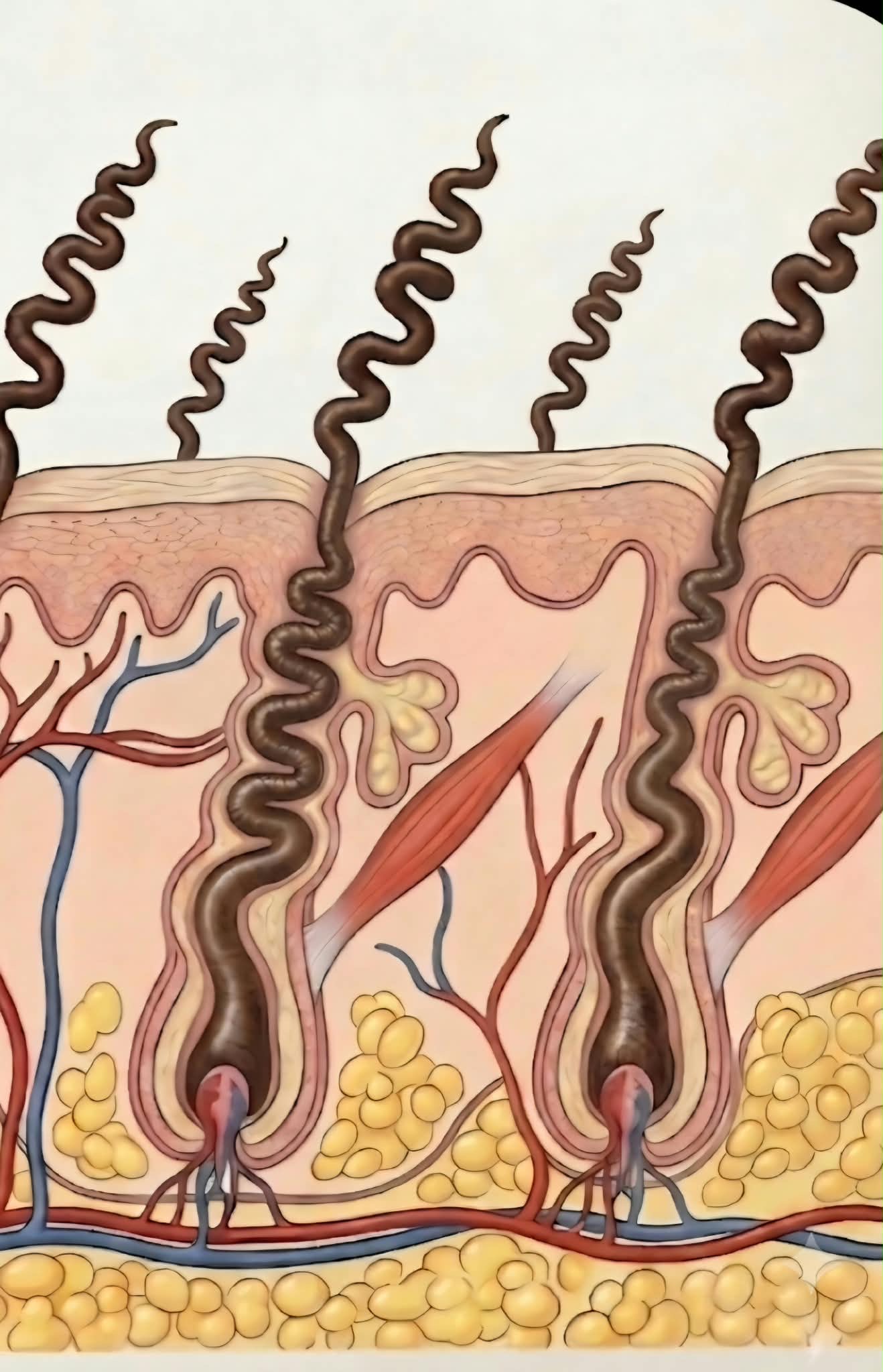
Curly hair structure differs substantially from straight hair. The visible hair structure is continued under the skin in the same type, angle, and direction [1]. Regardless of being wavy, curly, or straight, the same angle and direction of the hair will be continued under the skin for 2.5-4 mm.

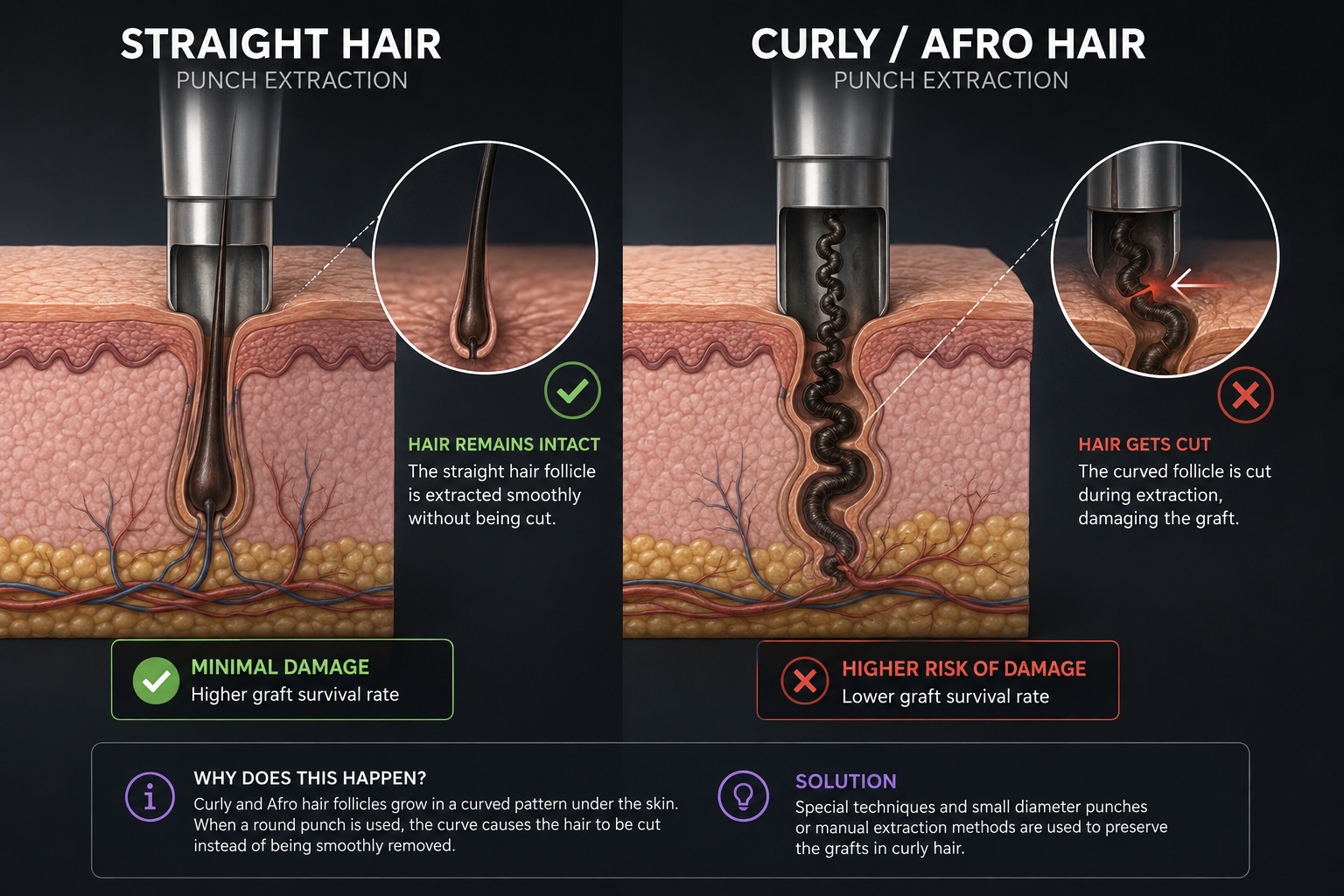
Thus, the extraction of Afro hair has to be performed more carefully because of that. If the standard punch is used, the procedure may become more challenging. Using a conventional straight punch, the coily hair structure is continued under the skin and, thus, may be cut by the punch. As a result, hair shaft will be extracted without its root. This is the most important thing to pay attention to during Afro hair transplantation.
Tightly curled hair can look thick, but its real diameter may be rather variable. For instance, it can be fine, medium or thick depending on the person. However, Afro hair can be thinner than Mediterranean hair.

Also, it is important to note the graft density per square centimeter. Afro-textured hair contains fewer follicular units per square centimeter than straight hair. For example, European male donor area may contain 55-85 grafts per square centimeter. However, the doctor will use only 40-55 grafts for transplantation. Afro male donor area may contain 45-65 grafts per square centimeter. Thus, the extraction capacity will be somewhat less. The reason is in hair thickness and follicular unit density.

Afro hair is always curly. Therefore, for the purpose of creating thick and dense structure fewer harvested units will be needed. In some Afro people with fine hair, the graft density may be relatively higher. However, it will still be less than straight hair.

Hair Loss Patterns

Afro Hair Loss

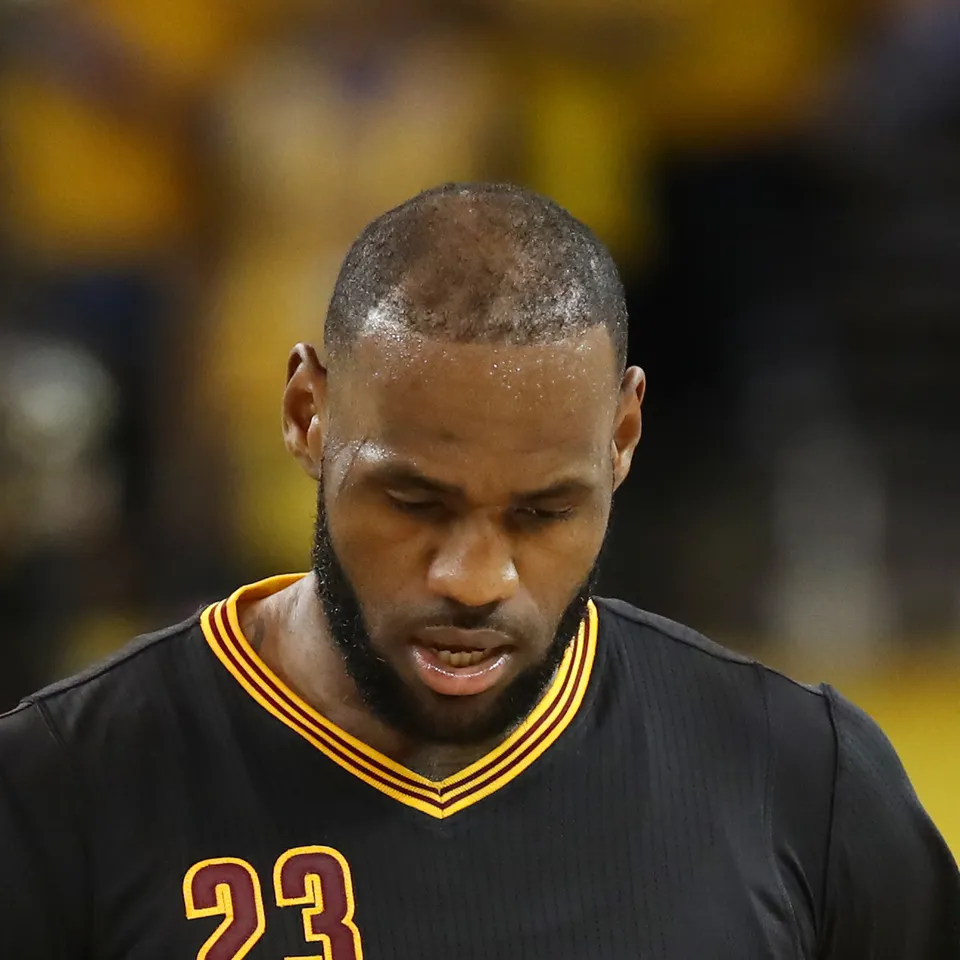
Hair loss generally appears due to a genetic pattern. If you father, brother, uncle has any Norwood stage hair loss, then your risk may increase. The Norwood scale can be interpreted for Afro men in the same way as for European and Asian people. However, visual hair loss features are different.

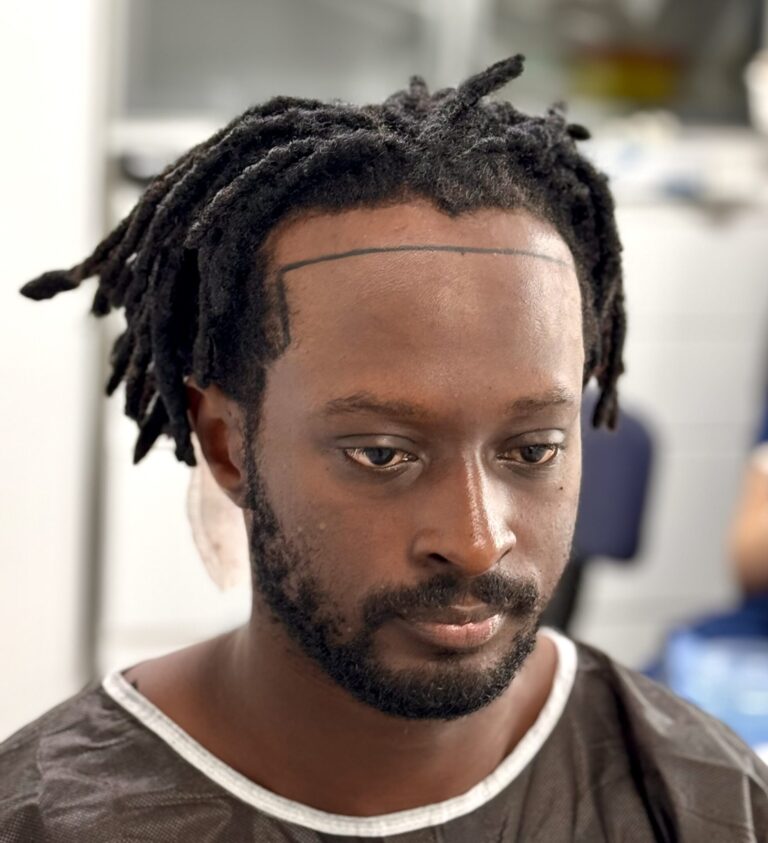
For a European or Mediterranean person, mild recession may look like a normal thing. Coily hair has the features of square temples and straight hairline traditionally. Thus, even a mild recession will change these features. As a result, hair loss will be more visible and transplantation will become necessary. In case if the Afro patient wants to transplant hair due to receding hairline, the traditional features of their hair should be taken into account.
Female Hair Loss

Afro Women and Traction Alopecia

Hair restoration is also common among Afro women. Their curly and dense looking hair creates a great amount of volume. Therefore, some women use some different methods to deal with the hair volume. These methods include braiding, dreadlocks, tight hairstyles, blow-drying. Also, hair extensions and some chemicals are used. The result of this is traction alopecia.

Hair loss in the area of temples and front part of the head is common among Afro women. In some regions, traction alopecia can persist for many years. Thus, big foreheads and receding hairline are common among Afro women.

Extraction Technique

Afro Hair Extraction: Why It Is Different

Both hair extraction and implantation are important for transplantation in Afro-textured patients. However, the harvesting process should be done more carefully because curly hair creates additional challenges. Afro-textured follicle is continued under the skin with the curly structure. Therefore, an expert using a straight punch can cut the hair and cannot reach its root [2].

The cut hair will be pushed out while the root will remain under the skin. If the root cannot be extracted, then the graft will not be transplanted successfully.

Extraction Method

Standard Punch Extraction for Curly Hair

There are two ways how Afro hair can be extracted while keeping the root. First, the skin can be stretched during the harvesting process. This will help to straighten the hair under the skin. However, the exit direction of the hair has to be determined also. The expert will determine the exit direction of the hair and will stretch the skin accordingly. This will help to extract the hair using a straight punch. Moreover, the punch has to penetrate the skin enough.

Dr. Resul Yaman's team has a lot of experience with Afro hair transplantation in Turkey. The team has long-term experience with skin stretching and hair exit direction determination. Thus, this method can help to perform a successful extraction using a straight punch. Otherwise, harvesting of the tightly curled hair will be problematic.
Extraction Method

Specific Punch for Curly Hair Extraction

The second method is to use a specific punch. This punch has widened structure towards the blunt end. Thus, it can contain curly hair while advancing through the tissue. The hair at an angled point will be less likely to be cut by the punch.

This specific punch isn’t commonly available from standard punch manufacturers. Those doctors who want to use it may need to have it specially manufactured. Dr. Yaman uses this specific punch in his clinic in Istanbul. Thus, his team has obtained good graft survival rates in curly hair transplantation.
Donor Planning

Afro Donor Area

During hair replacement, the so-called safe zone is determined for men in the case of male pattern hair loss. The same principle is used for Afro hair loss. Extraction is performed from the determined safe zone. Then, the grafts are transplanted to the recipient area.

Thickness of hair and graft density per square centimeter have to be taken into account. If graft density is high, then follicular extraction can be performed successfully. However, if donor graft density is low, then harvesting process has to be planned more conservatively. In some cases, the beard can be used as the secondary donor area.

Beard hair can be extremely helpful in case of curly hair. The reason is that the beard hair is curly also. Thus, it can be blended well with curly scalp hair. However, in case of straight hair, the beard grafts are used for transplantation to the crown. However, the beard hair can also be used in mid-scalp in case of Afro-textured follicles.

Female Hair Restoration

Afro Women Hair Transplant

Hair follicles transplantation can become a solution for Afro women who suffer from significant hair loss. Unlike the men, Afro women do not generally have genetic pattern corresponding to the Norwood Scale. Thus, other areas can be used as the donor region sometimes.

The top, sides, mid-scalp and surrounding areas can sometimes become a safe zone. Donor planning in this case has to be done carefully.

Implantation

How are Grafts Implanted?

The structure of Afro hair is an important factor which should be considered during the implantation process. DHI implantation needs more attention and precision in case of curly hair. The implanter has the structure of the straight tube. Thus, insertion of the tightly curled hair into the implanter will take more time. During the punch extraction process, some surrounding tissue is extracted together with the hair. For example, 0.8 mm punch extracts 0.8 mm tissue. The size of this tissue can be fitted in the implanter with the diameter of 0.8 mm.

However, some patients may have doubts concerning DHI transplantation of the curly hair. They may hear that DHI cannot provide successful results in case of Afro hair. But, this texture can be transplanted using dhi. The doctor and his team must have enough experience with curly hair.

The classic FUE transplantation can allow to perform faster transplantation of Afro hair. The reason is that with the classic FUE, there is no need to insert coily hair into the straight implanter. Thus, the classic FUE can be twice faster than DHI.

Dr. Resul Yaman suggests deciding which method to choose during the examination. DHI implantation is a safe method. However, insistence on DHI sometimes causes problems with extremely curly and fine hair. In case of extremely curly and fine hair, the grafts have to be implanted using incisions made using forceps with the classic FUE. DHI can give faster and more effective result in case of thicker and less coily hair.

Hairline Planning

Afro Hairline Design

Hairline design is another important part of Afro-textured hair transplantation. As it was mentioned above, extraction of curly hair creates significant challenge. In addition, frontal contour design requires careful planning and precise performance [3]. The Afro-American hairlines are traditionally straight and create the square structure in the temples.
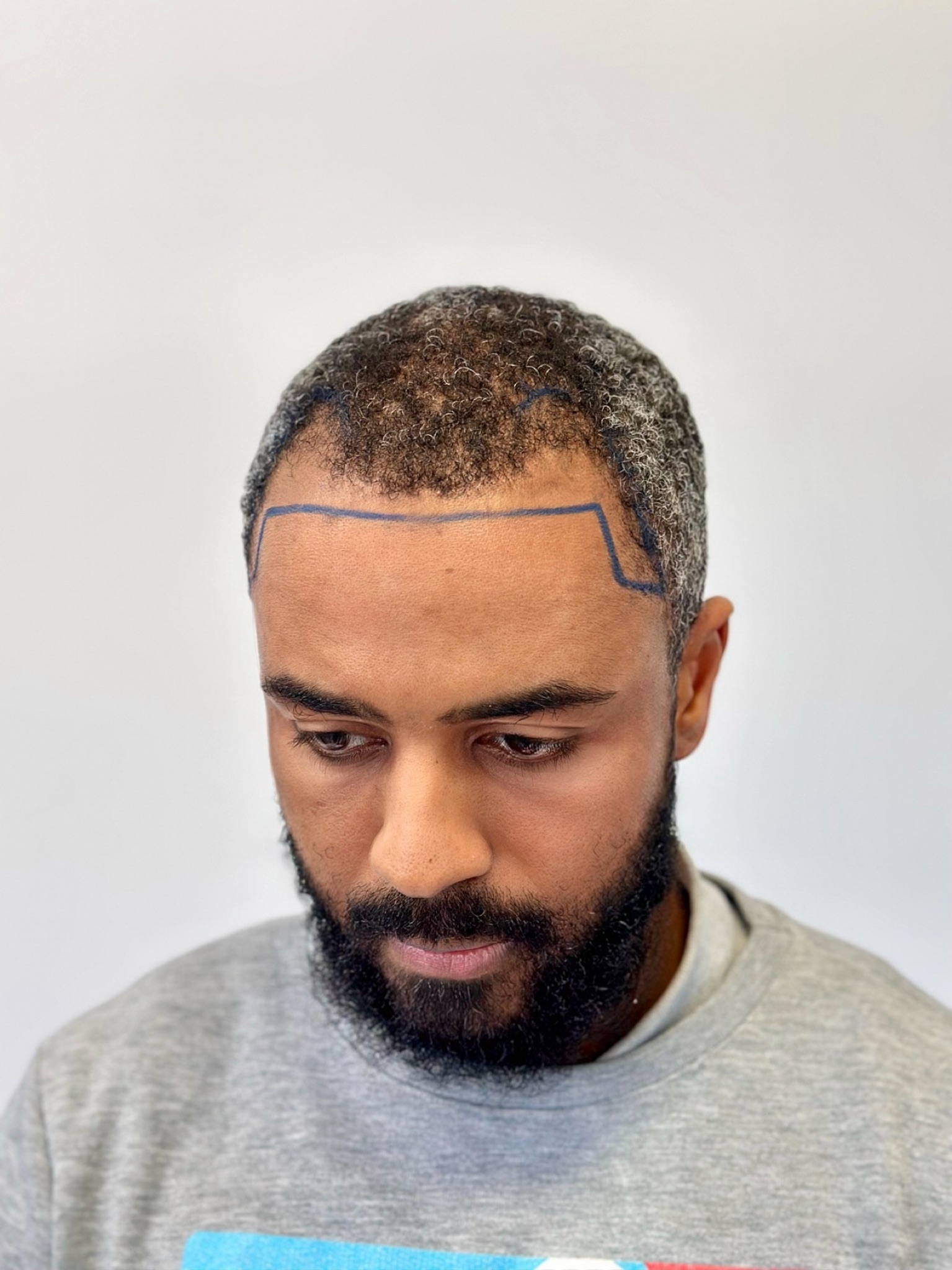
Thus, Afro hair line cannot automatically have European features. The widow's peaks, M-shaped, and V-shaped hairline can look unnatural in Afro patients. One of the main principles of Afro hairline design is preservation of the conventional hairline shape.

The doctor performed his first Afro hair transplant surgery in 2014. During this operation, he faced challenges while extracting the targeted grafts. After harvesting, he performed the design of the hair line in European style for the patient. However, the patient rejected it and asked him to design a traditional straight hair line.

Therefore, the doctor recognized the importance of the characteristic hairline pattern. Since 2014, he has accumulated rich experience in the design of the conventional Afro hairline. However, not every Afro-American patient has to get the straight square hairline. Some Afro-Americans and Jamaicans can have more European hairline features. Therefore, M-shaped or V-shaped frontal contour can be also appropriate. Genetic pattern, cultural characteristics and patient's wishes are important factors.

In Afro hair line, macro irregularities have to be limited generally. However, micro irregularities and single thin hairs are important for natural appearance. Also, the transition zone has to be created, even if it is relatively small.

For Afro women, the temple recession is common. Therefore, the completely straight hair line will look unnatural. The oval hairline is usually preferred. The frontal peak will have more defined oval shape than the widow's peaks.

Postoperative Period

Recovery Period and New Hair Growth

The day after the operation, the scalp is washed in the clinic. The crusting usually disappears within 10 days. The shock loss may appear in the first few weeks. The new hair growth will be visible since 3-4 months[. 6-7 months later, around 70-80 % of the transplanted hair can appear](https://resulyaman.com/how-long-does-it-take-to-see-noticeable-results-after-a-hair-transplant/), though the maturation will take up to 12-18 months.

Safety Considerations

Potential Risks

Potential risks include follicular transection, graft damage, infection, folliculitis, bleeding, swelling, temporary numbness, scarring, keloid or hypertrophic scar formation, poor graft survival, and uneven density. The natural curving of the follicle in Afro-textured hair adds complexity to extraction and requires precise surgical technique.

Hair Type Comparison

Comparison of Afro, European, and Asian Hair

Feature Afro Hair European Hair Asian Hair
Hair Structure Curly both above and below the skin. Usually medium in thickness, although fine hair types can also occur. Straight or slightly wavy. Hair diameter can range from fine to thick. Straight and thick both above and below the skin. It does not have a wavy structure and can grow vertically against gravity.
Extraction Because of its curly structure, a specific punch can be used. Alternatively, the skin can be stretched in the direction of the hair root, allowing a straight punch to be used. Most developed graft harvesting methodologies were designed for European hair characteristics. Therefore, the classical FUE punch extraction can be performed generally. Slight waviness beneath the skin usually does not cause a significant problem. Because of its straight and thick structure, extraction can be performed with the classical punch generally.
Implantation Classical FUE is preferable for very fine and highly curly hair. DHI can be used if the hair is thicker and less curly. DHI is a popular method which showed good results. Although classic FUE can also be performed, DHI is preferred for more successful results. Classical FUE is strongly not recommended. The hair shaft and root are thick and large. The large root has the larger surface area, increasing the chance of damaging the hair using forceps. Therefore, DHI is strongly recommended.
Donor Condition Donor density per cm² is higher than Asian hair but slightly lower than European hair. Donor density is generally moderate. Some people have sparse donor areas, some have higher density. Hair density ranges approximately 65-95 hairs per cm². Donor density is relatively low because of the thick hair structure. Hair density ranges approximately 40-50 hairs per cm².
Typical Graft Number 2,000–3,500 grafts 4,000–5,000 grafts Even if 4,000 grafts can be extracted, the number should remain limited because extracting thick hair from the donor area may create larger scars.
Final Thoughts

Conclusion

As it was stated, the Afro-textured hair transplantation is a technically complicated procedure which should be performed by an experienced hair transplant surgeon and skillful surgical team. The surgeon's experience, the reputation of the clinic, the longer extraction time needed for tightly curled follicles, and the possibility of spreading an advanced hair transplant procedure over two days can influence the total cost.

Since hair transplantation is meant to provide the long-term, potentially permanent result, the choice of the experienced surgeon like Dr. Resul Yaman is important to obtain the natural and successful results. Ultimately, expertise, realistic planning, and meticulous surgical technique are key factors in a successful Afro hair transplant.

FAQs

Frequently Asked Questions About Afro Hair Transplant

Should I shave my hair before the Afro hair transplant?

Before the procedure, the donor area is shaved in order to extract the grafts easily and prevent damage to the follicles. Nevertheless, the recipient area can usually be left unshaved. The method could suit people wishing to hide the transplanted area after surgery.

Is it possible to have dreadlocks after Afro hair transplant?

Generally speaking, it is possible to have dreadlocks after hair restoration, but it is necessary to wait for at least a year after surgery. This allows the transplanted grafts to become fully established and the scalp to recover. Tight dreadlocks should be avoided if they create excessive traction, as repeated pulling may contribute to traction alopecia.

When can I dye my hair after an Afro hair restoration?

It is usually possible to color your hair about 2-3 months after an hair replacement, as long as the scalp has healed completely. Otherwise, chemicals can irritate the recovering scalp. Therefore, it is better to consult your hair surgeon before the coloring process.

Can I use minoxidil after an Afro hair follicles transplantation?

After the surgery, the hair surgeon might prescribe minoxidil in order to protect existing hair and stop further hair loss. Minoxidil cannot be used right away, since the scalp needs to heal. The doctor will decide when to start using minoxidil.

Should I take finasteride after an Afro hair transplant?

In order to protect the hair that is susceptible to androgenetic hair loss, finasteride can be prescribed for male patients. Nevertheless, it primarily protects existing rather than directly improving the transplanted grafts. As finasteride is a prescription medication with potential side effects, you should consult a physician about it first.

Is Afro hair transplant more difficult than transplanting straight hair?

Transplanting Afro textured hair can be technically harder due to curly hair shaft and the fact that follicle itself can be curved under the skin. This curvature can make follicular unit extraction more demanding. Thus, it requires careful selection of the punches, extraction techniques and surgery planning in order to minimize the damage to the follicles.

How much does an Afro hair transplant cost?

The cost of Afro hair transplant depends on the amount of grafts required, degree of hair loss and the technique that will be used. Afro textured hair requires more attention during extraction because of the curved follicular structure. Hence, the consultation is essential in order to estimate the cost of the procedure.

How long does it take to see the result of Afro hair transplant?

Growth of the transplanted hair happens gradually. Newly transplanted hairs will probably shed in the initial recovery stage, then they will grow again. Improvement will develop gradually, taking several months, but complete result will take 12 months or even longer.

Scientific Sources

References

Loussouarn G, El Rawadi C, Genain G. Human Hair Shape is Programmed from the Bulb. British Journal of Dermatology. 2007;157(1):107–113. https://pubmed.ncbi.nlm.nih.gov/15840091/

Umar S. Comparative Study of a Novel Tool for Follicular Unit Extraction for Individuals with Afro-textured Hair. Plast Reconstr Surg Glob Open. 2016;4(11):e1069. doi:10.1097/GOX.0000000000001069. PMID: 27757365; PMCID: PMC5055031. https://pubmed.ncbi.nlm.nih.gov/27757365/

Rogers NE, Callender VD. Advances and Challenges in Hair Restoration of Curly Afrocentric Hair. Dermatol Clin. 2014;32(2):163–171. doi:10.1016/j.det.2013.12.004. PMID: 24680003. https://pubmed.ncbi.nlm.nih.gov/24680003/

Written by
Nazlı Defne Konak
Nazlı Defne Konak – Medical Writer & Editor

Nazlı Defne Konak graduated from the Chemistry Department of Hacettepe University. She worked in a microbiology laboratory and completed doctoral-level coursework in the field. For more than 6 years, she has been working as a medical writer and editor, producing medically accurate and patient-focused content on hair transplantation and cosmetic procedures.

Contact Us