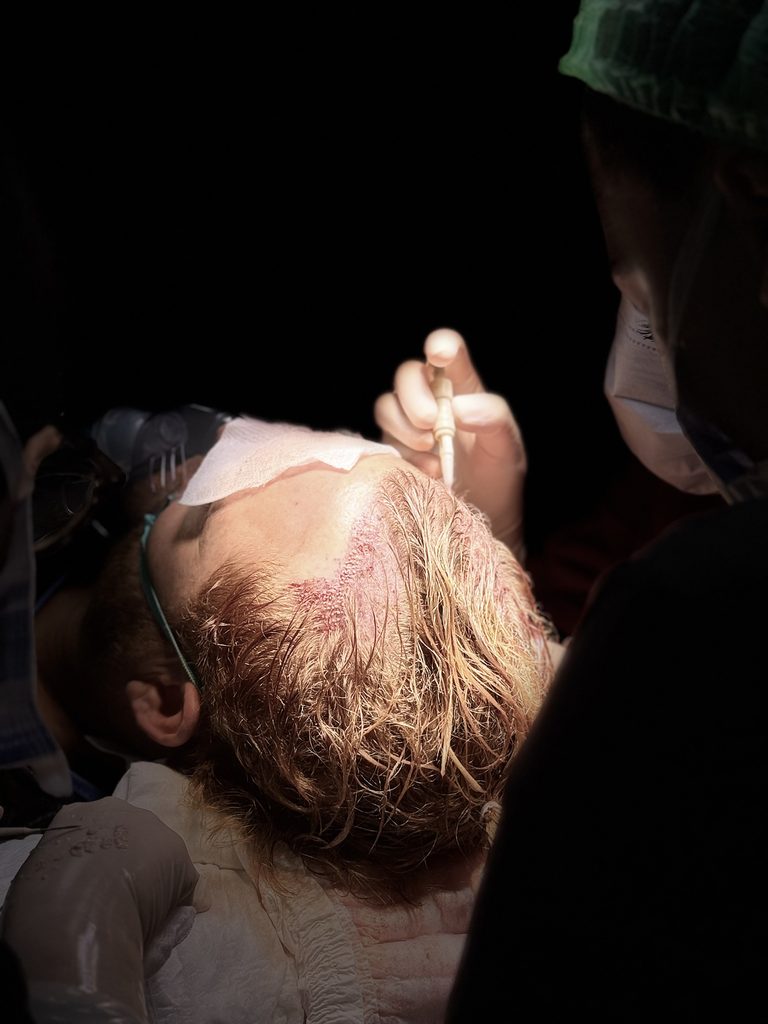
Traditional hair transplant procedures usually involve shaving the donor and the recipient area. Shaving makes follicular unit harvesting and recipient-site preparation technically easier. It also allows the surgical team to assess graft distribution and plan implantation density more clearly.
Recipient site creation in case of already long hair can be quite difficult. In course of the operation, it will be necessary to carefully create recipient sites between long existing hairs while keeping the required density of grafts. With long hair, it can be more challenging to properly prepare and disinfect the surgical site. For this reason, most hair transplant surgeons prefer procedures involving shaving unless there is a special need for an unshaved procedure.
However, some patients strongly prefer to keep their existing hair throughout the procedure. Such patients often include women wishing to preserve their hairstyle without any change after shaving. Some men also avoid shaving because of occupational requirements, social responsibilities, or personal preferences. For such patients, an unshaven hair transplant procedure provides an alternative.
Actually, hair restoration procedures which can be done during one session when hair is shaved can require 2-3 sessions with one-year intervals in case of unshaved procedure. However, both male and female patients tend to select no-shave hair transplants nowadays due to the mentioned reasons.
No -Shave Hair Restoration Extraction Methods
In an unshaven hair transplant procedure, extraction can be performed in two different ways depending on whether the donor area is shaved. In the first method, the donor area is shaved for harvesting, while the harvested grafts are implanted into the unshaved recipient area. In the second method, the donor area is not shaved. The grafts are harvested with the hair remaining long and then implanted into the no-shave recipient area.
Partially Shaved Donor Area Techniques
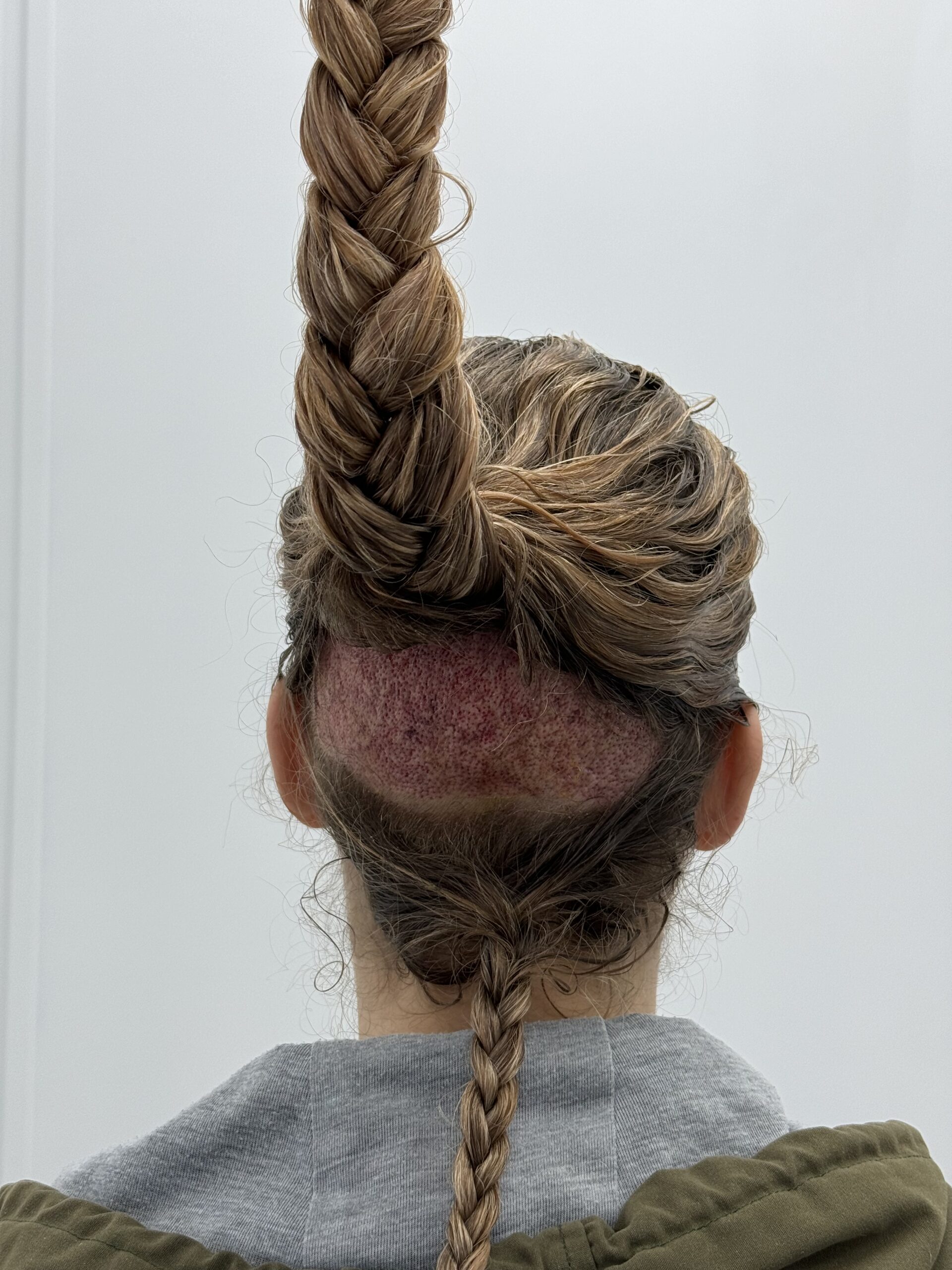 Let us talk about no-shave hair restoration with partially shaved donor area. The procedure can be done using three different techniques. Shaving of the donor area and implantation in the unshaved recipient area was the first developed no-shave procedure. A window-shaped area of the occipital region is shaved and grafts are harvested from it.
Grafts are mostly used in the frontal area, temples and for hair density increase. Long hair is still remaining above, below and on both sides of the shaved window area. Then the hair around the window can be gathered and tied in order to hide the shaved donor area. It is especially preferred by women; however, men with long hair can also use it. In case of patients with long hair, if extraction is done via window-shaped shaved area in the donor region, up to 3,000-3,500 grafts can be extracted. Taking into account the amount of extractable grafts, the width of the occipital region, hair density, hair length and hair strength are to be considered. You can check the before and after hair transplant results of our patients.
The second way of donor area shaving is creating two or three separate shaved lines for extraction of the grafts. According to this technique, an approximately 1.5 cm-wide area of the donor region is shaved towards the temporal area and an approximately 2 cm-wide no-shave area follows. After that, another approximately 1.5 cm-wide area is shaved. In this way, longitudinal strip-like donor areas of the occipital region are created. Therefore, the hair remaining above the shaved lines covers these areas. This method can be performed on both men and women with medium-length hair by creating two or three longitudinal lines. It is not necessary to tie hair separately in order to hide the shaved areas since the medium-length hair itself will hide the shaved strips. In this way, approximately 2,000-2,500 grafts can be extracted via two or three shaved lines. Since extraction is performed via smaller donor area, the number of extractable grafts is smaller.
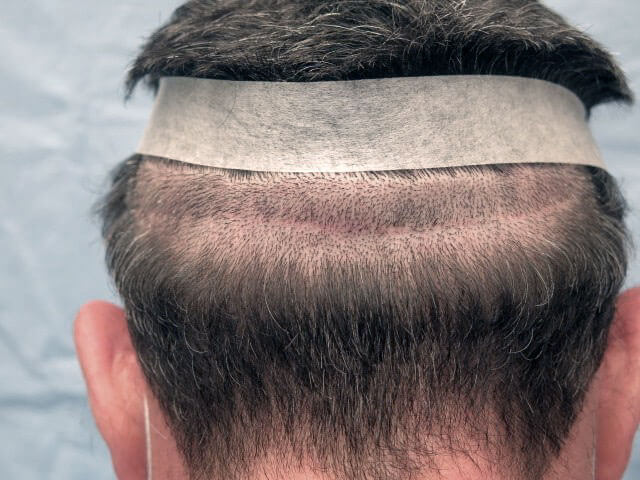
In men, the lower parts of the temporal region and the occipital area can be completely shaved. Grafts are extracted from the shaved areas while the recipient area remains non-shaven. If a high number of grafts is required in the frontal area, some limited shaving of this area can be done. In this case, since bigger donor area is shaved, up to approximately 4,000 grafts can be extracted.
Hair Extraction From Donor Area Without Shaving
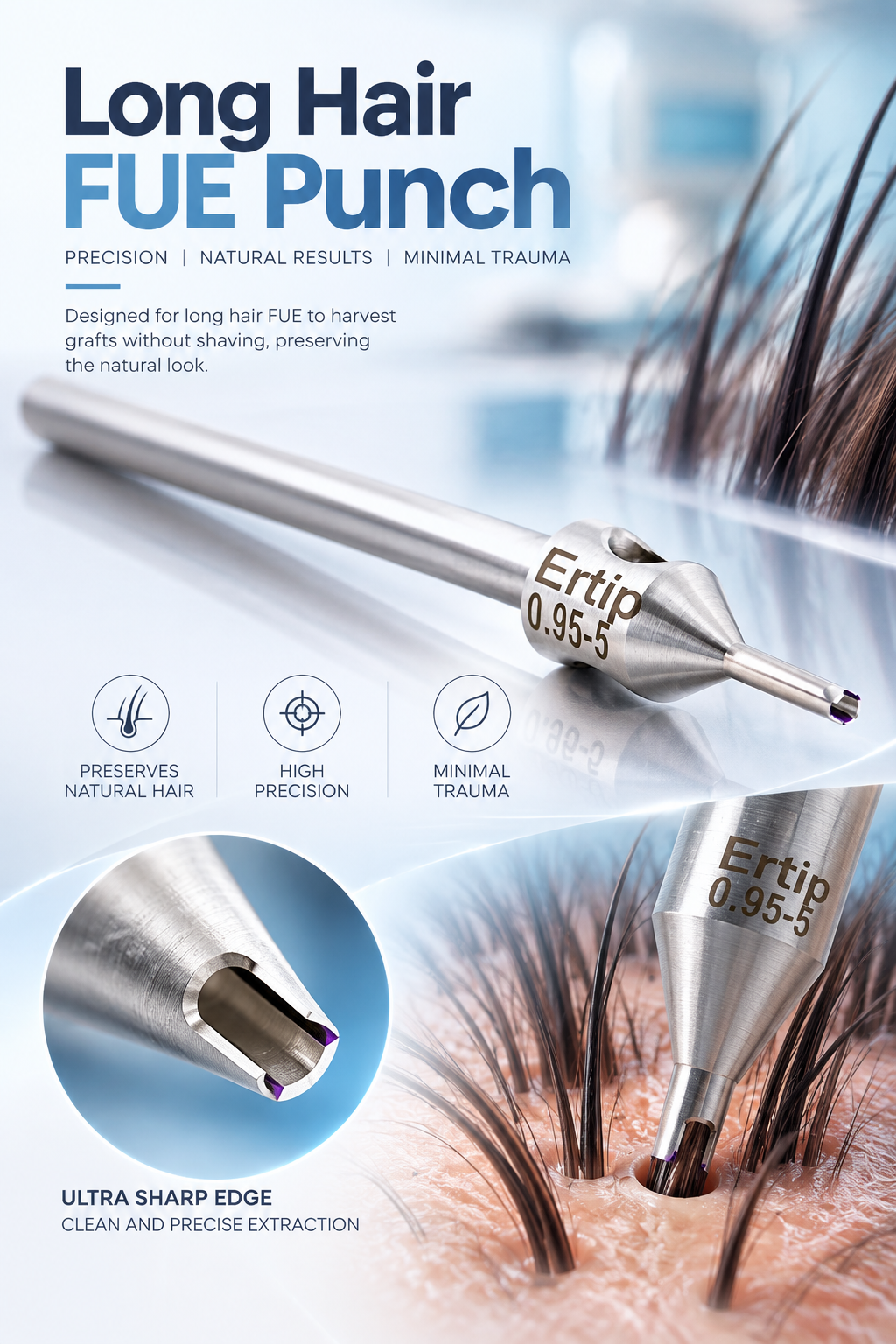 Having talked about different techniques of donor area shaving, let us discuss hair restoration procedure without shaving either donor or recipient area. Technological developments in micro-motors and punches have made extraction of the long hair from the donor area without shaving it possible.
In Turkey, ERTIP – the producer of medical hair transplant equipment – has developed micro-motors for this purpose. Similar studies involving these types of micro-motors have also been conducted in different parts of the world. For example: "Trivellini and colleagues [1] state that innovations in technology have made the long hair FUE technique more accessible to hair transplant surgeons."
Punches used for extraction have a slit on their body. This slit allows the hair shafts to remain long during the process. That is why hair extraction is performed without donor hair shaving. Via this technique, approximately 1,500-2,000 grafts can be extracted.
As a real-world demonstration of how the unshaven FUE technique is applied, we invite you to examine our detailed evaluation of the Matteo Lane Hair Transplant.
FUT Without Recipient-Area Shaving
FUT can also be used to perform hair extraction and implantation without recipient area shaving. In this technique, a thin strip with grafts is extracted from the occipital area without shaving this zone. Further, the grafts are separated from the strip and prepared for implantation. The recipient area is unshaved and extracted grafts are implanted into it. The area where the strip is removed is sutured. In this way, approximately 1,000-1,500 grafts can be extracted.
Unshaven Hair Restoration Implantation
The implantation method depends primarily on the condition of the recipient area. In case of completely bald recipient area, several different implantation methods can be used. They include classic FUE-based implantation, DHI, sapphire assisted recipient site creation or Yaman hybrid implantation.
However, implantation can become more difficult in case of long hairs in the recipient area. If hair density increase should be done among long hair, it will be helpful to use DHI approach with the use of Choi type implanter pen. Creating recipient sites between long hairs and further insertion of grafts with the help of forceps can be demanding. There is also a risk of manipulation of the existing and newly extracted hair during the procedure. That is why implantation method should be chosen depending on the recipient area and experience of the surgeon.
Importantly, the planned graft density in a nonshaven density-enhancement procedure may be lower than in a fully shaved procedure. Existing hair makes recipient-site visualization and graft placement more technically demanding.
If both the donor and recipient areas have long hair, grafts can be harvested without shaving the donor area and immediately implanted into the unshaved recipient area. In procedures where both the donor and recipient hair are kept long, either an implanter pen or forceps can be used. In such operation, the number of the grafts which can be transplanted during one session will not exceed 1,500-2,000.
One of the important applications of the long hair transplantation is eyebrow transplantation. Long hair will enable the surgeon to evaluate the direction, curvature, and orientation of the transplanted hair during the procedure. It is especially important during eyebrow transplant since hair follicles should follow the natural contour and exit angle of the eyebrow. Long transplanted hair will provide the opportunity to shape the eyebrow visually. After that, the hair can be trimmed according to the desired contour. According to Park et al., this technique provides the opportunity to evaluate hair curl characteristics during eyebrow transplantation[2].
The Advantages of an Unshaved Hair Transplant
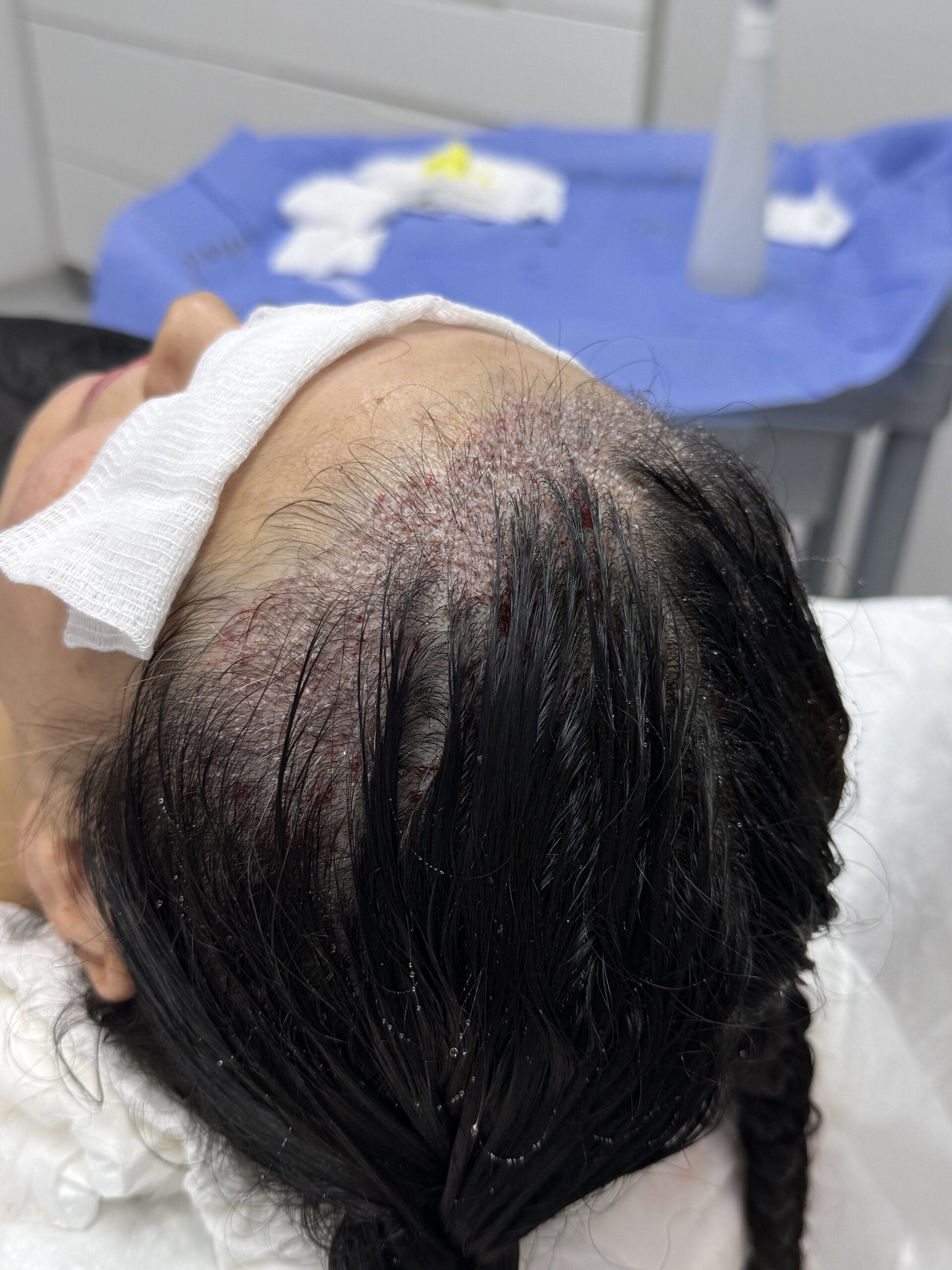
The unshaven hair transplant can provide several practical and aesthetic advantages for the suitable patient.
· Many women do not want to shave their hair due to personal and psychological reasons.
· Some men can refuse shaving of their hair since their occupation, social status or daily routine do not allow a visible donor hair shaving.
· Having hair long will help to camouflage the signs of surgery in the early postoperative period.
· Long hair grafts will provide the opportunity for the surgeon to evaluate hair orientation and curvature during eyebrow restoration.
According to scientific literature, long hair FUE will reduce the immediate signs of surgery by enabling to camouflage the treated areas with existing or transplanted long hair.
What are the Disadvantages of No Shave Hair Transplant?
Despite its aesthetic advantages, unshaven hair transplantation has important limitations.
· The number of extractable grafts can be less than in case of completely shaved procedure.
· The nonshaven procedures are generally more difficult and take more time. Presence of the long hair makes harvesting and implantation more challenging. According to the published research works, the long hair FUE is also described as the technique requiring advanced surgical skills and additional procedure time[3]. 1,000 graft unshaven procedure can take approximately 1.5 times longer than the same shaved procedure.
· If the transplantation is done between the existing long hair, the number of grafts which can be safely placed per cm² can be less than in completely shaved recipient area.
· The procedure which can be done during one session can be divided into 2-3 sessions which will be done with one year intervals between each other. This increase the overall treatment time and financial cost.
· The postoperative period care can be more difficult if the recipient and donor areas keep their long hair. It will require additional attention for washing, cleaning and protection of the treated areas.
· Long hair will make access to the scalp and visualization of the skin more challenging. That is why the cleaning and disinfection become especially important during the procedure.
Dr. Resul Yaman's Approach to Unshaven Hair Transplantation
Dr. Resul Yaman has 18 years of experience in hair transplantation. In general, he does not prefer no shave hair transplantation unless there is a special reason or request of the patient. According to his clinical experience, shaving generally simplifies the procedure. It provides better visualization of the donor and recipient areas, helps harvesting, recipient site preparation and implantation. Furthermore, the time and cost involved for the patient are higher with the unshaven technique. That is why, in case there is no special need for preservation of the hair length of the patient, he recommends traditional shaved procedure.