 WhatsApp
Since alopecia is a very common condition, it is no longer surprising to hear about a new experimental study almost every day. As medical professionals, we follow new developments in our area of expertise and examine experimental studies from a scientific perspective.
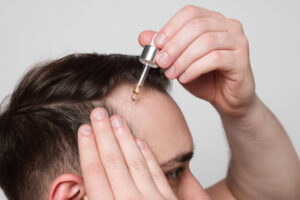
The subject of this blog is a topical hair serum created by researchers at National Taiwan University (NTU) for the issue of hair loss. Experts have reported the preclinical findings of this experimental treatment. The topical agent was made using natural fatty acids. Researchers tested the serum on mice. In the laboratory study, the result was the new hair growth in mice after 20 days.
According to Taiwanese researchers, the drug stimulates fat cells under the skin. In this manner, they believe that dormant hair follicles are reactivated. However, this study has not yet undergone the required clinical trials on human subjects.
Researchers describe the Taiwan hair regrowth study as a hair regeneration and baldness breakthrough, but only at the preclinical stage.
 This innovative research was done in Taiwan by a team of scientists working at the National Taiwan University. The scientists started their research with the objective of finding a simple yet effective solution to reactivate the hair follicles.
The motivation for the research was based on the fact that many people around the world are experiencing hair loss. Moreover, many of the medications used to treat hair loss are not very effective.
Professor Sung-Jan Lin, who headed the research team, studied the role of fat cells in waking up the stem cells of the hair follicles. In this way, the scientists were inspired by the metabolic process.
In the initial stage, experiments performed on mice revealed that some fatty acids stimulated hair follicles and caused new hair growth in a short span of time. Scientists noticed the effect on the hair growth cycle in 20 days in mouse-based hair restoration experiments. The scientist also mentioned that, in the early stage, he noticed the effect of the formula on his legs.
 The science behind this innovative serum is based on the function of subcutaneous fat tissue in the hair cycle. In normal conditions, when there is mild injury or irritation in the skin, fat tissue releases some fatty acids. These fatty acids, in turn, stimulate hair follicle stem cells and cause new hair growth.
The experimental hair regrowth serum acts on stem cell stimulation by affecting cell metabolism in subcutaneous fat tissue. Taiwanese scientists used components such as oleic acid and palmitoleic acid in the formulation they developed to replicate this natural process.
By using these fatty acids on the skin, the bioactive topical solution triggers the fat cells. In this manner, it awakens dormant hair follicles. This potential hair breakthrough serum acts on the metabolic pathways of fatty acids and adipocyte lipolysis in the skin.
However, this mechanism has not yet been ascertained in human skin and in cases of baldness. This is because the physiology of human skin and hair loss is much more complex compared to laboratory settings.
Although this Taiwanese serum has created excitement in the scientific community, it needs to be evaluated carefully based on scientific facts. The research is primarily conducted on animal models and a small number of self-reported effects. This implies that large-scale, double-blind, randomized controlled human studies have not yet been published.
It is important to note that findings in mice do not necessarily translate to direct human hair loss or severe baldness. Until there is concrete evidence of its efficacy in humans, its safety, dosage, and long-term efficacy, it is difficult to term such serums as curative.
Further, findings in mouse models may not necessarily demonstrate similar results in complex conditions such as human hair loss, particularly androgenetic alopecia. This is why, while scientists find such findings an important lead, they are yet to be convinced of its efficacy as a definitive remedy for human baldness.
Experts like this study, but they stress one important thing: scientific proof must be derived from controlled clinical trials on humans. While the study itself represents an interesting approach, it mostly needs extensive clinical studies to assess its safety and efficacy.
Dermatologists agree that hair regeneration can be achieved through genetics, hormones, and the regulation of epithelial stem cells. Therefore, the presentation of the product as a panacea in the form of serum is premature.
Presently, there are various FDA-approved hair loss treatments available in the market. These treatments include Minoxidil and Finasteride.
Both these treatments are safe and effective, and their efficacy has been proved through scientific data. These are commonly used to treat baldness and hair thinning.
Now, let’s briefly discuss two scientific studies that are being talked about.
Ultimately, if these scientific studies are successful, we may be able to see some positive results. These studies may also be used in conjunction with hair transplantation procedures.
While the new hair serum study in Taiwan is quite interesting, the most efficient and scientifically supported method for permanent hair loss is hair transplantation. Hair replacement procedures include the transfer of a patient’s own hair follicles to the balding areas through surgical methods.
Our hair transplant clinic in Turkey has been offering expert hair plantation services for many years. We also have before-and-after photos that accurately demonstrate Dr. Resul Yaman’s 17 years of experience.
In our gallery, it is possible to find an example that corresponds to your level of hair loss. With our health-focused and natural aesthetic philosophy, we can help you treat your hair loss problems.
Although the study indicates the regeneration of hair follicles, the researchers still have to conduct a human study to test the safety and efficacy of the results. If the ‘Taiwan Hair Growth Serum’ study is successful in human clinical trials in the future, this may bring a new dimension to the way people treat their hair. Until then, the proven methods and procedures remain the best options.
It is a research-stage topical serum created by scientists at National Taiwan University, using natural fatty acids, which are believed to stimulate the growth of hair by activating dormant hair follicles. The bioactive topical solution has not yet been tested on human subjects.
Minoxidil is currently the most effective and recognized treatment for hair loss, which is FDA-approved and has been proven to be highly effective in stimulating hair growth.
No, a definitive cure for baldness has not been found. The Taiwanese research is promising but has yet to be tested on human subjects.
The new treatment is a research-stage topical serum that aims to replicate the natural process of hair follicle activation using fatty acids.
 Get Mail!