 WhatsApp
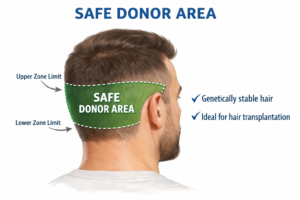
For a hair transplant doctor, the term “Safe Donor Area” is the foundation of the entire surgical procedure. For the patient, it is the area of the scalp where the hair is most resistant to hair loss or baldness. These hairs are used in hair restoration surgery, which is why it is a permanent solution.
When you are thinking of a hair implant, it is important to note that it is imperative to look for a professional doctor who is skilled in hair surgery to make sure that the graft source area is properly utilized. This is because an experienced surgeon will properly plan the surgery while considering the best use of the hair in the supply area.
When you come to Dr. Resul Yaman Hair Transplant Clinic, the donor area, the hairline, and the future hair loss are all taken into account in the hair replacement surgery.
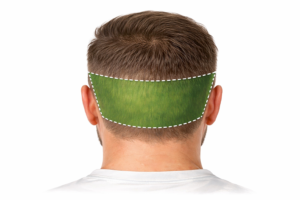 Generally, the safe donor region refers to the hair that is found at the back and the sides of the head. In comparison to other parts of the head, these hairs are less impacted by hormonal influences, particularly DHT (dihydrotestosterone).
The use of follicular units in the safe donor area ensures the longevity of the transplanted hairs. As Dr. Resul Yaman states:
“The success of a hair transplantation is not only about extracting grafts, but also about using a healthy donor tissue in the right way. For this reason, defining the safe donor area, performing density analysis, and evaluating hair direction must be done with great precision.”
In Afro-textured, Asian, and other ethnic hair types, the anatomy of the donor site may vary considerably. In Afro hair, the strands are curly, and the hair follicles also grow in an angled, curved manner under the skin. This makes the hair follicles prone to transection during the extraction process.
In Asian hair varieties, the hair is thicker and straighter. This requires a different approach in terms of the graft size and the incision technique. Therefore, the correct evaluation of the safe donor site for ethnic hair varieties requires extremely high expertise and anatomical knowledge.
In our Turkey clinic, the doctor uses punch Fue planning, and donor density mapping techniques in the examination of the donor area. This ensures the selection of the best and healthiest hair follicles suitable for each patient.
Moreover, the doctor seeks to ensure the acquisition of the maximum number of grafts without causing visible scarring in the donor area.. The examination of the patient’s future hair loss ensures the preservation of the donor area and the prevention of the possibility of overharvesting.
 However, it is not just about determining the number of follicular units that are required. It is also about determining the density and distribution of grafts. When planning the supply area, there are a number of critical factors that are considered by a hair transplant specialist. These factors include patient age, hair color, hair diameter, as well as potential hair loss in the future.
For example, patients with thin hair generally require higher graft density to achieve adequate coverage. Therefore, it is essential that there is a proper distribution of graft with utmost care.
Planning becomes even more important for patients with ethnic hair. Afro-textured hair often provides better visual coverage with fewer grafts. But improper harvesting methods can cause permanent loss of grafts and over-harvesting.
But even with a dense graft, the natural hairline and frontal area design becomes the primary concern for Asian hair type. This implies that the design of the harvesting site should always be individualized based on the type of hair that the patient possesses.
The homogeneous harvesting of the supply zone, as well as avoiding an over-harvesting situation, may help in the maintenance of the graft reserves for the next sessions. Our doctor creates individualized treatment plans by analyzing hair characteristics and donor capacity using digital devices.
In some cases, especially when the individual suffers from advanced baldness (for example, Norwood 7) or has had previous hair transplant surgery, there may be insufficient hair grafts. In these situations, doctors consider alternative graft sources.
The first alternative for hair grafts is beard hair. This hair is thicker and more effective for covering the balding area. Moreover, hair transplantation to the crown or other areas requiring more hair density often uses beard hair as an alternative hair supply area.
Another graft source that may be considered is hair obtained from the chest region. However, these hair follicles should only be considered by experienced surgeons since the hair growth cycle is different.
While examining the beard donor site, Dr. Yaman makes proper planning to ensure the aesthetic look of the face and avoid scarring. Hence, while answering the question ‘Who is the most experienced hair transplant doctor in Turkey?’, the answer is often among the top ones.
The main focus of Dr. Yaman’s approach to hair plantation is the individual planning of the procedure and the aesthetic look of the results. The design of the hairline is based on the facial characteristics of the individual, age, and genetic pattern of hair loss.
While performing a crown hair transplant, the area is generally larger. The planning of the graft in this region should be according to the natural pattern of hair loss and the direction of the surrounding healthy hairs.
An eyebrow hair transplant requires extremely precise placement of micro-grafts. For eyebrow transformation, fine-caliber hairs from the nape (back of the neck) are most commonly used as the graft source. When necessary, hair from behind the ear or a limited number of beard grafts may also be considered.
However, because beard grafts are thicker, they must be selected very carefully and used only in areas where they will not disrupt the natural look of the eyebrows. It takes a lot of skill to create an eyebrow of symmetrical shape, following the natural direction of hair growth.
In summary, the safe donor area is one of the most essential elements of the success of a hair transplant procedure. The properly defined area for harvesting is of the utmost importance for the long-term survival of the grafts and a pleasing aesthetic outcome. The specialist relies on highly advanced imaging procedures, density mapping, and individual risk assessment for his planning of the donor area.
In the case of ethnic hair, such as Afro or Asian hair, it is of the utmost essential to have an accurate assessment of graft reserve and harvesting performed by experienced surgeons. Due to Dr. Yaman’s attention to detail in hairline, crown, and eyebrow transplantation, the outcome of the transplant procedure is planned not only for the present but also for the future.
For those interested in a hair transplant in Turkey, it is essential to understand the importance of the safe donor area.
 Get Mail!