 WhatsApp
In the context of the hair transplantation process, one of the most important aspects of the success of the procedure is the donor area. In this regard, the permanent hair area is considered a limited biological resource, and if this area is not used appropriately, there will be permanent aesthetic problems regarding the scalp, density, and design of the hairline.
This is the reason why the question ‘Can Donor Area Be Used Twice?’ is considered one of the most frequently asked questions by patients who are interested in the hair replacement process. It is ‘yes,’ but it depends on the medical expertise, donor potential, and long-term use of the first procedure.
In the process of the extraction, with the proper planning, it is possible to have the second hair transplant and the third hair transplant without compromising the healthy hair.
At Dr. Resul Yaman Hair Transplant Clinic in Istanbul, there is a question that patients ask frequently. ‘How many times can you take hair from a donor area?’ This question is closely associated with the genetically resistant hair potential, graft survival rate, and biological limitations of hair follicles. Now, let’s discuss this issue in detail.
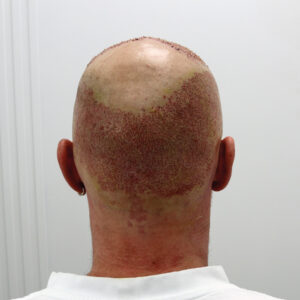 Donor area management is a technical and medical procedure that has a direct impact on the success of the operation. Each surgeon has their own distinct medical philosophy that is based on their own experience, aesthetic sense, and planning capacity. The type of punch sizes used during the harvesting process, the distribution, and the number of grafts extracted have a direct impact on the future condition of the occipital area.
If improper techniques are used, it may result in overharvesting, which may cause thinning, scarring, and reduction of the donor area. This may have a direct impact on the availability of grafts, which may be required in the future for further procedures. Though problems like this may be camouflaged with SMP and longer hairstyles, the best way to deal with this is to avoid it.
In this context, Dr. Resul Yaman has emphasized the fact that it is very important for patients not to choose the clinic depending upon the price and availability of grafts. Instead, the involvement of the doctor, the training of the medical team, and the scientific basis of the hair transplant procedure should be carefully evaluated.
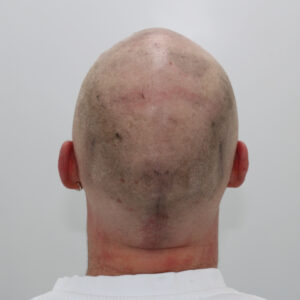 A successful hair restoration surgeon does not only treat visible bald areas but also anticipates future progressive hair loss. During the consultation, the harvested area must be evaluated with the possibility of a second transplant or repeat operation in mind. This is the basis of personalized donor planning.
Each patient has different hair characteristics, grafts to be harvested, scalp, and hair density. Therefore, standardized extraction strategies are not suitable. When grafts are harvested homogeneously and strategically, the occipital region remains reusable for future procedures. Aggressive harvesting during the first session may make a second hair transplant procedure impossible.
At our clinic, we create extraction area planning individually during the medical examination. When patients review before-and-after results, they clearly see how we preserve the donor areas.
We restore the hairline and treat baldness using transplanted hairs with an optimal graft survival rate.
There is no standard number of hair implants operations that can be performed on an individual. The number of operations is purely dependent on individual factors, including the amount of balding, genetic structure, availability of the donor area, and individual aesthetic expectations.
Some individuals may be satisfied with the results of the first operation, while others may require multiple sessions of hair replacement operations. Research has indicated that 52% of patients feel that their baldness challenge is solved with the first session. However, some may feel that the condition can be improved, hence the need for multiple sessions of hair replacement operations.
We manage the extraction area carefully to protect graft quality. This approach allows us to plan multiple surgical sessions safely.
The celebrity cases have clearly shown us the need for strategic graft extraction. The case of Tiger Woods clearly illustrates the need for hair loss stabilization. We have seen poor results when surgeries are conducted too early. The case of Tiger Woods clearly illustrates the need for proper donor site planning. We have seen poor graft viability in the occipital area.
There is also a lot of speculation that other prominent individuals like Elon Musk, Joe Buck, and Wayne Rooney have undergone multiple sessions. This clearly illustrates that even celebrities have to undergo multiple sessions for effective results.
We are not concerned with the number of operations the patient receives. Rather, we are focused on maintaining the transplanted hair as well as the follicular reserve.
While the idea of hair plant surgery is typically thought to be a one-time procedure, there are several medical and aesthetic reasons why a multi-stage approach is sometimes needed.
In advanced cases, Dr. Yaman provides two options: two consecutive-day procedures or two separate procedures at least one year apart. This allows safe distribution of grafts while preserving donor capacity and ensuring optimal results for transplanted grafts.
There are various elements that determine the suitability of the patient for second hair plantation results and the planning of an operation. First, the donor site must have enough healthy available genetically resistant hair. Proper healing and stabilization of the results of the first hair implants are vital before the second session.
Stabilized hair loss, availability of grafts, strong hair qualities, and high graft survival rates are important in the success of the second session of hair plantation. It is possible to plan a second operation, even after a large session involving a high number of grafts. All of these, including age, quality of the scalp, and health, form part of the assessment process.
When the surgeon puts all these factors together, he will be able to plan an up transplant strategy through professional planning. By taking a long-term approach, the expert will be able to focus on maintaining the donor area while promoting natural hair growth.
This way, we will be able to provide our patients with long-lasting results without compromising any further treatment.
 Get Mail!