


Female Hair Transplant: Techniques, Candidacy, Results and Long-Term Outcomes
Hair transplantation is no longer a procedure performed only for men. Today, many women undergo surgical hair restoration to improve hair density, restore a receding hairline, or reduce the appearance of a big forehead. Female hair loss may present in several patterns, including diffuse thinning, bitemporal recession, temporal hairline recession, and widening of the widow's peak[1].
Female hair loss is never associated with complete baldness as it happens with male pattern baldness. Instead, it is accompanied by a gradual reduction of the hair density. Thus, the careful diagnosing of hair loss is an essential pre-condition before performing a hair restoration surgery.
In many cases, women with hair thinning caused by medical conditions (hormonal disorders, postpartum, menopause, thyroid disease, iron deficiency, and others) need only to use the medical treatment. Surgical hair restoration should be carried out only when the underlying cause was diagnosed and the hair loss stopped.
When the surgery is necessary, female hair transplantation requires a different approach from male procedures. Hairline design, donor area management, graft distribution, and density planning must all be individualized to preserve existing hair and achieve a natural, feminine appearance. With the right choice of the candidate and careful planning of the procedure, women can achieve natural results with significant improvement of hair volume.
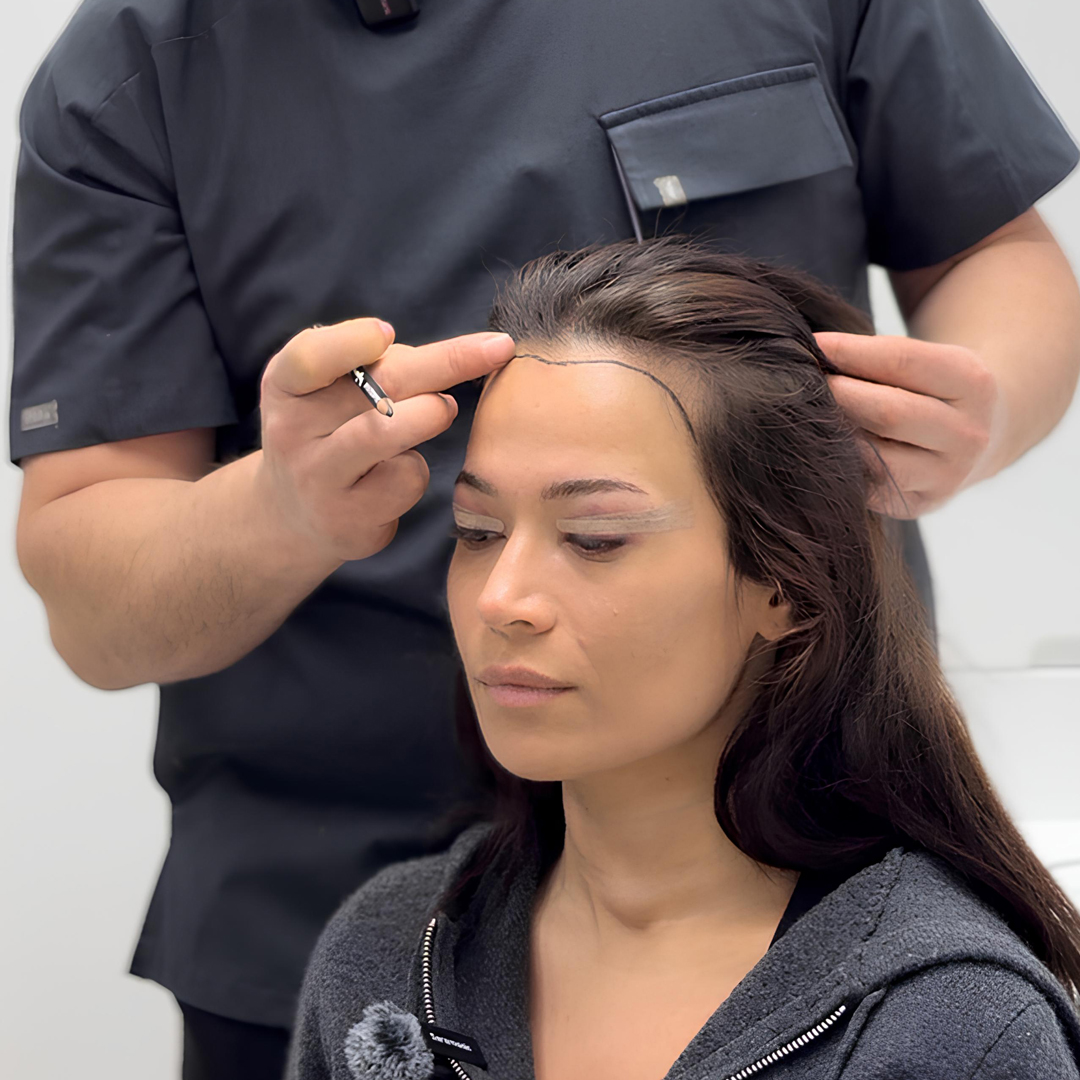
What is Female Hair Transplant Surgery?
Female hair transplant is a surgery aimed to correct the pattern of hair loss in females with transplantation of healthy hair units from a donor site to the recipient site. The surgery is especially useful in the cases requiring female pattern hair loss transplant.
The surgery is most ideal for patients who have a steady donor hair density but experience a receding hairline or traction alopecia. The choice of the hair transplant technique depends on the characteristics of a patient's hair, the pattern of hair loss, and the quality of the donor area.





Is Hair Transplant Suitable for Women?
The answer to that question depends on the donor area's stability, hair characteristics, and the level of density that can be created. A qualified hair transplant surgeon should evaluate the patient and define whether she is eligible to perform the surgery.
Who are the Best Candidates?
Stability of the donor area's density (70-80 folc/cm²) - Sufficient hair volume is necessary to ensure the safe harvesting from the donor area without the risk of over-harvesting.
Hair loss and hairline recession easily identifiable – Recognizable areas of hair loss allow planning the distribution of density and the harmonious blending of the transplants.
Hormonal disorders should be examined and treated – The surgery should be considered only when the hair loss persists despite the appropriate treatment and stabilization.
The non-progressive hair loss – The stable pattern of hair loss reduces the risk of the hair restoration becoming out of balance with the native hairs in the future.
No active inflammatory scalp disease – Healthy scalp is necessary to ensure the optimal graft implantation and healing.
Donor Area Analysis
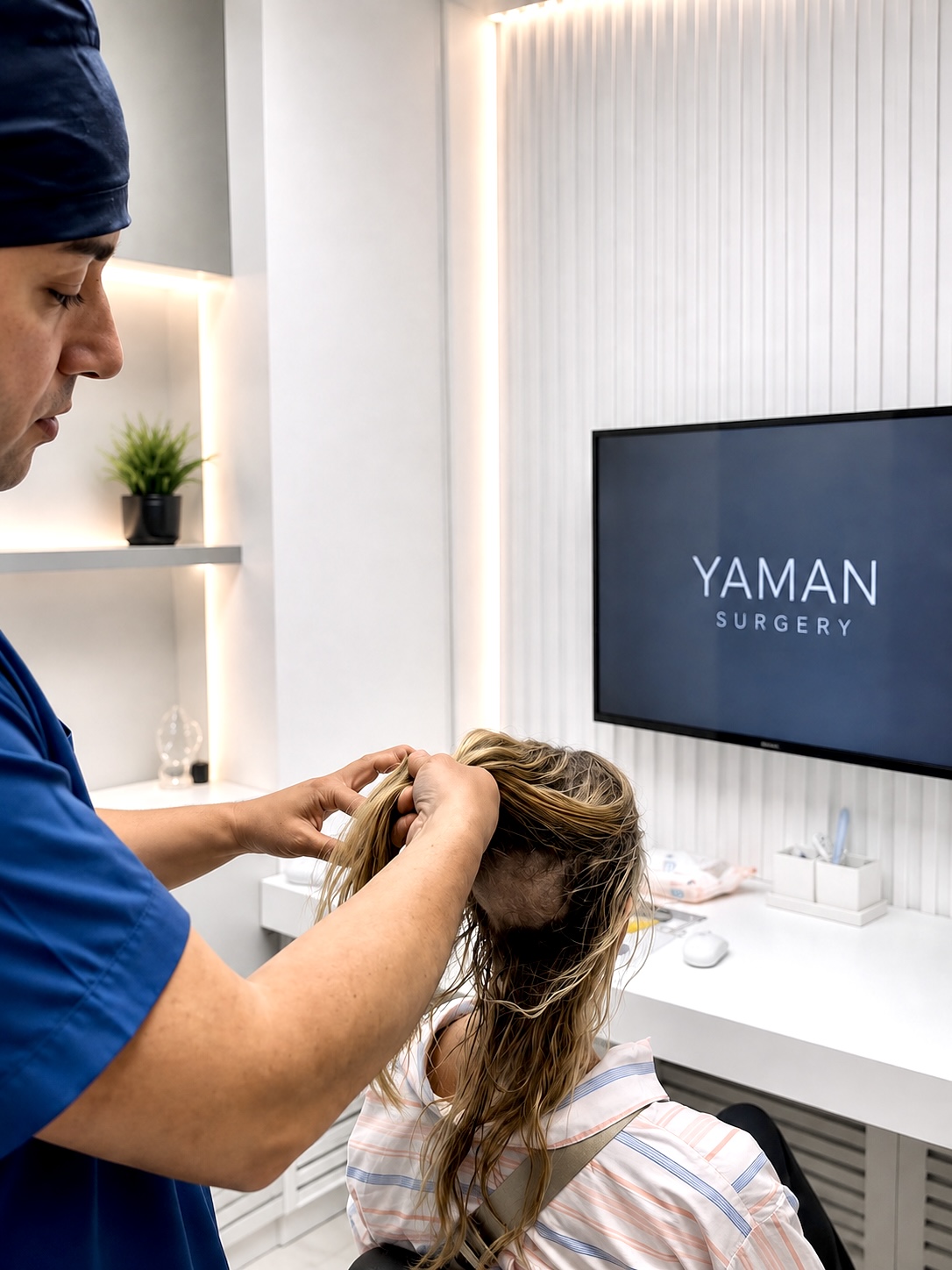
The donor area in women usually has lower follicular density in comparison with that in men. Additionally, the process of miniaturization can affect the donor site that is considered as the traditionally safe one.
Also, the fact that many women choose non-shaven hair transplantation limits the possibilities of the surgeon to harvest the grafts. That is why donor planning becomes especially important to obtain the sufficient number of grafts while maintaining the cosmetic appearance of the donor area. Therefore, a thorough trichoscopic analysis should be done before the hair transplant.
Pre-Surgical Trichoscopic Evaluation of Donor Area
The evaluation includes the following:
Evaluation of follicular unit density – This will help the surgeon to harvest the grafts without disturbing the scalp coverage.
Rate of miniaturization – This helps to define the signs of androgenetic changes in the donor area.
Hair shaft thickness – The thicker hair shafts ensure the better visual volume after implantation. In case of very thin hair shafts, the recipient area should be planned appropriately with the higher density of grafts per square centimeters. Sometimes, the required density cannot be achieved through one-stage surgery, and multi-staged hair restoration should be planned. In addition to hair shaft thickness, the high percentage of naturally occurring multi-hair follicular units is preferable since they ensure better volume.
The rate of anagen-to-telogen ratio – This will help the surgeon to assess the stability of the growth cycle and the risk of shedding.
Structural characteristics in ethnically diverse hair types – The curved follicles, increased dermal curvature, and unique exit angles observed in Afro-textured hair require specific surgical planning and technical awareness, particularly regarding afro hair transplant considerations.
Safe Donor Zone in Women
In the case of some selected female patients, when additional grafts are required, especially in the case of the frontal hairline recession or extensive frontal thinning, the crown area can be considered as the supplementary safe donor zones sources after the careful trichoscopic evaluation of the donor stability.
Consequently, the donor assessment in women is different from that in men since the long-term stability of the crown should be evaluated individually and not taken for granted.
Overharvesting should be avoided especially in the case of diffuse thinning since this can affect the aesthetic appearance of the donor site and may be not reversible in the future.
Age Considerations
Although there is no exact age limit, the transplantation surgery is usually recommended only after the pattern of hair loss became stable. In young patients, the conservative planning is preferred in order to maintain the donor resources for future procedures.
Unlike male pattern baldness that is usually progressive for decades and can be more extensive during 30s and 40s, hair loss in women is different. Most women do not progress in hair loss over time because of aging, unless there are some underlying factors like hormonal disorder, medical conditions, or other causes of hair loss.
The hair thinning may start after the menopause due to the hormonal changes [3]. That is why age alone is not the key aspect in female hair restoration. Instead, the stability of hair loss, the underlying medical condition, and the possible hair loss progression should be defined before planning the surgery.
In clinical practice, the female hair restoration usually requires the conservative graft distribution due to the prevalence of the diffuse thinning.
Female Hair Transplant Techniques
The most appropriate transplantation technique for women depends on the several factors, including the style of women's hair, the willingness to shave the donor area, the number of grafts required, the pattern of hair loss, and the desired density.
The procedure in women is different from that in men because it usually involves preserving of the existing hair and achieving the increase of the hair volume in the thinning area. So, the implantation technique is as important as the extraction one.
FUE for Women (Follicular Unit Extraction)
Follicular Unit Extraction (FUE) is one of the most frequently performed extraction techniques in operation. Usually, the whole donor area does not have to be shaved. Instead, the surgeons shave a small rectangular piece in the occipital donor area where the required grafts are extracted.
After the procedure, the surrounding long hair naturally covers the shaved area, so that it becomes hardly visible. The main advantages of FUE are the absence of linear scar and the quick healing since the follicular units are extracted individually.
Advantages of FUE
Minimal scarring
Faster recovery
Only partial shaving of the donor area is needed
Suitable for most female hair transplant candidates
For women with high forehead or hairline recession, when increasing density is not the primary goal, the implantation can be done using the conventional forceps after the creation of the recipient channels. However, as described below, DHI based techniques allow to achieve a better precision and graft protection especially when implanting between existing hair.
FUT (Strip Method)
Although FUT (Follicular Unit Transplantation) is performed less frequently today, it can still be used in some selected female patients.
The advantage is that the shaving of the donor area is not needed. Instead, the surgeons remove the narrow strip of scalp with hair follicles from the back of the head and close it with the stitches. The female patients who wear their hair long can have the hidden donor area during the recovery period without shaving.
But the FUT has some disadvantages. First of all, the number of grafts that can be harvested is lower in comparison with FUE, and the patient gets the linear donor scar. If additional operations are needed in the future, multiple strips should be harvested, so that multiple linear scars appear. That is why FUE has replaced FUT in modern hair transplant for women.
Sapphire FUE
The Sapphire FUE procedure is performed similarly to the classic FUE. The only difference is that the recipient sites are created with the help of sapphire blades instead of steel blades.
This technique is especially good for women who are having the hairline restoration since it allows to create natural angles and directions. Nevertheless, as described below, the DHI techniques can be more appropriate since they allow to protect the grafts and perform precise implantation especially when working between existing hair.
DHI for Women (Direct Hair Implantation)
Direct Hair Implantation (DHI) technique is considered one of the most suitable for women, especially for those who have long hair or diffuse thinning. Using the implanter pen, the surgeons can perform the direct implantation of the grafts between existing hair without the previous creation of the recipient incisions.
Such approach ensures the protection of the existing hair follicles and the precise implantation in the area where hair volume needs to be increased. That is why the DHI technique is especially efficient for diffuse hair loss and for the women wishing to avoid the shaving of the recipient area.
"One of the main reasons why DHI is so popular in the women is that it allows implantation of the grafts into the thinning areas without cutting the existing hair, helping to reach the required density and protect the surrounding follicles."
Our Approach: The Yaman Implanter Hybrid Methodology
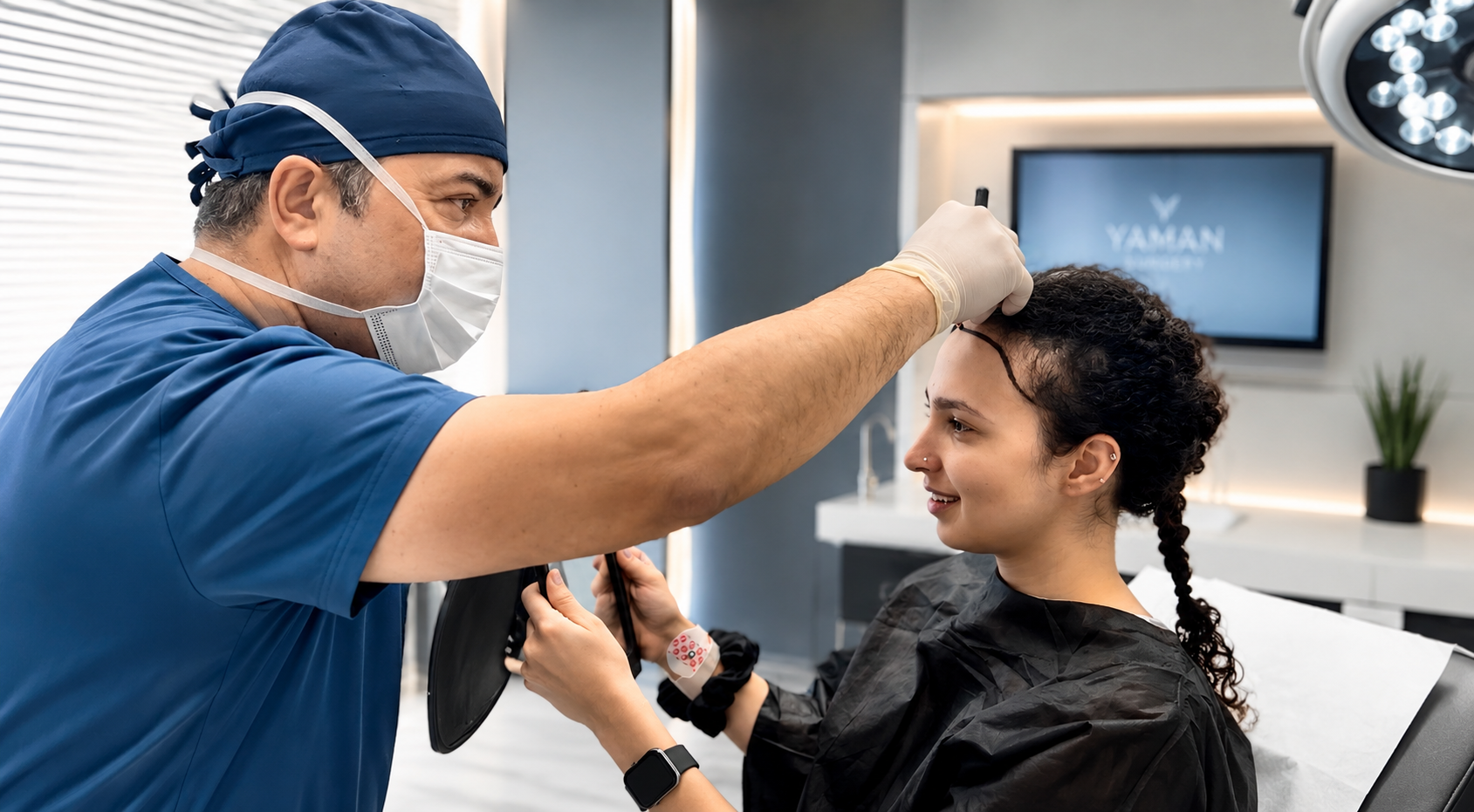
At Dr. Resul Yaman Hair Transplant Clinic in Istanbul, the female hair transplantation is performed with the help of the Yaman Implanter Hybrid Methodology, which combines the Sapphire Blades, DHI, and Yaman Implanter according to the needs of different scalp regions.
In the female patients, the achievement of the natural-looking result depends mostly on the reproduction of the correct angle, direction, and transition along the frontal hairline and temples. Planning of these areas is crucial because even minor deviations can affect the harmony of the face.
For the frontal hairline and temporal areas, where the angle and direction of the hair is crucial, the surgeon creates the recipient sites using sapphire blades. It allows precise control of the graft orientation and creation of the soft and feminine frontal contour.
For the mid-scalp, where the main aim is the increasing of fullness, the grafts are implanted directly using the sharp Choi implanter pen without the preliminary creation of recipient incisions. It helps to perform the implantation between existing hairs while minimizing the trauma to the native follicles and preserving hair volume.
Combining these two techniques, the hybrid methodology is aimed at optimizing both the natural appearance of the frontal contour and the density of hair.
Hairline Design for Female
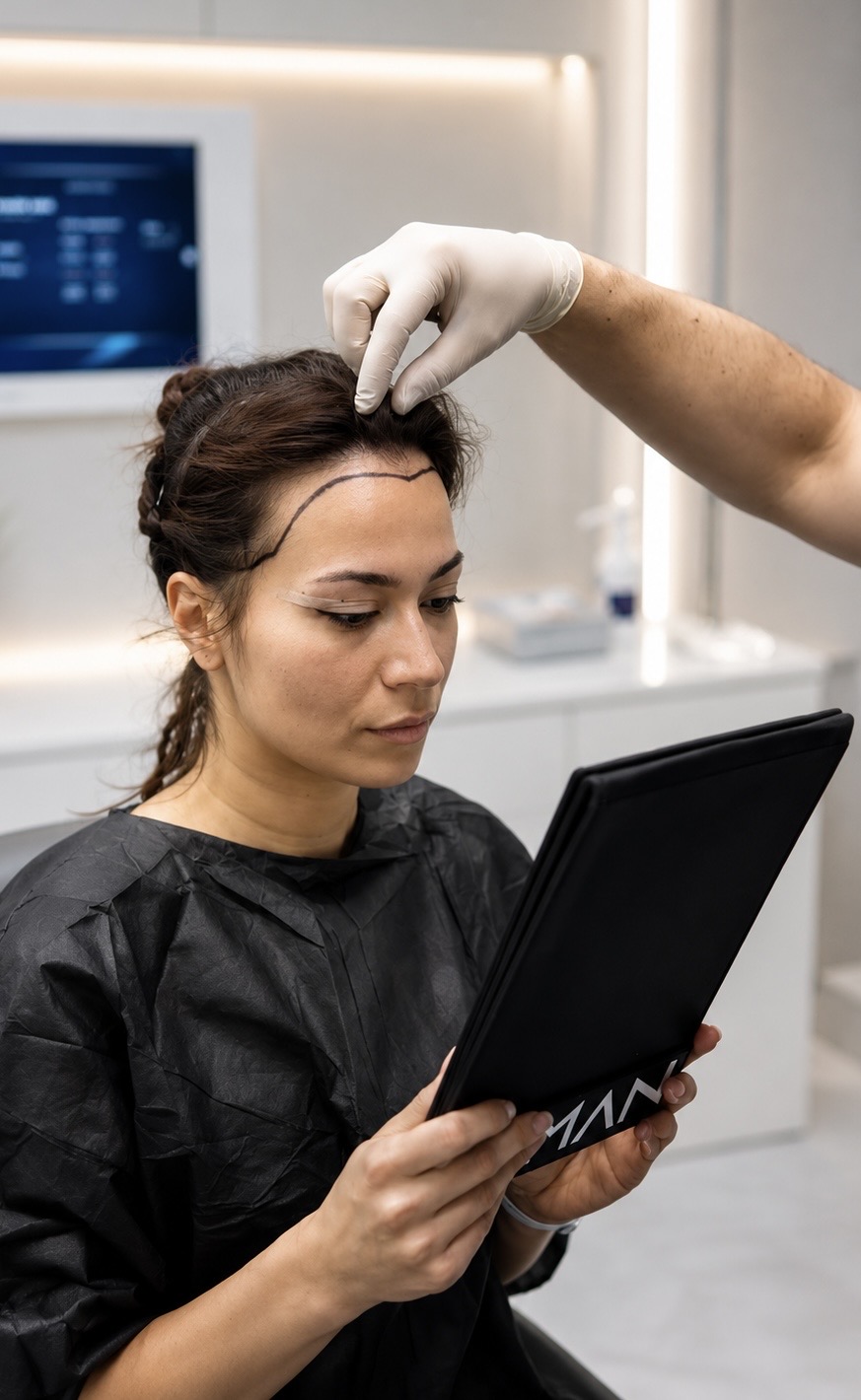
Hairline design is one of the crucial steps of women's hair restoration. In contrast to the men, the women usually have different hair styles including loose hairstyles, ponytails, buns, and center or side parts. Since the frontal line is usually highly visible during the everyday and social activity, creation of the natural and feminine appearance is crucial.
Many hair transplant clinics in Turkey treat mainly the male pattern baldness and, therefore, have rich experience in the design of the masculine frontal contours. That is why some female patients get the hairline which is placed too high and has masculine features.
So, the women intending to perform hair replacement should carefully choose the clinic which has the rich experience in the hairline restoration in women. Studying of before and after photos will allow to define whether the clinic creates the natural-looking feminine hairline.
Natural Hairline Form
The anatomy of the hairline in the women is significantly different from the male one and requires a different approach to the surgery.
The main characteristics of the natural female hairline include:
In comparison with the men, women usually have smaller forehead, the temporal recessions (widow's temples) are less pronounced, and the temporal hairline extends with a lower and flatter angle.
Another important characteristic is the transition zone. Women naturally have higher concentration of fine or baby hairs at the frontal edge of the hairline. The gradual transition of fine hair to the thick terminal hair occurs farther behind the hairline than in the men. Reproducing this seamless transition is one of the key aspects of achieving the undetectable result.
That is why the surgeons mainly use the single hair follicular units for creation of the frontal hairline.
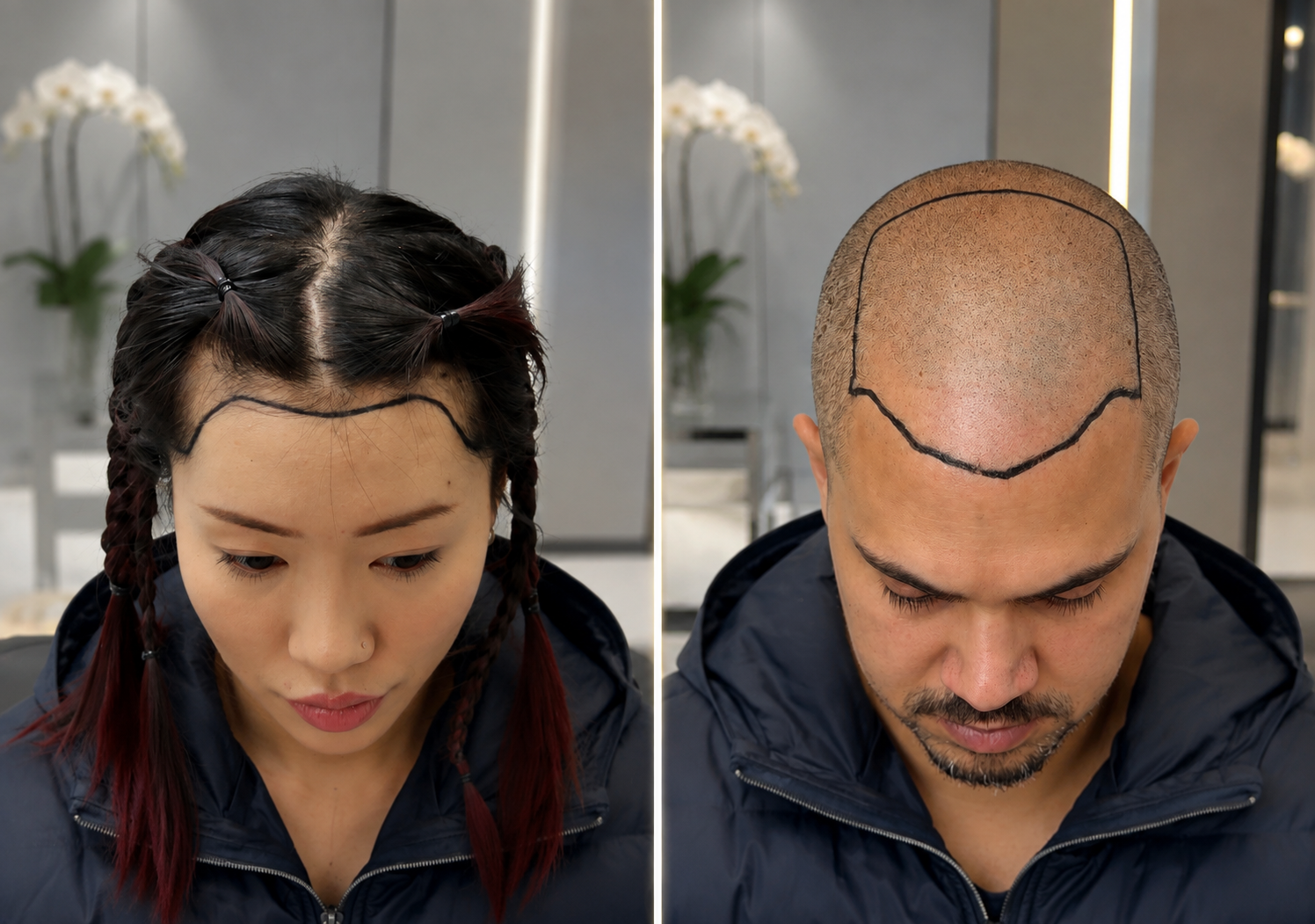
Female Hairline vs. Male Hairline
Although both procedures involve the hair restoration, the principles of hairline design in women and in men are different.
| Female Hairline | Male Hairline |
|---|---|
| Usually is quite stable during the whole life of the woman. | Usually recedes with age, especially starting from 20s, with progressive temporal recession and frontal thinning. |
| Has wide and gradual transition zone with higher amount of fine hairs. | Has narrower transition zone. |
| Needs more single-hair grafts for the recreation of the delicate frontal edge. | Requires fewer single-hair grafts because the transition zone is generally shorter. |
| The temporal angles are flatter, and hairstyles can include bangs and center parted hair. | The temporal angles are steeper, and hairstyles are usually brushed backward. |
| The hair shafts are usually thinner, and density planning is needed. | The hair shafts are thicker, and, therefore, provide bigger visual density per graft. |
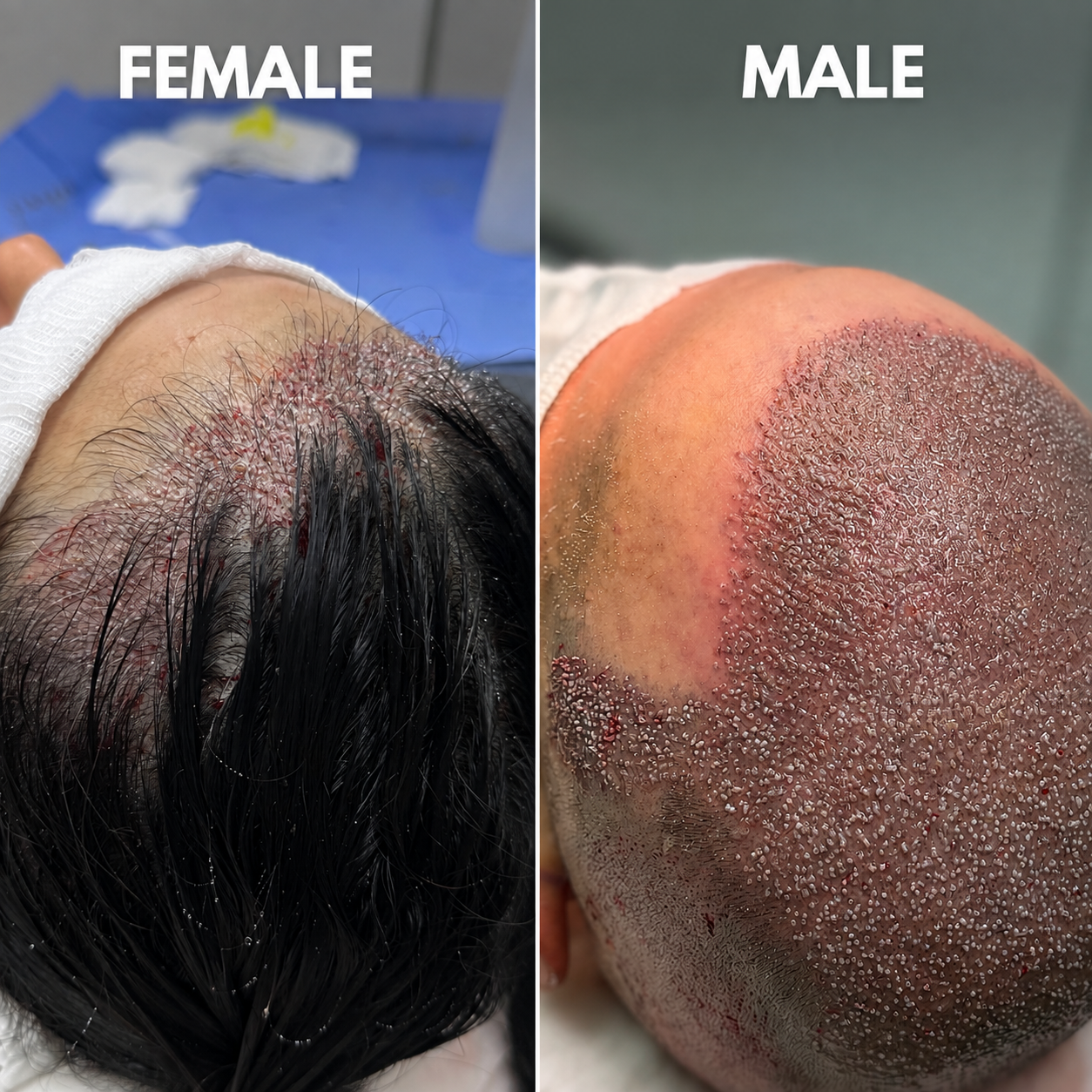
Hairline Design According to Ethnicity
The ethnic origin of the patient influences the design of the hairline because of the differences in the facial proportions, hair structure, and aesthetic preferences.
Afro women – The hairline design can be somewhat sharper while remaining natural as long as the natural curl pattern and follicle direction are preserved.
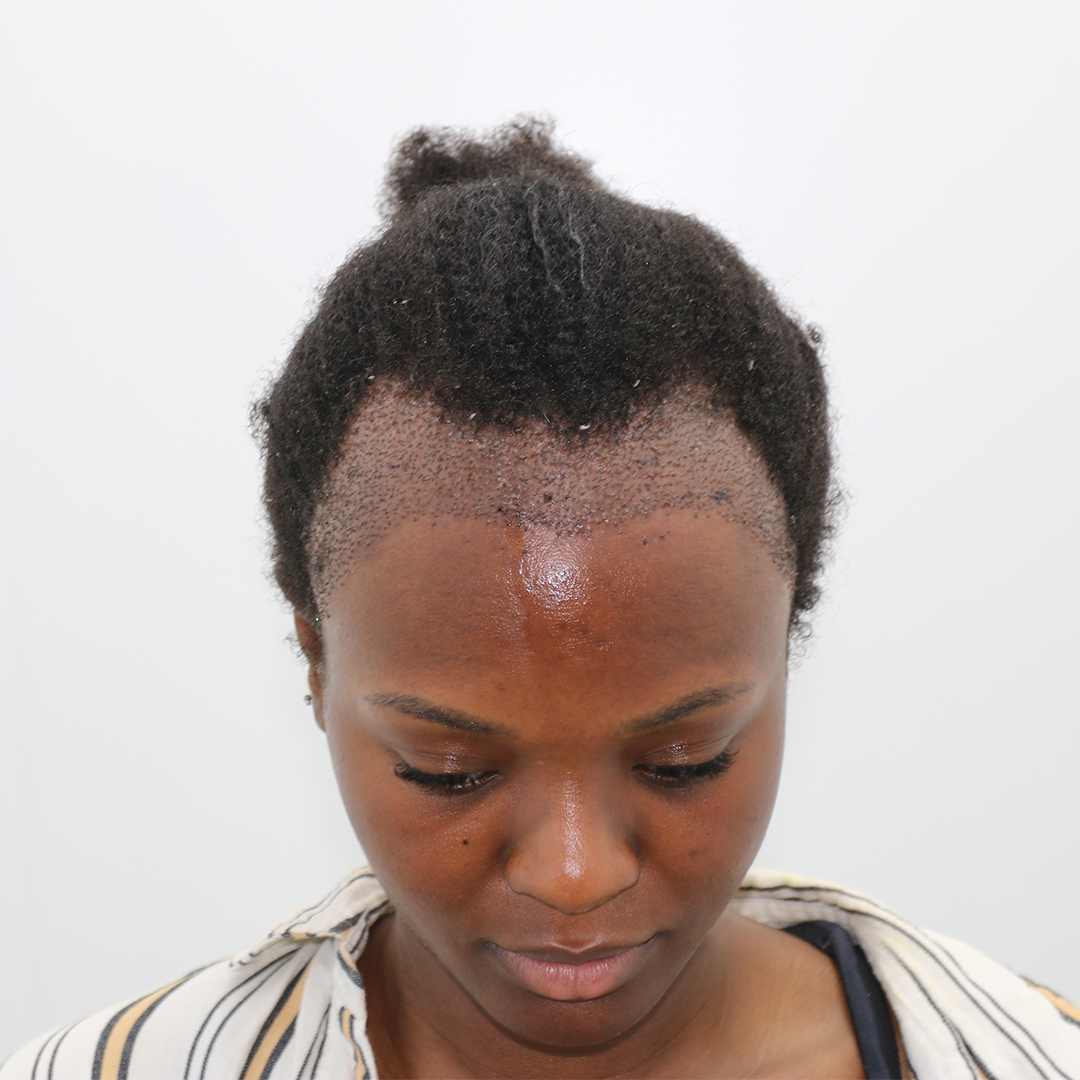
Asian women – The temporal regions should be designed more compactly in order to reflect the typical facial proportions and hairline anatomy.
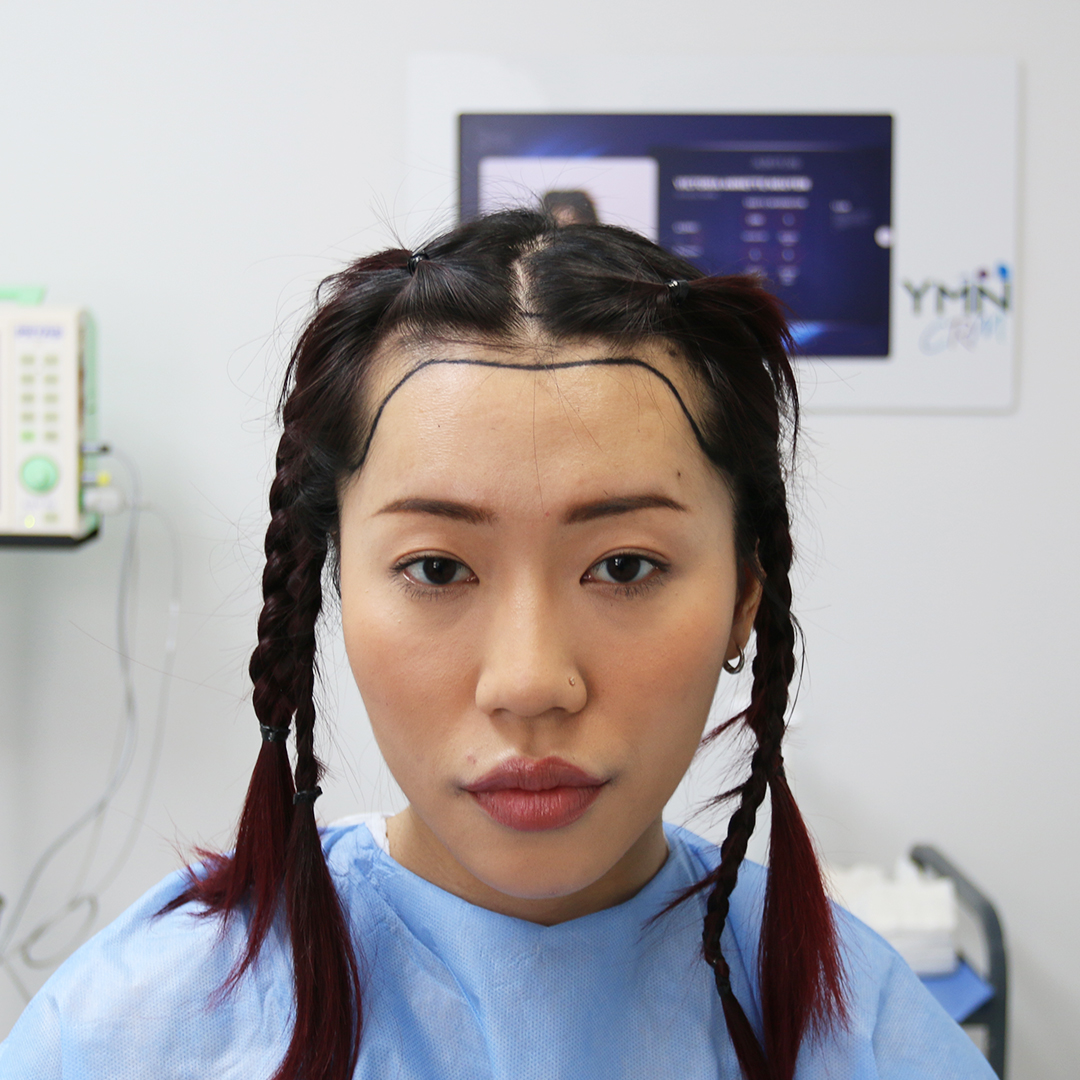
Middle Eastern (Arab) women – Some patients prefer the hairline which looks lower and creates the impression of small forehead while maintaining the natural facial harmony.
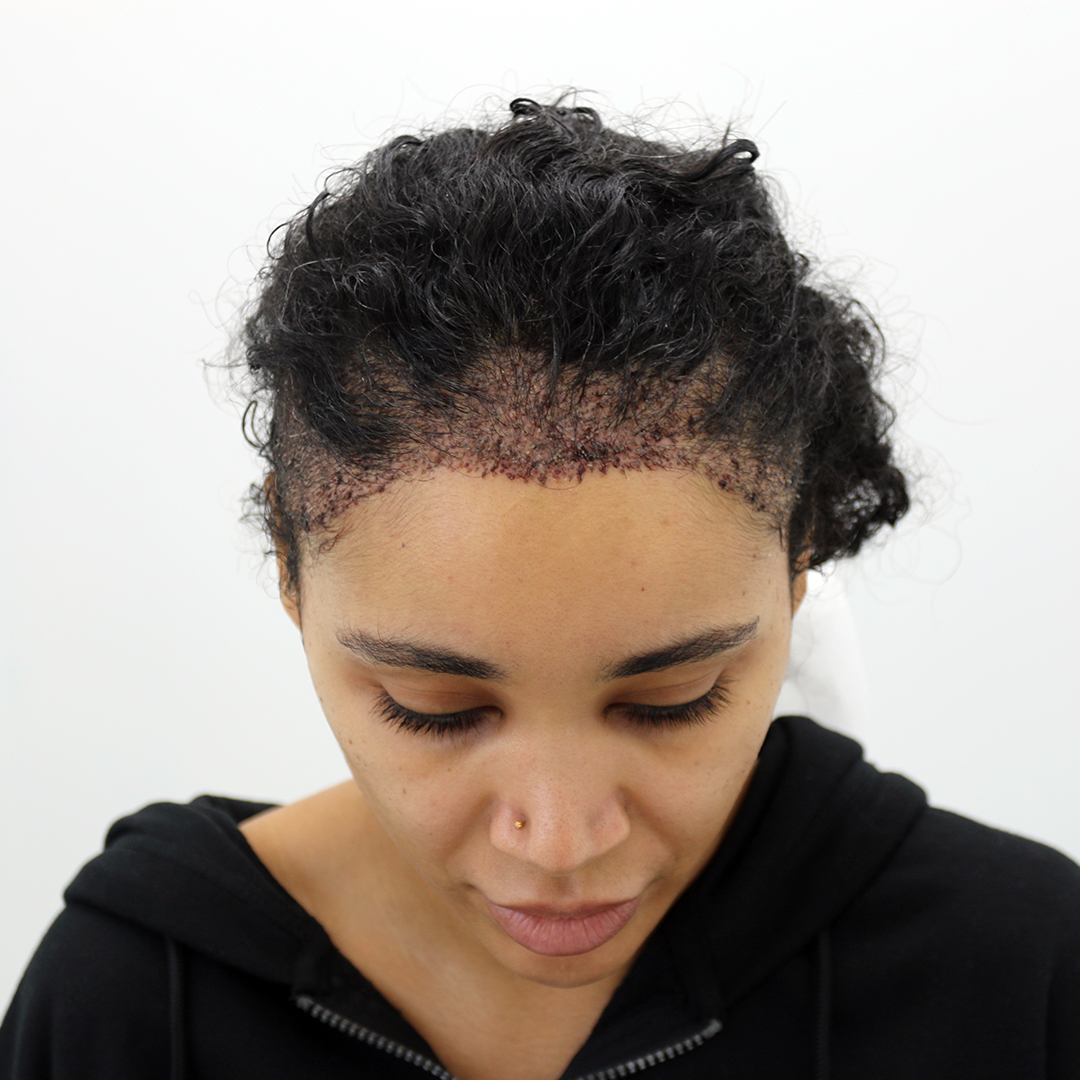
Female Hair Transplant Recovery and Growth Timeline
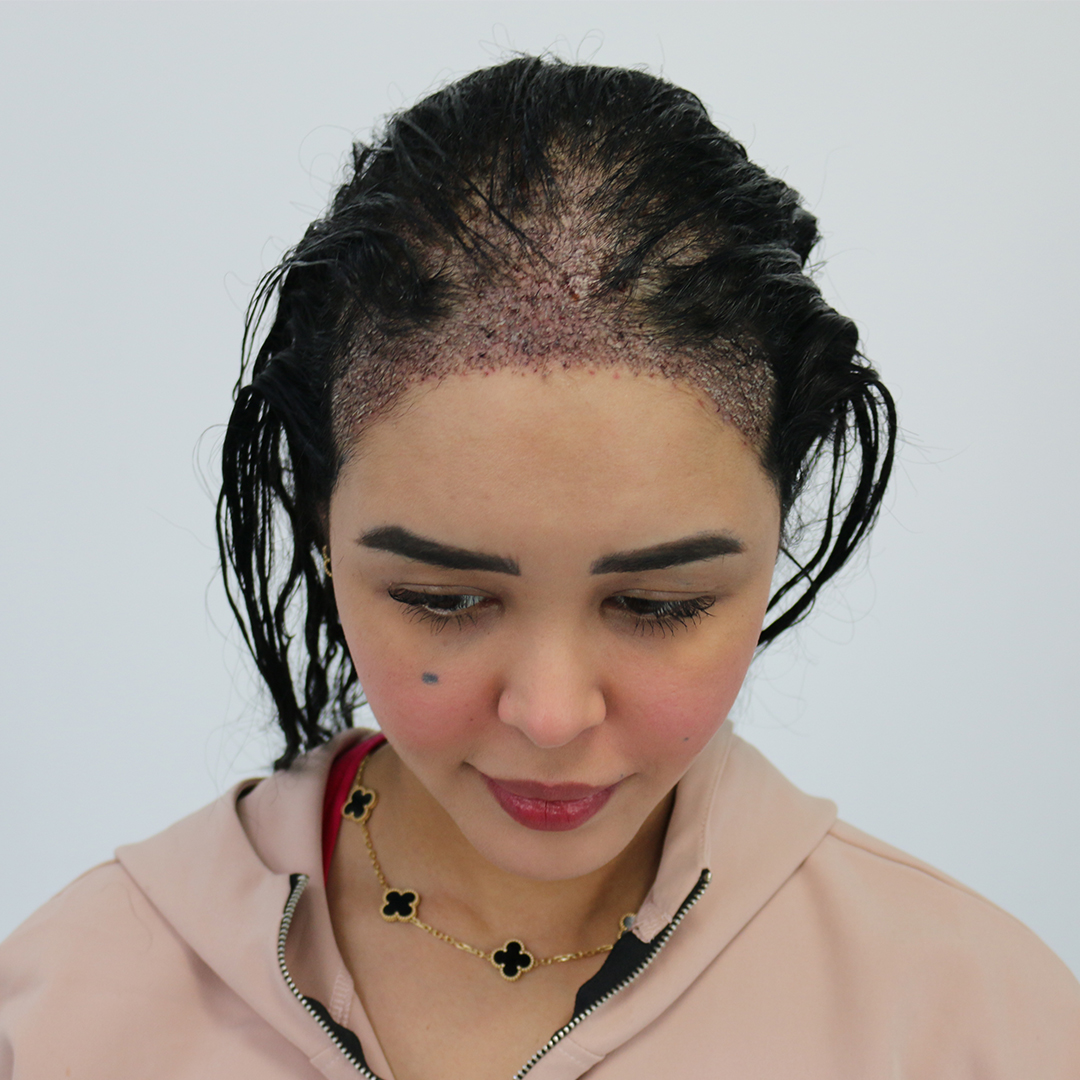
The process of recovery after the hair restoration in women is similar to that in men. But since many women have the unshaven hair restoration, their existing long hair usually conceals both the recipient and shaved donor area during the recovery period. The concealment of the post-surgery state with the help of the hair allows women to resume their normal life faster.
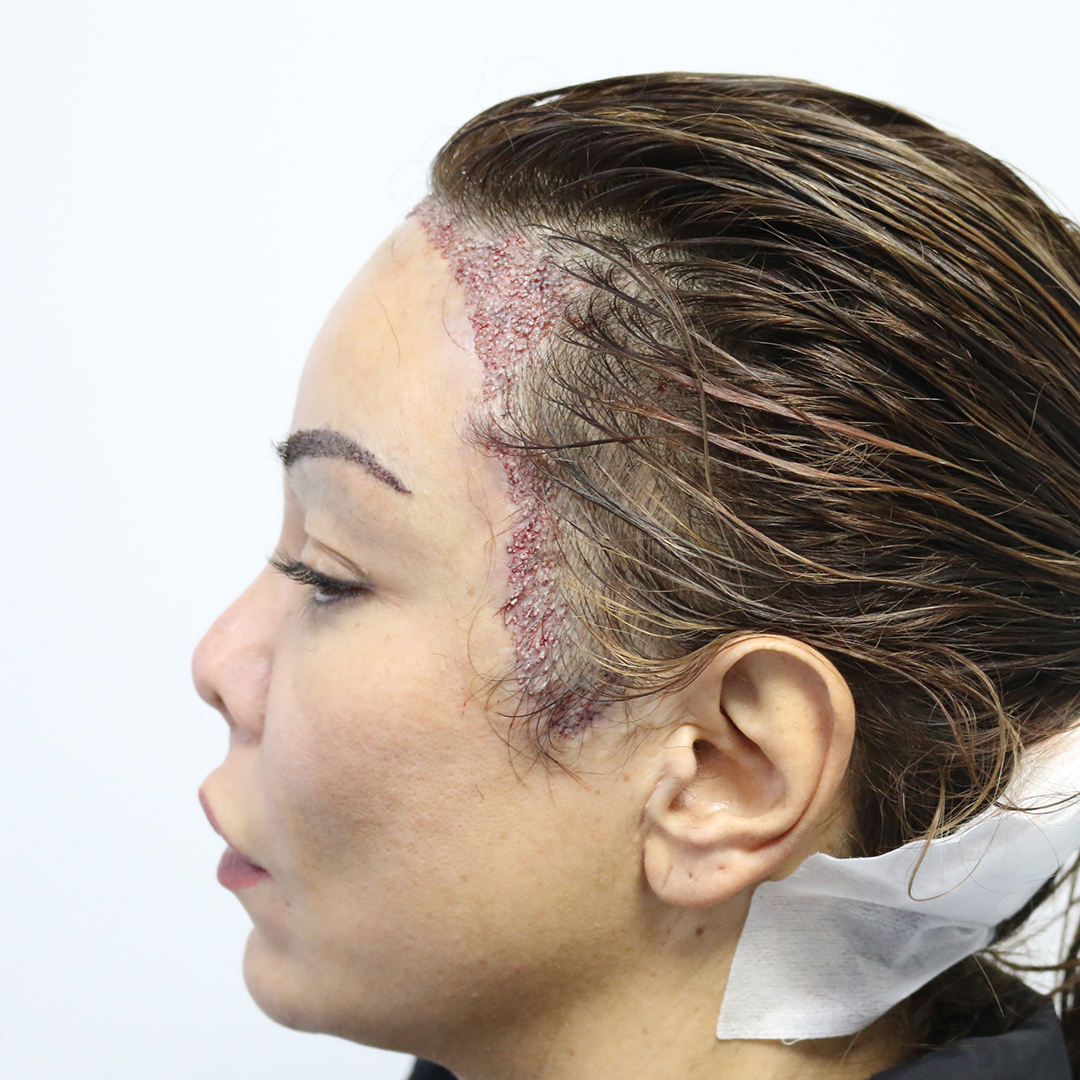
The process of recovery in women has a predictable biological character, but the speed of the recovery can be influenced by various factors including vascularity of the scalp, number of the transplanted grafts, individual recovery ability, and hormonal effects. Understanding of every step of the recovery allows patients to set realistic expectations and to realize that the temporary hair loss is a normal phase of the hair growth cycle, not the sign of the treatment inefficiency.
First 2 Weeks
There will be some redness and some crusts (or scabs) around the transplanted grafts due to the healing process. This redness and scabs will fade away spontaneously in 7-10 days.
There will be some swelling of the forehead due to the accumulation of the fluid during the procedure. This swelling will disappear in a few days.
The transplanted follicular units (grafts) will be anchored to the surrounding tissue and will establish microvascular connections which are essential for the survival of the grafts.
By the end of the second week after the procedure, the small rectangular shaved area in the donor region will begin regrowing hair and will become barely visible. At this stage, most women can confidently have their hair down without exposing the donor area.
Strict adherence to post-operative care instructions during this period will greatly influence graft survival.
Shock Loss Phase (Weeks 3-6)
There will be a temporary shedding of the transplanted hairs due to the shock of the surgical procedure, causing the transplanted hairs to enter the telogen (resting) phase all at once.
3-6 Months
The growth of new hairs starts once the follicles go into the anagen (growth) phase again. At this point, the hair growth may be fine, light-colored or slighty unruly in direction before eventually becoming normal and thick later on. The thickness of the area would also increase due to more follicles becoming active.
9-12 Months
The final density, thickness and maturity of the transplanted follicles are achieved as they grow through their whole cycle. This allows the transplanted and existing hairs to completely blend together, giving you a long-lasting aesthetic result.
Before and After Results
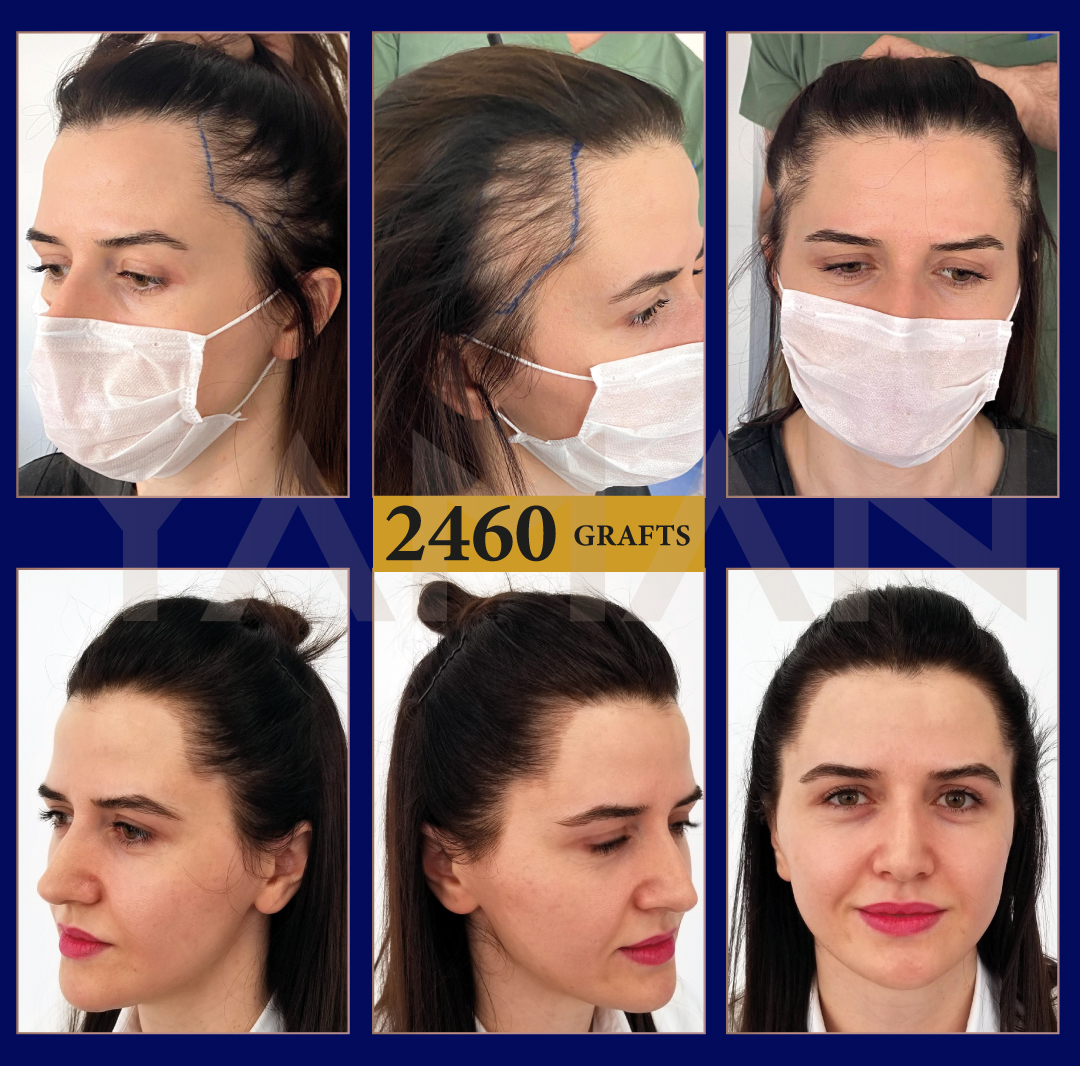
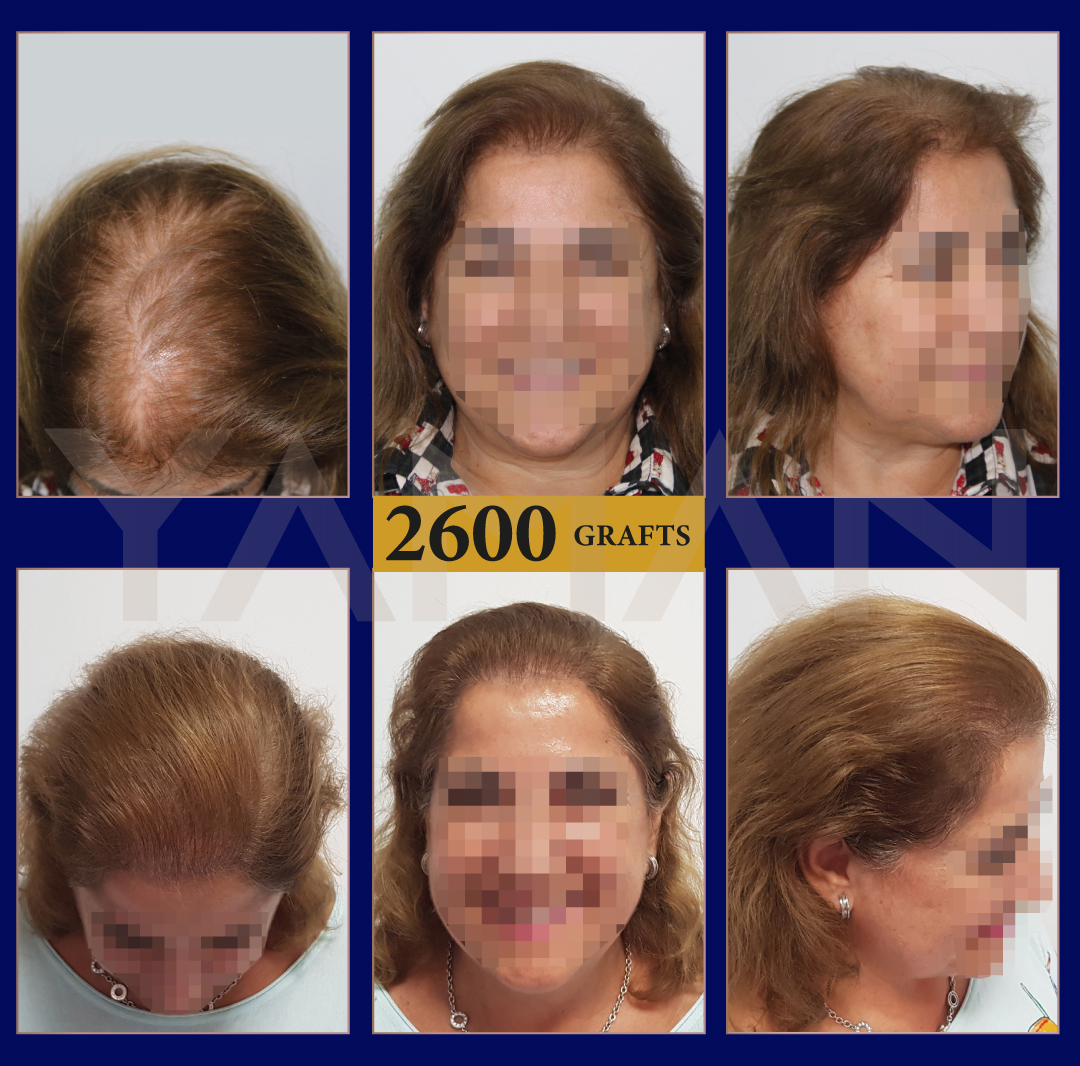
The success of the operation in females depends heavily on accurate surgical planning and donor site stability. Generally, the before and after hair transplant results show obvious improvements in the degree of frontal density, part line and the contour of the front following the evaluation of the donor site stability.
Surgeon Involvement
The quality of the final result is also highly influenced by surgeon involvement throughout the treatment. Frontal frame design is one of the key factors influencing the before and after results in women. Designing the natural female hairline demands precise planning of the shape of the frontal border, transition zone, angle and direction of hair growth[5].
Implantation Technique
Moreover, the transplantation technique is also very important, especially if the grafts need to be implanted between the native hairs while preserving them.
Hair Shaft Assessment
Similarly important is the preoperative assessment of the hair shaft diameter and the proportion of multi-hair follicular units in the donor site. Females with fine hair shafts require a special approach in recipient site preparation compared to males.
Density Planning
If the recipient site density is calculated using the graft per square centimeter method typical for the male patients, the transplanted hair may give insufficient visual density even with good graft survival rate. Because of this, surgeons need to personalize the graft distribution according to hair shaft diameter and follicular unit composition.
Clinical Observation
Standardized medical photos taken 6-12 months following the procedure usually show an improvement in hair thickness and scalp coverage. These clinical observations are backed up by actual patient results, showing the importance of proper graft positioning, angulation and long term donor site stability.
Female Hair Transplant Cost and International Pricing
The cost of surgery depends on the complexity of the procedure and service package. Below are the key aspects that influence the price:
Type of Surgery
The use of new techniques for implantation influences the cost of the surgery.
FUE, DHI, SapphireNumber of Grafts
The number of grafts has a direct influence on the cost of the surgery.
800–2500 GraftsClinic Experience
The level of experience of the surgeon and the clinic's infrastructure influence the price standards.
Location
The international cost differences can be quite significant.
All-Inclusive Medical Package
Female hair transplant in Turkey is usually done using the all-inclusive medical package rather than per-graft pricing. The package may include airport transfer, hotel accommodation, city transport, surgery, post-op treatment, interpreter fee and medical products like shampoo and lotion.
Female Hair Transplant at a Glance
| Category | Details |
|---|---|
| Operation time | 6–8 hours |
| Anesthesia | Local |
| Recovery | 7–10 days |
| Shedding phase | Weeks 3–6 |
| Visible growth | Month 3 onward |
| Final results | 9–12 months |
| Typical graft range | 800–2500 grafts |
Cosmetic hair restoration in Turkey requires personalized planning, advanced surgical skills and thorough medical work-up. Contrary to male hair transplant, the presence of diffusely thinning areas and donor site restrictions requires a thoughtful approach.
When performed in experienced clinics, including clinics specializing in female hair transplant in Turkey, the procedure is predictable and yields long term density improvement. For a personalized evaluation and planning, the patients should get the assessment in experienced medical facilities like Dr. Resul Yaman Clinic.