The Safest Examination Method; The First Stage of Dr. Yaman’s 3SE Methodology
Hair transplantation requires more than estimating the number of grafts needed to cover hair loss. A successful surgical plan should begin with a detailed examination of the donor and recipient areas in terms of their current state and patient's long-term hair restoration needs.
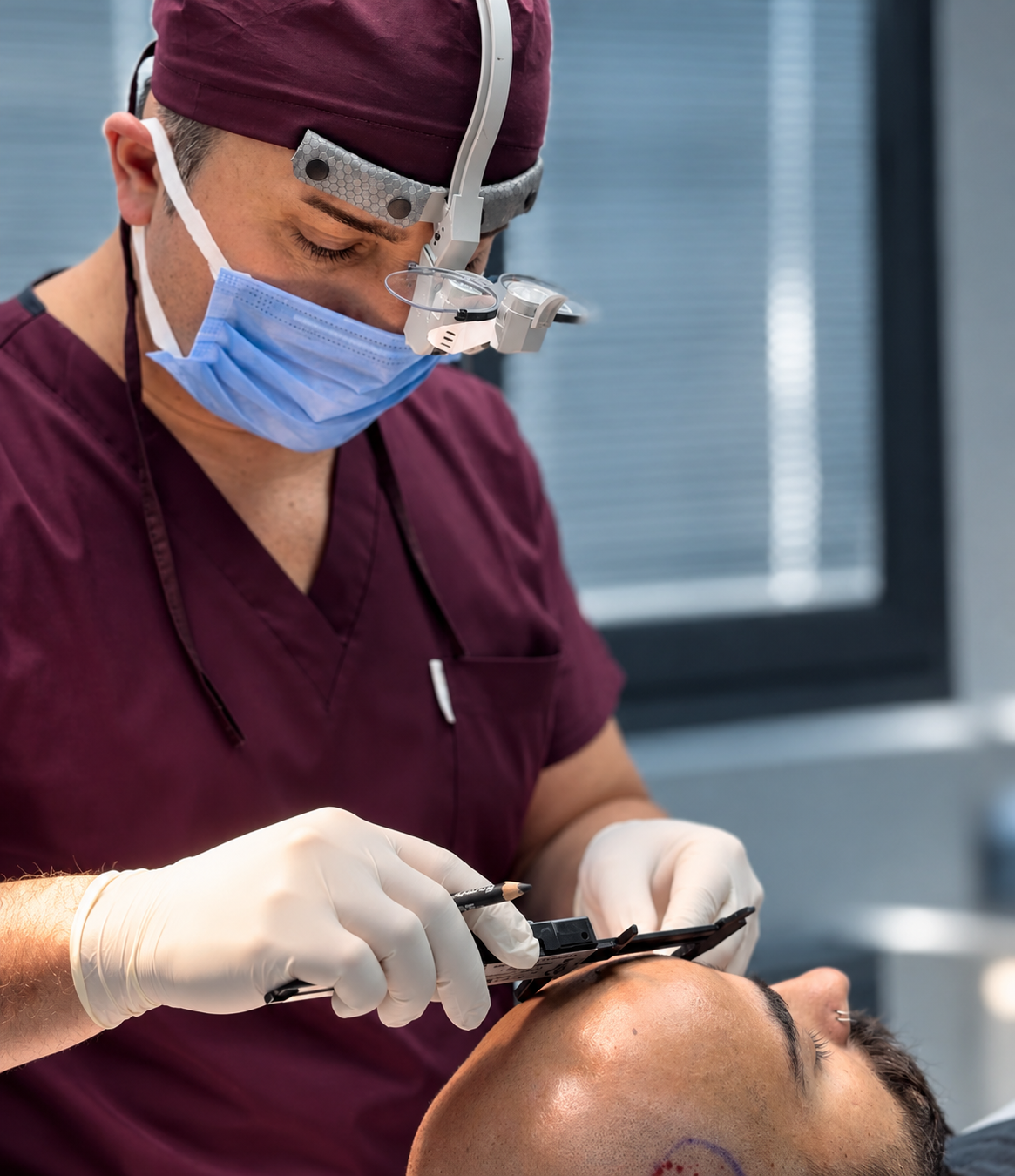
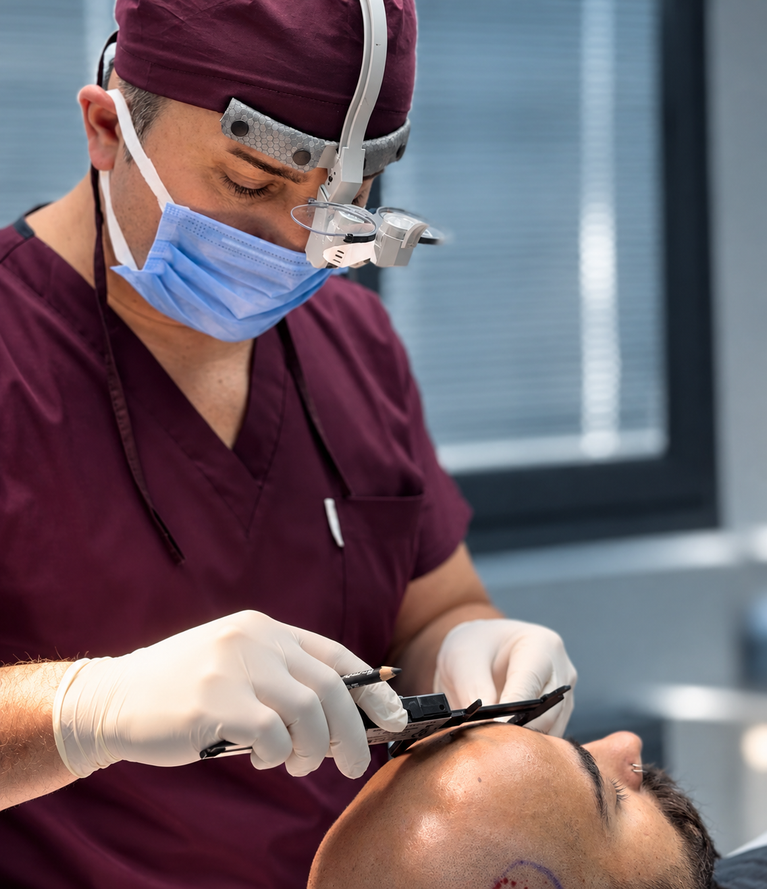
Dr. Resul Yaman's 3SE methodology begins with the Safest Examination Method. The first step of this method consists of the trichological and surgical examination of the donor and recipient areas to assess donor capacity, the current state of hair and planning of the graft distribution. Additionally, this stage considers genetic hair loss progression, specific scalp characteristics and relation between hairline design and donor resources.
The goal of the process is to develop a realistic, personalized surgical plan which would provide both aesthetic satisfaction and preservation of donor areas. The patient's hair characteristics, scalps' structure and future needs should influence the decisions made before the surgery.
The Reason for Undergoing a Pre-Operative Examination
Every patient has a different hair structure, shaft thickness, hair color, and degree of hair loss. The hair density, composition of follicular units, scalp characteristics and the rate of hair loss is different. These differences influence both influence the surgical process and the result's look.
For instance, thicker hair shafts provide better visual coverage compared to the thinner ones, having the same hair number. Additionally, the patients having different combination of scalp and hair colors may have different level of contrast between hair and scalp.
The patient's expectations also should be considered during the examination. Some people need hair restoration on the frontal hairline, while others require coverage of mid-scalp and crown areas.
These issues are addressed with two complementary assessments in Safest Examination Method:
- Trichological analysis: Evaluation of the condition, density, thickness, growth phases and composition of the hair along with scalp characteristics.
- Surgical analysis: Measurement of the donor and recipient areas and estimation of harvesting capacity and graft distribution.
Although these examinations are connected and inform each other, they serve different purposes. During trichological examination, the biological characteristics of the hair and scalp are evaluated. And the surgical analysis turns this data into the practical measurements and personalized treatment plan.

Donor Area Examination: Trichological Analysis
The donor area is a source of follicular units for hair transplant procedure. Its condition and capacity directly affect the number of grafts which can be harvested. That's why the thorough examination of the donor area should be performed in the first step before the surgical planning. Dr. Yaman evaluates several characteristics of the hair during the trichological examination.
Donor Area Size
The examination considers both donor area size and its density and distribution to assess the availability of donor resources. If donor resources are limited, this fact should be reflected in the surgical plan. Attempts of harvesting excessive grafts can influence the donor area's appearance and future treatment possibilities.
Multiple-Hair Follicular Units
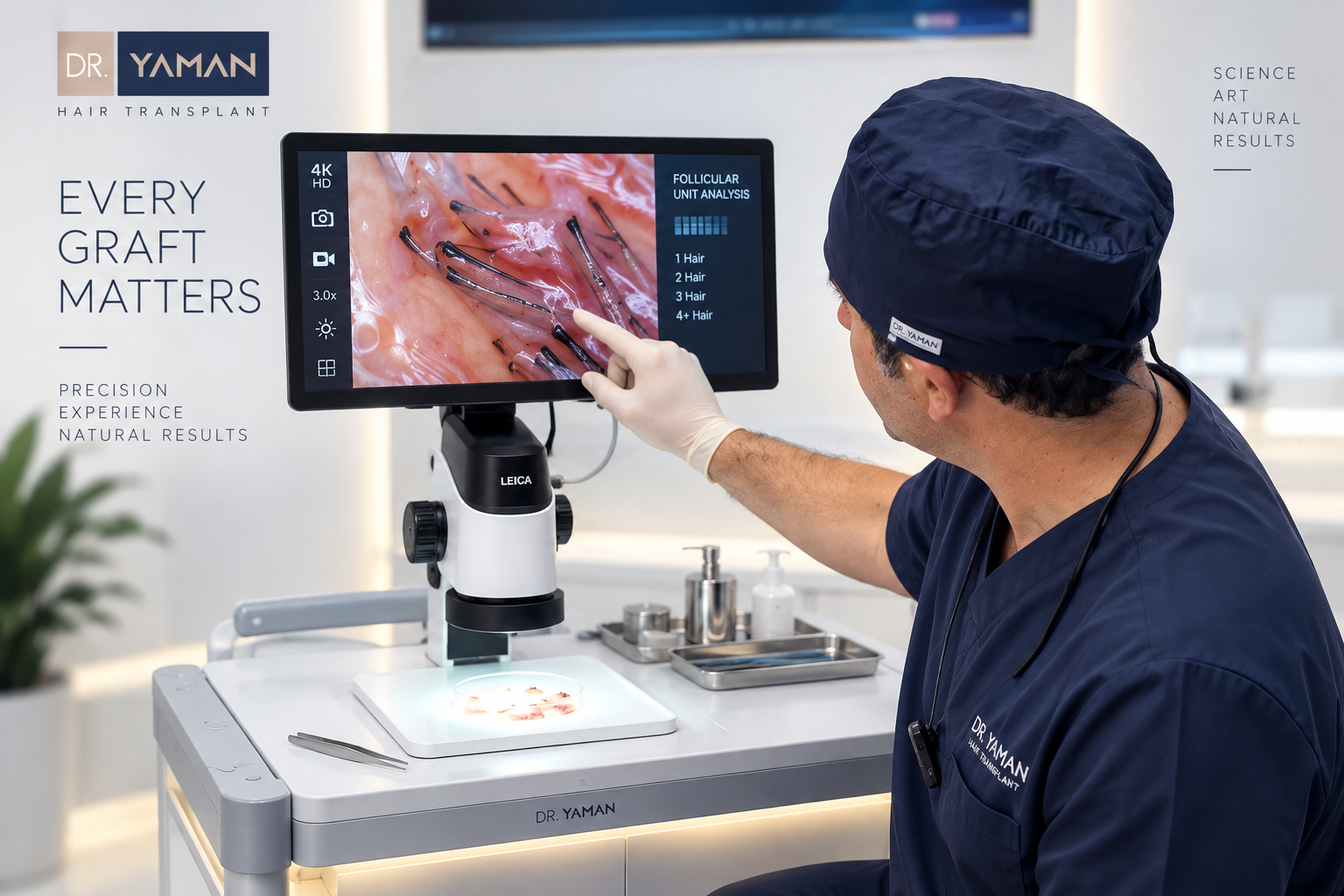
Follicular units naturally contain different numbers of hairs, commonly one, two, three, or more. The percentage of the multiple-hair grafts is an important characteristic to consider when assessing donor's qualities.
The donor area which has higher percentage of multiple-hair follicular units may provide greater coverage per a certain number of grafts. However, the contribution depends on the hair shaft thickness, hair characteristics and the recipient area's demands. The examination helps to define the follicular unit composition to estimate the potential coverage provided by the donor area.
Hair Shaft Thickness
Hair shaft thickness influences the volume and visual density achieved after transplantation. Thicker hair usually provides more coverage per hair than thin one. Dr. Yaman assesses hair thickness as part of the donor evaluation because graft numbers alone do not accurately represent the expected visual result. Two patients getting the same number of grafts may achieve different results since their hair shafts are different. This measurement also helps guide the allocation of available grafts across the recipient area.
Scalp Characteristics and Dermatological Conditions
Before the harvesting of the hair, the condition of the scalp should be examined for any relevant characteristics and dermatological conditions which may affect the procedure. The characteristics of the scalp influence the practical aspects of harvesting and the surgical assessment in general. The identification of skin problems is important since it may require some additional examination and treatment before surgery. Also, this examination considers the correlation between the scalp and hair characteristics and does not examine the hair density alone.
Hair Growth Phases: Anagen and Telogen
The hair follicles go through different phases of growth. The active growth phase is called the anagen phase and the resting phase before shedding is called the telogen. The assessment of the proportion of hairs in those phases provides the additional information about the current condition of the donor area. The telogen hair ratio is particularly relevant when interpreting the apparent density and growth status of existing hair.
These results help in the broader of the trichological assessment. They should be considered alongside hair density, follicular unit composition and scalp characteristics and cannot be used as the indicator of the donor capacity alone.
Donor Area Examination: Surgical Analysis
The trichological findings defines the biological characteristics of the donor area. The surgical analysis helps in defining how those characteristics should be reflected in practical harvesting plan. It includes the measurement of the donor surface area, the estimation of the number of grafts that can be harvested and the evaluation of risks of the excessive harvesting.
Measuring the Donor Area
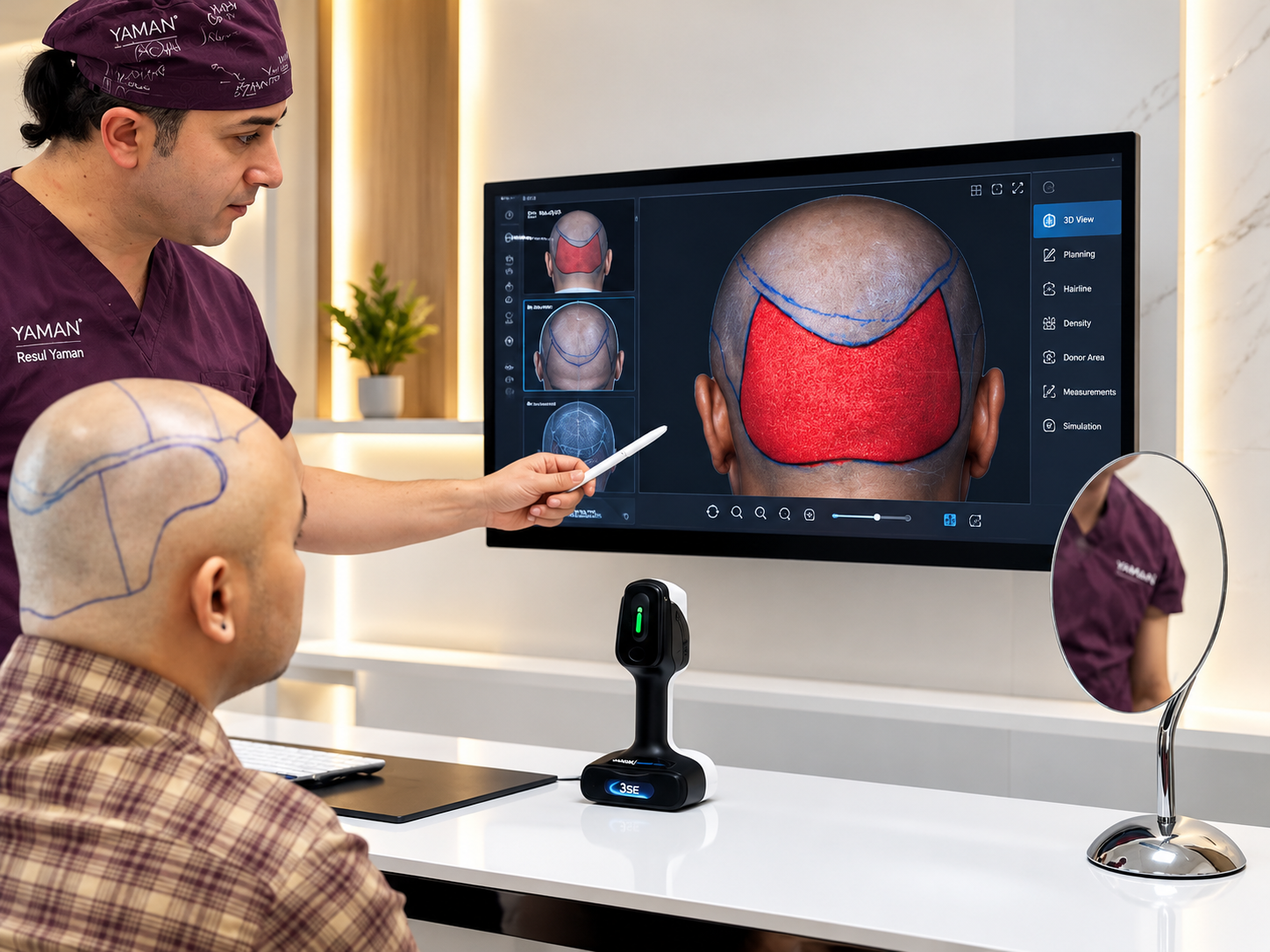
The donor area's size is defined in square centimeters (cm²). Dr. Yaman commonly performs manual measurements and also uses 3D scanning when appropriate.
Three-dimensional scanning and newer photographic modeling systems based on AI assistance can support surface-area assessment. It may be useful when the recipient area is large while the donor area is limited. Additional detailed measurements can help refine the distribution of available grafts.
The donor area is examined separately in several anatomical zones:
- Temporal areas: The sides of the scalp, where hair direction and density require careful consideration.
- Parietal areas: The upper lateral scalp, where density and hair orientation can affect the visibility of harvested sites.
- Occipital area: Back of the scalp, where downward-growing hair provides the coverage of the harvesting areas.
These zones differ in density, hair orientation and ability to hide harvested areas. Thus, the harvesting percentage cannot be calculated equally across the whole donor area.
Calculating Donor Capacity and Harvesting Limits
The donor capacity is the number of the follicular units which can be harvested without compromising the donor area's appearance and over depletion of it. This calculation is dependent on the donor area size, hair density, hair shaft thickness, follicular unit composition and regional characteristics. The number of grafts required by the recipient area should also be considered.
Approximately 30–35% of available follicular resources in suitable area may help in maintaining the visual coverage. In selected cases, a larger percentage can be considered. But harvesting 50% may increase the risk of visible gaps, patchiness and donor area's lack of density.
That's why the limit of harvesting should be personalized. The percentage which looks acceptable in one zone may cause the visible thinning of the donor area in another one. The goal of the procedure is not to harvest as many grafts as possible but to use donor resources reasonably.
Using the Beard as a Secondary Donor
In some cases, the beard hair can be used to complement the resources of the scalp donor hair. The beard is one of the most popular sources of the secondary hair for hair transplantation. But the harvesting of the beard hair also requires personalization. The doctor examines the density and size of the beard, calculates the number of grafts that can be harvested without creating the noticeable gaps. The beard hair differs from the scalp one in its characteristics and look. Its suitability and desired location should be considered during the planning of the surgical procedure.
Recipient Area Examination: Trichological Analysis
The recipient area is the region where grafts will be transplanted. Its examination should help to define the condition of the existing hair and restore the areas which require coverage.
Assessing Existing Hair and Future Hair Loss
While performing trichological analysis, Dr. Yaman examines the patient's age, current state of the hair loss and pattern of genetic hair loss. Those factors are especially important for patients in their thirties since the hair loss may continue in the next decades. The patient who needs only frontal restoration today may require restoration of mid-scalp or crown area in the future. Thus, the surgical plan should take into account those factors instead of focusing on the current look.
During the trichological analysis, the doctor examines the state of the existing hair and the proportion of hairs in different growth phases. He also evaluates if some hair may become thinner in the future due to genetic hair loss.
The distinction between stable hair and hair that may thin out in the future is an important aspect of the treatment strategy. The assessment should consider the patient's hair loss pattern and his age, not assume that the current state will not change.
Evaluating Recipient Scalp Characteristics
The scalp is examined in terms of its sensitivity, irritation and possible dermatological conditions. Those factors help to identify if the recipient area is suitable for the surgical procedure or it requires additional assessment.
The condition of the existing hair is also important since it may influence the surgical approach, graft placement and desired coverage. Thus, the comprehensive examination takes into account the recipient area's scalp, existing follicles and distribution of hair loss.
Recipient Area Examination: Surgical Planning
After the recipient area's state was identified, the next step of the Safest Examination Method is the surgical planning of the graft distribution. The plan should consider the age, facial proportions, sex-related aesthetic features, hair characteristics and donor capacity. The goal of this step is to create a natural looking result and preserve the opportunities for future surgeries.
Hairline Design and Long-Term Planning
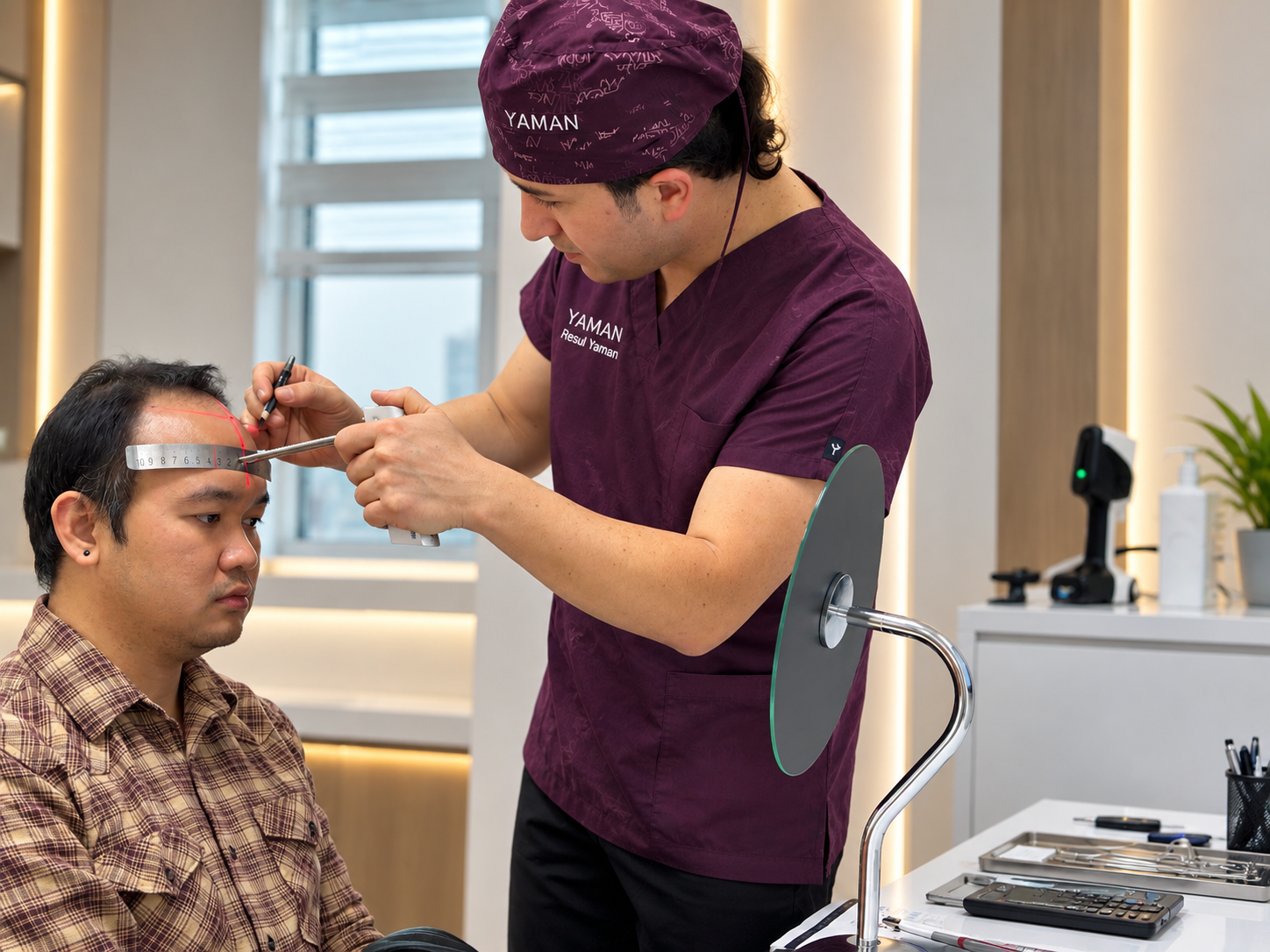
The hairline design is an important component of the surgical assessment. Dr. Yaman considers facial proportions, age and personal characteristics of the patient to define the suitable position and shape of the hairline. The donor capacity plays a big role in this decision. If the donor resources are sufficient, the hairline may be slightly lower if it is suitable for the patient's facial proportions and future hair loss pattern.
When the hair loss in the future is expected or the donor resources are limited, the higher hairline is more preferable. Such approach allows reducing the number of grafts which are required for frontal coverage and preserving the donor resources for future procedures.
If the examination shows that additional procedures are required in the future, the initial harvesting plan should be more conservative. The future hair restoration needs should be considered before harvesting the donor resources for the first procedure.
Measuring the Frontal Area, Mid-Scalp, and Crown
The recipient area is divided into three parts for the surgical planning:
- Frontal area: Front of the scalp including hairline and frontal zone.
- Mid-scalp: Central area behind the frontal area.
- Crown: Upper rear area, where hair loss may develop in the circular or expanding pattern.
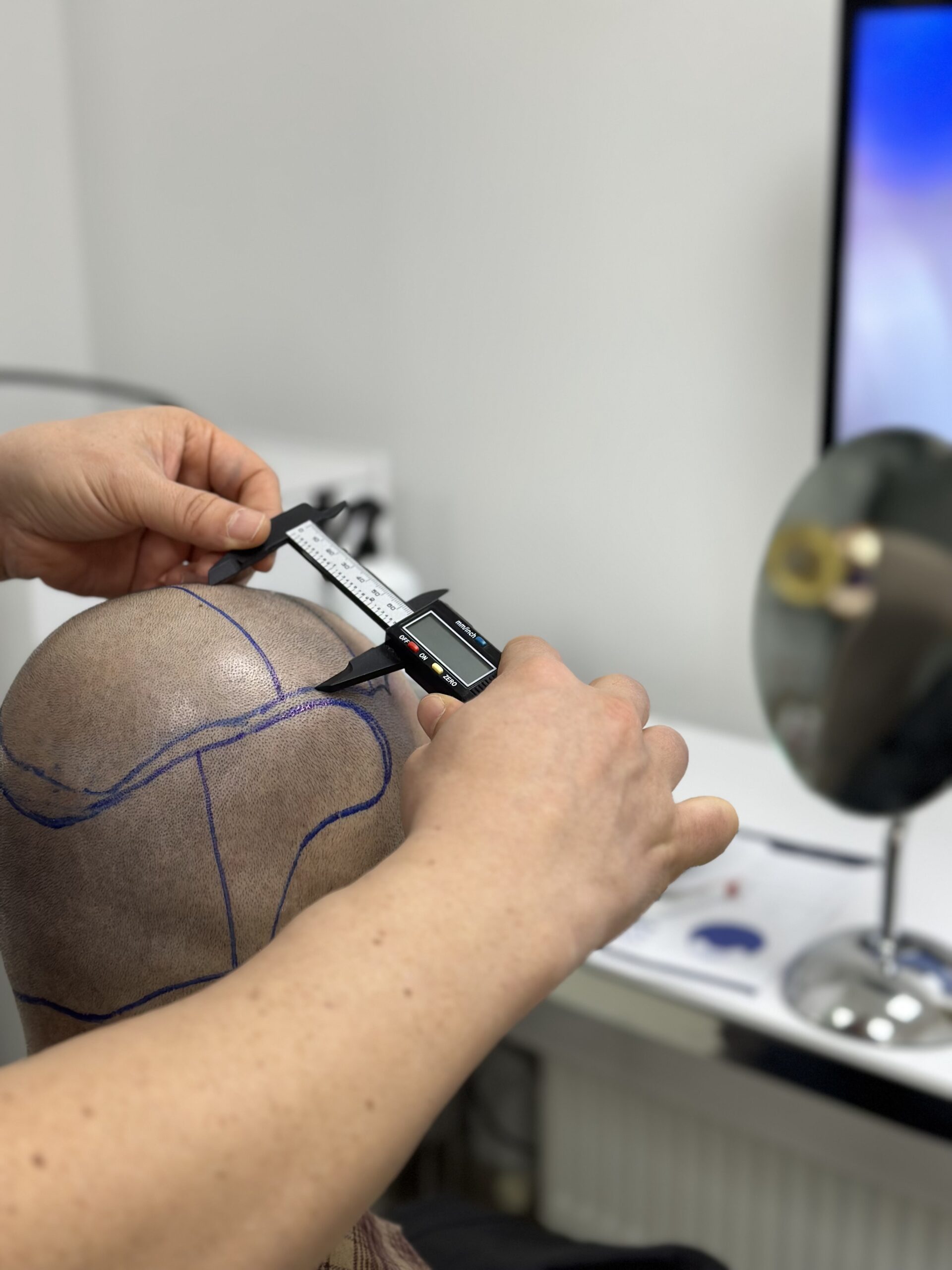
Each region is measured in square centimeters and the required number of graft allocation is then estimated according to the degree of hair loss, existing hair, hair shaft thickness and donor resources.
These regions may require different number of grafts per square centimeter. The frontal area usually requires higher density of grafts to create the frame for the face. The mid-scalp and crown may also require different densities depending on their characteristics and the treatment needs.
The uniform distribution of the grafts is not always practical. It may require excessive harvesting and negatively affect the donor area's look and future restoration possibilities.
Planning Hair Density According to Donor Capacity
The thickness of the hair shaft is an important characteristic to consider when estimating the number of hair per square centimeter. For example; depending on the hair characteristics and surgical plan, the target can be approximately 40–55 grafts per cm² in the frontal area. One follicular unit can have more than one hair. So, the number of grafts will differ depending on the patient's follicular unit composition. The thickness of the hair shaft and the composition of follicular units are critical for deciding the graft density per square centimeter in the recipient area.This target should be considered according to the available donor capacity. Not every patient can get the same hair density in all recipient regions. The surgeon should balance both the desire to cover the area aesthetically and number of grafts which can be harvested reasonably.
Ultimately, the planning of the recipient area involves the distribution of available grafts to the places where they will provide the most aesthetic effect. The final distribution depends on the hair characteristics, hair loss pattern and long-term restoration requirements.
Can My Hair Be Examined Without Visiting the Clinic?
The examination which allows identifying the condition of scalp, hair density and donor characteristics is performed in person. But the patients who cannot initially travel to the clinic can send the photos for a preliminary assessment by Dr. Resul Yaman.
The photos may allow identifying the hair loss pattern and the areas which require attention. But this method cannot always provide the same reliable information about the donor density, follicular unit composition, scalp conditions and exact donor capacity as a direct examination.
When the patient visits the clinic, the doctor can perform the more thorough examination of donor and recipient areas. The manual measurements or 3D scanning can be used depending on the patient's needs.
The information obtained in this way informs the individualized treatment plan which includes estimated number of grafts, possible limitations and procedures which may be required in the future. Thus, the preliminary photographic assessment can be helpful but it cannot replace the complete preoperative examination.
Conclusion
The Safest Examination Method is the basis of Dr. Resul Yaman's 3SE methodology. It involves the trichological and surgical examination of the donor and recipient areas.
The donor area examination helps to define the available resources and limits of harvesting. The recipient area examination allows evaluating the current state of the hair, estimating the future hair loss, designing hairline and grafts distribution.
With the help of the area measurements, the assessment of hair shaft thickness, examination of regional differences and the consideration of long-term needs, the surgeon can create more personalized surgical plan. The goal of this process is to provide the balance between aesthetic expectations and donor resources preservation. It contains all the necessary data to develop surgical strategy and conduct hair transplantation based on patient's anatomy and hair features and long-term needs.
Frequently Asked Questions
What Is the Safest Examination Method in Hair Transplantation?
The Safest Examination Method is the first step of the 3SE method developed by Dr. Resul Yaman. This procedure implies trichological and surgical examination of the donor and recipient areas for the evaluation of hair properties, donor capacity estimation and treatment planning.
What Is the Difference Between Trichological and Surgical Analysis?
Trichological analysis focuses on examining hair density, shaft thickness, follicular unit composition, growth cycles and scalp condition. Surgical analysis is aimed at determining the size of the donor and recipient areas, limits of harvesting and the possibility of distributing available grafts according to the needs of the patient.
How Does a Doctor Calculate Donor Capacity?
Donor capacity depends on the size of the donor area, hair density, shaft thickness, follicular units, regional properties. A surgeon estimates the number of grafts that can be harvested while keeping sufficient coverage and the resource for possible future surgeries.
Why Is Donor Area Measurement Important Before Hair Transplantation?
Donor area measurement allows estimating the size of the available surface and the capacity of harvesting. Manual measurement or 3D scanning can be used. Regional planning is important to avoid overharvesting and allocate the available grafts according to recipient areas requirements.
Why Does Hair Shaft Thickness Matter in Hair Transplantation?
Shaft thickness influences the degree of visual coverage provided by the transplanted hair. The thicker shaft usually provides more coverage compared to the thin one at the same amount of hairs. Assessing of shaft thickness allows the surgeon to determine the required density and distribute the available grafts properly.
Why Should Hairline Design Consider Future Hair Loss?
Genetic hair loss can occur even after transplantation especially in young patients. The consideration of possible future changes helps to preserve donor resources and avoid isolated frontal hairline. In some cases, a surgeon can recommend raising the hairline height.
How Are Grafts Distributed Across the Recipient Area?
Recipient area is divided into frontal, middle and crown regions. The measurement of each region and the allocation of grafts depend on the number of existing hair, shaft thickness, required coverage and donor capacity. The planned density of hair might be different in various regions.
Can a Hair Transplant Examination Be Performed Online?
Photographs might be helpful for preliminary examination when an in-person visit is impossible. But photographs cannot show the exact donor density, follicular unit composition, and all scalp conditions. Clinical examination is necessary for more accurate surgical planning.