Eyebrow Transplant

Eyebrow Transplant

Since ancient times, people have described the importance of eyebrows in female beauty with the expression, “Eyebrows are the crown of the face.” At the present time, various cosmetic methods  are used by women for solving eyebrow problems. Permanent and semi-permanent makeup are among the most well-known options. Micro needling, micro blading, and tattooing are also popular.

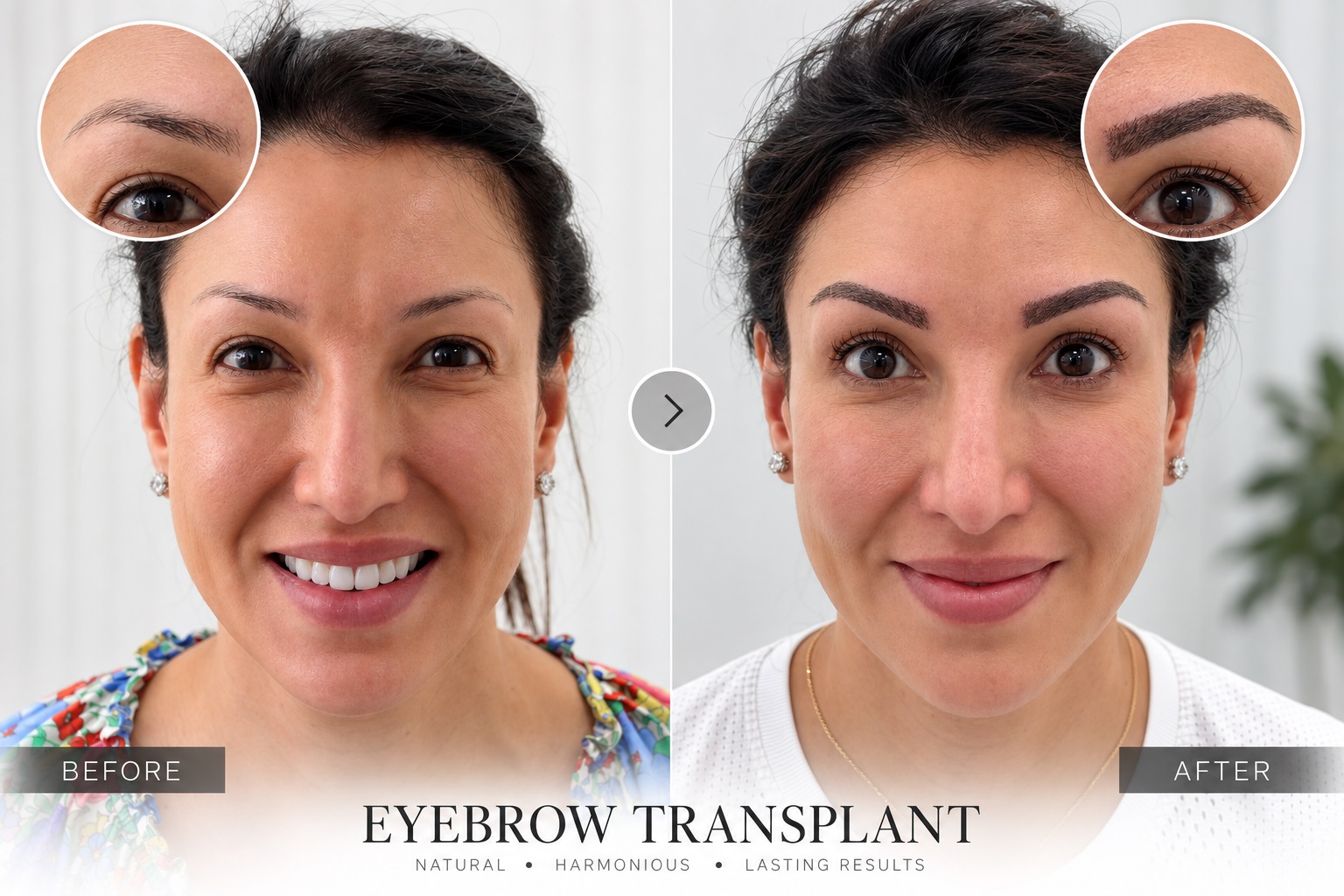
Limited duration of the effect provided by permanent makeup, the need to perform temporary cosmetic procedure frequently and fading of eyebrow tattoos pushed people to find a more permanent solution. This has led to an important question: Can eyebrows be transplanted in the same way as scalp hair? Currently, the eyebrow transplantation procedure is widely used.

Eyebrow transplantation may be used when micro blading or tattooing has faded, eyebrow thinning has developed due to excessive or wrong plucking, or a person wishes to increase density of eyebrow. It may be needed after accidents or trauma, or even surgical scars. This kind of cosmetic procedure may be considered in selected cases for alopecia areata-related eyebrow loss if the appropriate medical evaluation has been completed.


Happy Patients
0 K
Years Of Experience
0 +

Trusted by patients from the United States, United Kingdom, Canada, Australia, Germany and other European countries.

🇺🇸 United States • 🇬🇧 United Kingdom • 🇨🇦 Canada • 🇦🇺 Australia • 🇩🇪 Germany • 🇫🇷 France • 🇪🇸 Spain
In this post

What is an Eyebrow Transplant?

The procedure of eyebrow transplantation implies harvesting hair follicles from the scalp or, in some cases, another donor area and their implantation in the eyebrow area. Planning of the eyebrow shape and contour takes place according to patient's facial structure, current eyebrow structure, and aesthetic preferences.

However, it should be noted that patients should not assume that every hair transplant clinic has the expertise required for eyebrow restoration. This procedure requires a different surgical approach from hair transplantation. Therefore, the procedure of brow hair restoration should be performed by a surgeon and team with experience in this kind of transplantation.

It should be emphasized that natural eyebrows  consist of fine single hairs. In contrast to many donor areas of the scalp, the eyebrow itself does not contain double and multiple hair follicular units [1]. Therefore, single-hair grafts are used for eyebrow hair replacement [1]. If a donor graft contains two or more hairs, the surgeon may need to separate it into individual follicular units before implantation.

For men, body hair may sometimes be considered when fine, single hairs are required. Women's lower portion of the nape is the source of relatively thin and single-hair grafts. Using hair, which characteristics correspond to the characteristics of natural eyebrow hair, helps to make the procedure more natural and gives the ability to direct the hair in needed direction.

Sometimes the donor area does not contain enough of sufficiently fine hair for performing the whole procedure. In these cases, slightly thicker hairs from the area above the lower nape are used and split into single-hair grafts.

For implantation, the finer hairs are used for upper and lower border of the eyebrow. Relatively thicker grafts are used for denser middle portion of the eyebrow.

Direction of Natural Eyebrow Hairs

Scalp hair generally follows relatively consistent growth patterns. Eyebrow hair, however, changes direction according to its anatomical position.

The hairs close to the nose grow upwards either vertically or with slight inclination outwards. In the middle portion, where usually the eyebrow is most dense, the hair grows horizontally and with diagonal upwards direction. Upper border hairs grow downwards and outwards, while lower border ones grow upwards and outwards. These two groups can converge towards the middle portion. Tail of the eyebrow grows towards the temple. Here the hair mostly grows horizontally and slightly downwards.

All these natural directions should be reproduced precisely during transplantation. Otherwise, even single incorrectly directed hair may be noticed and spoil the eyebrow appearance. The researches about eyebrow restoration emphasize the importance of donor hair selection, its placement angle, alignment, and direction [2].

Following a hair transplant, the transplanted hairs grow downwards over the skin due to gravity; however, in eyebrow transplants, some hairs are implanted in the direction opposite to gravity. These grafts require extremely low angle of implantation. This approach allows to make hair lie close to the skin and follow the natural direction of the eyebrow hair.

Get Free Consultation

Eyebrow Shape and Contour Planning

One of the important things in the eyebrow transplantation procedure is planning of the eyebrow shape. There is no universal contour for everyone. Patient's facial anatomy, current eyebrow structure, aesthetic preferences, and realistic expectations should all be taken into account. The desired result should be anatomically and surgically achievable.
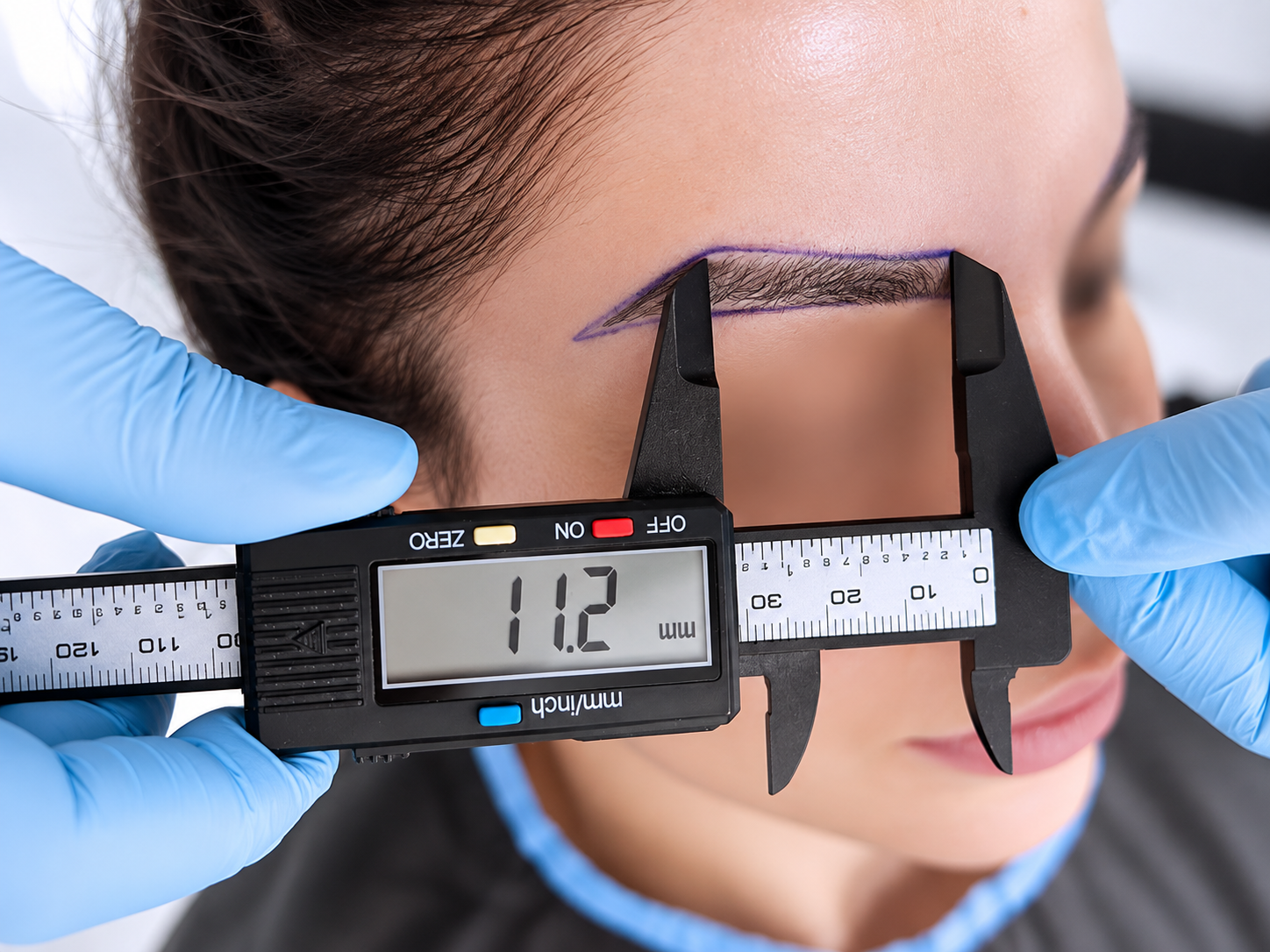
Female patients often have a specific eyebrow shape in mind before surgery. In course of consultation, the surgeon with experience evaluates patient's facial anatomy and preferences and draws the future eyebrow contour.

Creating the desired shape may be challenging because of the difference in thickness and structure of transplanted grafts and existing eyebrow hair. For this reason, the transplanted hairs need to be blended carefully with the existing eyebrow hairs so that the transition is difficult to notice.

For example, the patient may wish to have thick eyebrows. If the hair of the transplant is thicker than the current eyebrow hair, the implantation of transplanted hair exactly according to the drawn line may lead to thicker result than patient expected. In this case, the surgeon should inform patient about the potential outcome and guide the patient toward a more appropriate contour.

To make eyebrow contour design successful, the understanding of the cosmetic eyebrow styling is necessary. According to Dr. Resul Yaman, surgeons interested in eyebrow restoration should study the work of experienced makeup professionals. It can give an insight about the planning of eyebrow contour.

Natural Facial Asymmetry and Eyebrow Design

Facial asymmetry is the natural thing in human anatomy. No person's face is symmetric on both sides. This natural asymmetry makes every face unique. People, who plan to undergo the eyebrow restoration procedure, should know that perfectly identical eyebrows are not necessarily the natural result.

After the brow hair implantation, the asymmetry should not be easily noticeable when a person is seen from the front. For this reason, subtle differences between the two eyebrows may sometimes be intentionally maintained. Some adjustments can camouflage the natural facial asymmetry and make the face look more harmoniously.

How is Hair Harvested for an Eyebrow Transplant?

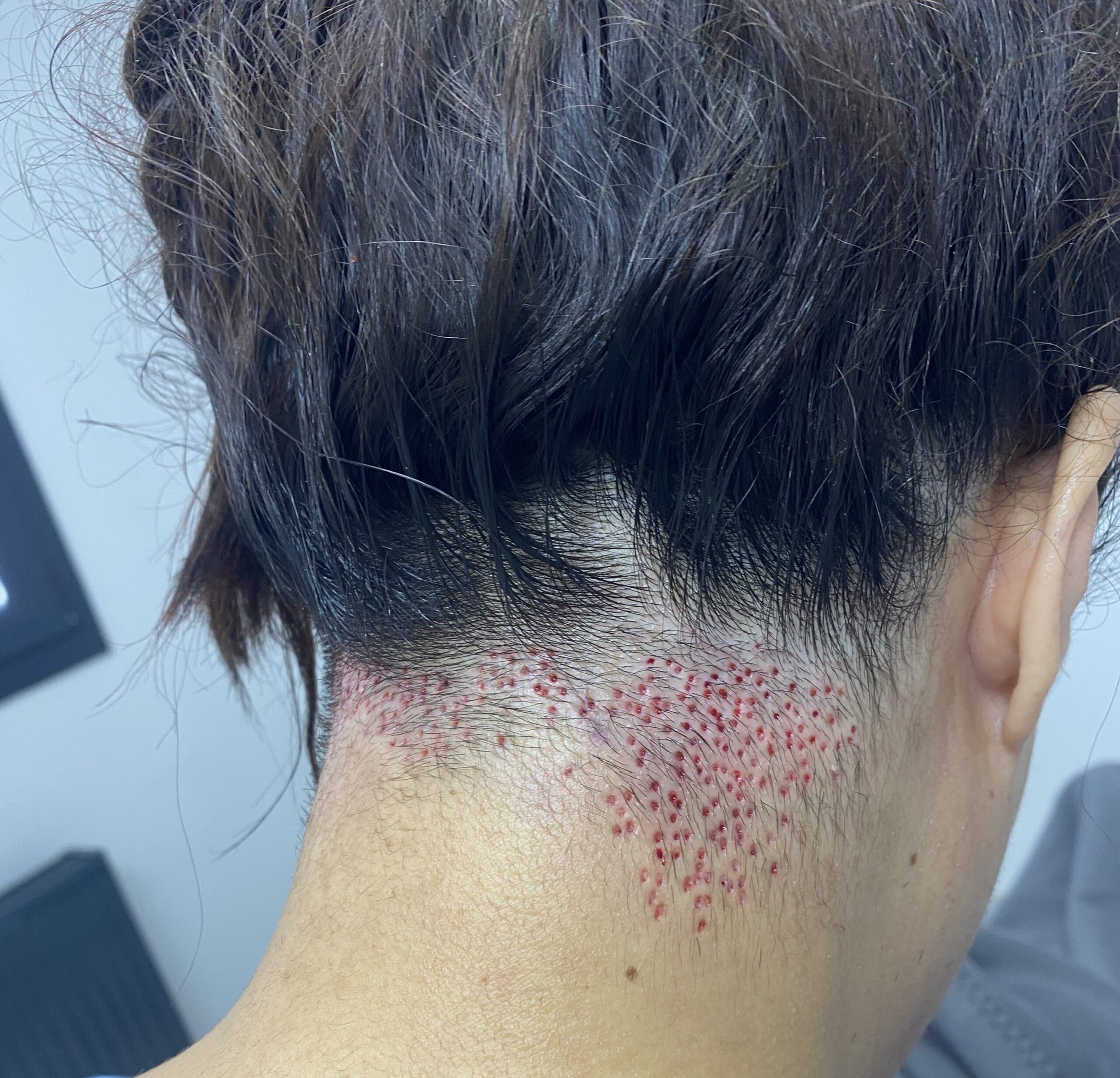
As the donor area, fine hair follicles of the lower portion of the nape are chosen. If necessary, hair follicles may be also harvested slightly above the lower portion. Body hair are used in some male patients if its characteristics allow obtaining the desired eyebrow shape.

Forceps FUE technique may be used during the hair harvesting. However, sometimes the harvesting of the hair from the lower nape may be problematic with this technique. In case when harvesting hair follicles from this donor area with FUE is difficult or this technique does not provide an adequate number of suitable grafts, FUT strip harvesting may be performed. With this technique, a narrow strip of donor area skin is harvested, and grafts are prepared separately for implantation. Grafts, obtained from FUT strip, are split into single-hair follicular units before the implantation. The donor area is sutured.

In women, hair follicles are harvested from the narrow strip of the lower nape without the need for visible shaving of this area, depending on the surgical plan and donor area characteristics.
How to Implant an Eyebrow?

Several techniques are used for the eyebrow transplantation, for example, DHI hair transplantation, Yaman Implanter Hybrid Methodology, and forceps FUE hair transplantation.
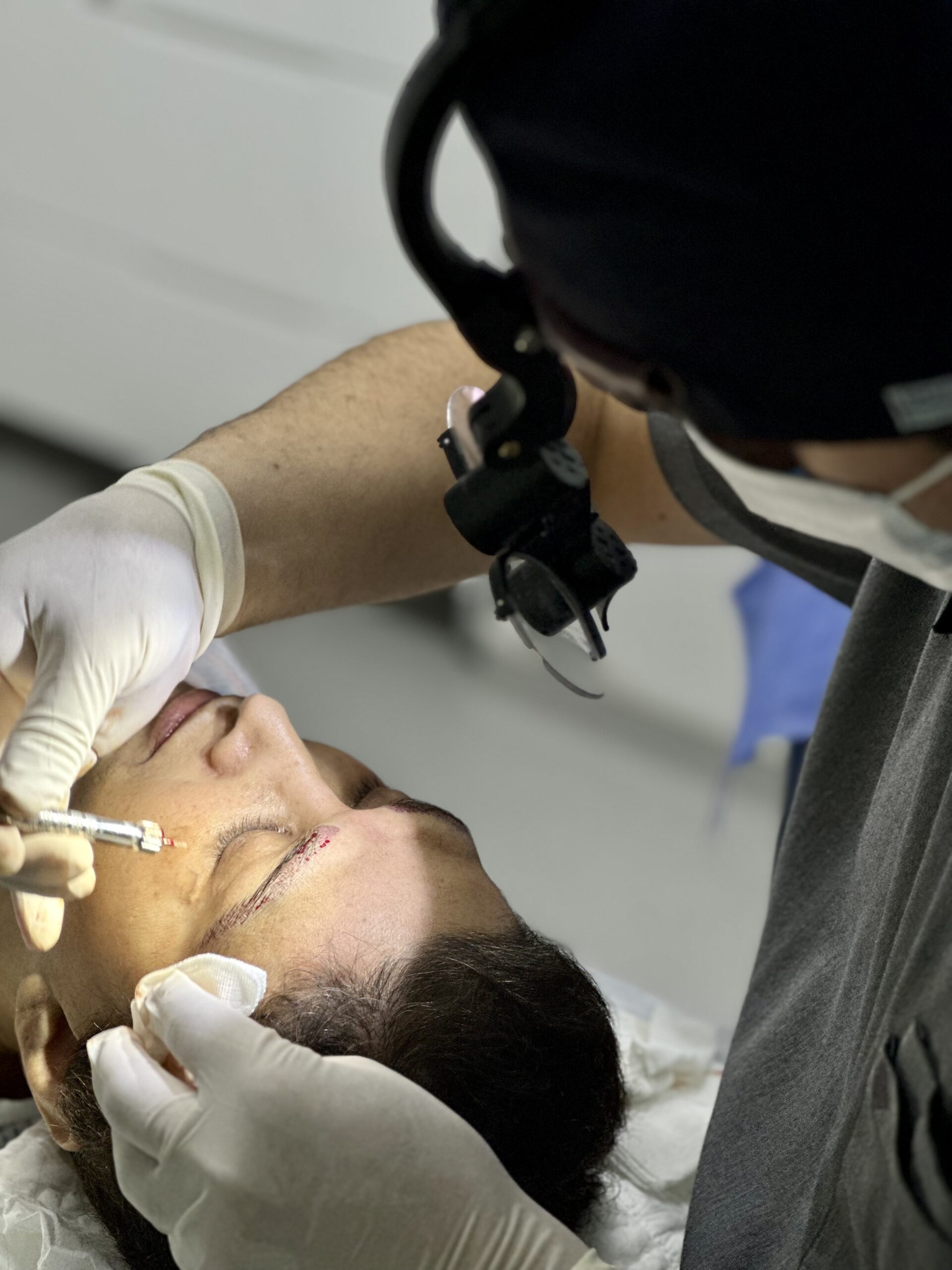
However, when the procedure requires extremely low angle of implantation, the classical forceps FUE technique provides better control. First of all, recipient channels are made, which gives an opportunity to determine the angle and direction of the hair emergence . While with the standard DHI technique, it may be difficult to achieve extremely low-angle design depending on the implanter and the specific eyebrow design.

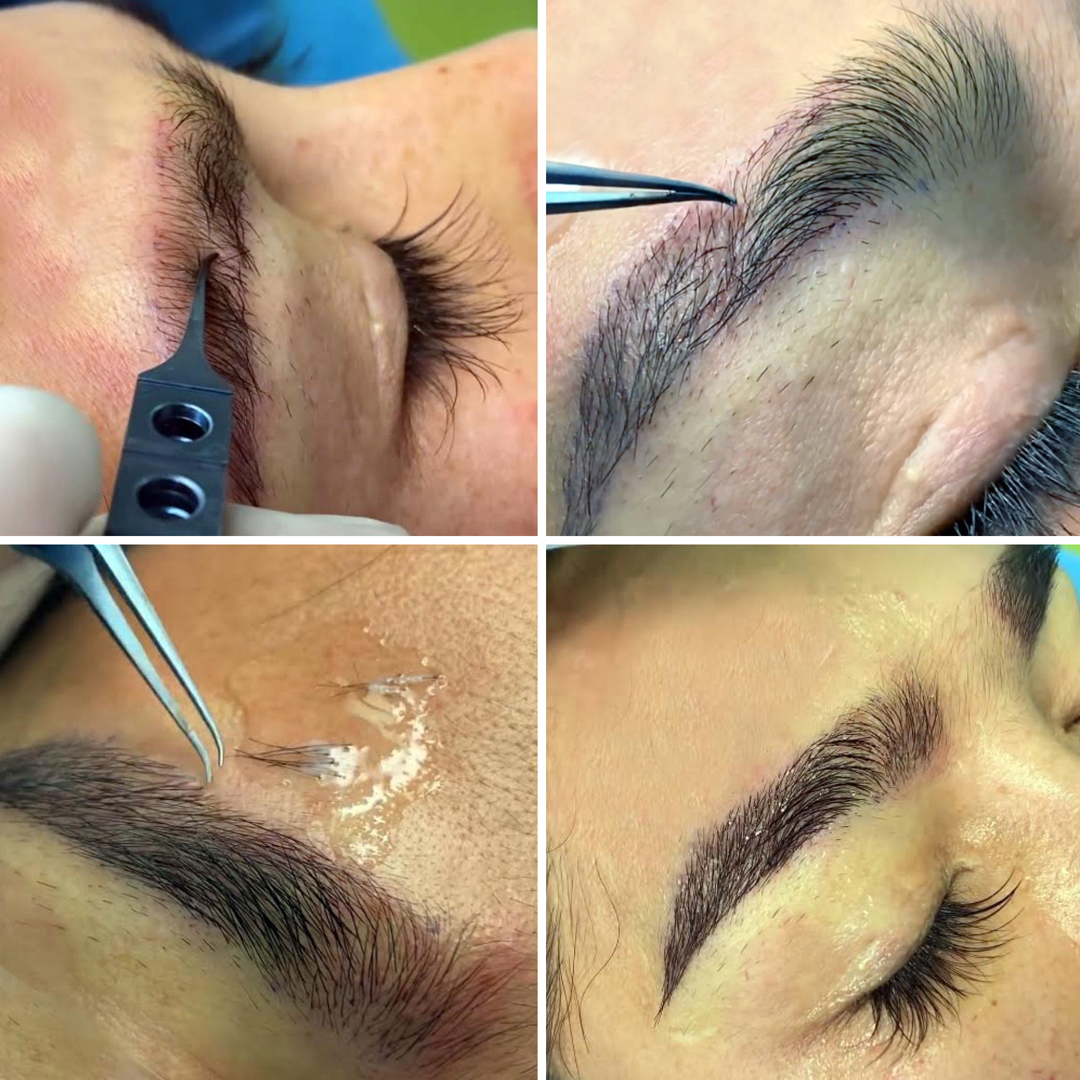
While sapphire blades are used for making recipient channels, micro-needles are more convenient for creation of very small recipient sites for eyebrow restoration. The needles can be positioned at certain angles to create micro channels. Angle of implantation is extremely low in some cases, sometimes approaching the parallel angle to the skin surface. Then the single-hair grafts are implanted with the help of Yaman Implanter or forceps, depending on the chosen technique.

The importance of recipient site creation and hair orientation in the procedure is emphasized in the published eyebrow transplantation literature. It is stated there that the eyebrow restoration requires detailed knowledge of the eyebrow anatomy and careful control of graft angle and direction.
What are the Advantages of Eyebrow Transplantation?

The potential advantages of eyebrow transplantation are:

It can give long-lasting result when it is performed correctly.

Eyebrow shape is designed in order to complement the patient's facial anatomy.

Increased eyebrow density improve overall facial balance and self-confidence.

It reduces the need for repeated cosmetic procedures, such as micro blading or tattooing.

With matured transplanted eyebrows, the patient requires less cosmetic makeup for getting fuller eyebrows.

Good blood supply is typical for the eyebrow region, which facilitates healing and graft survival.

What are the Disadvantages of Eyebrow Transplantation?

Unlike in case with hair transplantation, when a small number of incorrectly positioned grafts may be concealed among thousands of hair, the eyebrow is different. Due to the low amount of hair and high visibility of their arrangement, even the single incorrectly placed graft affects the overall result. That is why every graft should be carefully placed according to the angle and direction planned.

Another thing to note is that the transplanted scalp hair keeps many of its natural characteristics. In contrast to natural eyebrow hair, transplanted hair continues growing faster and longer. As a result, the patient may need to trim the transplanted eyebrows regularly.

Choosing the finer hair from the lower nape may partially solve this problem because these hair grow slower than thicker scalp hair. Transplanted hair also requires more maintenance than native eyebrow hair because these follicles retain characteristics from their original donor area.

Possible Complications

Eyebrow restoration, like other surgical procedures, may be associated with  such complications as:

Swelling and pain

Bruising

Scarring

Infection

A consultation before the surgery is very important. The surgeon should discuss the advantages, disadvantages, limitations, risks, and expected recovery with the patient before the treatment. Proper patient selection, treatment planning, technique, and postoperative care may help to prevent complications [3].

How Long Does Recovery Take After an Eyebrow Transplant?

After brow hair restoration, proper postoperative care is necessary for creating favorable conditions for healing and growth of the transplanted grafts.

7–10 days

Crust formation in the treatment area during the first week is natural. It is the part of the healing process although it may affect the appearance of eyebrows for a while. Crusts usually disappear in seven to ten days.

3 months

Patients should also understand that the transplanted hair may shed during the initial postoperative period. This shedding is called "shock loss" or shedding phase. The new growth happens after the resting period of the transplanted follicles [4].

12 months

The transplanted hair may start growing after three months [4]. The eyebrows keep developing and looking more natural during the following months, while the general contour becomes clear around seven to eight months. The final result is achieved within 12 months.

Cost of an Eyebrow Transplant in Turkey

The cost of an eyebrow transplant in Turkey can vary considerably between patients because the procedure is individually planned rather than based solely on a fixed number of grafts.

The surgeon's experience and the clinic, where the procedure is performed, are one of the main cost factors. Also, complexity of the reconstruction is the cost factor. The patient with the limited loss of eyebrow may require another treatment plan from the patient with significant loss, scars, or previous cosmetic procedures.

Donor area is also an important factor. The surgeon should estimate whether there are sufficiently fine single-hair grafts and what extraction approach is necessary. Different clinics may use different pricing system. Some clinics charge the patient according to the number of grafts, while others may charge a fixed procedure fee.

Our clinic evaluates the individual treatment plan according to the patient's eyebrow characteristics, donor area characteristics, the degree of hair loss, and aesthetic preferences. That is why the cost of an eyebrow transplant in Turkey may be different for every patient.

Frequently Asked Questions

When Can I Go Back to My Normal Activities after an Eyebrow Transplant?

A few days may pass before it becomes acceptable to return to work. However, since recovery time varies from person to person, it is advisable to consult your surgeon.

Is An Eyebrow Transplant Painful?

Since the procedure is performed under local anesthesia, you will not feel pain during the extraction and implantation process. After the operation, in case you feel any pains while the skin is still healing, then you can take pain medications.

Do Eyebrows Grow Long after an Eyebrow Hair Replacement?

The surgeon harvests the hair which should be transplanted into the brow area from the scalp of the patient. The transplanted hair retain the growth characteristics of scalp hair. To summarize, the patient will need to trim the hair located on the brow area to maintain the proper length.

How many Hair Grafts Do I Need to Restore My Eyebrows?

An average of 300–500 grafts may be required per eyebrow. Dr. Resul Yaman extracts thin hair follicles from the patient's donor area at the back of the scalp and implants them into the recipient area.

What is the Cost of an Eyebrow Transplant Surgery in Turkey?

The price for brow hair implants in Turkey varies according to certain factors. This includes the patient's degree of hair loss, the doctor's skill and experience, and the method used. You can contact our clinic to receive a price quote for 2026 after a free online consultation.

Are the Results of an Eyebrow Transplant Permanent?

Transplanted follicles will ensure permanent hair on the eyebrows. However, the final result depends on factors such as donor hair quality, recipient site condition, surgical technique, and individual healing. Patient should also realize that the transplanted scalp hair keeps donor site growth characteristics.

Can I Choose Any Eyebrow Shape I Want?

Not every eyebrow shape requested by the patient may be suitable for every face. The final contour should take into account the patient's facial anatomy, current eyebrow, hair direction, graft characteristics, and realistic aesthetic expectations.

Will I Need to Trim My Eyebrows After a Transplant?

Yes. Since the transplanted hairs are taken from the scalp, these hairs will grow faster and thicker than the patient’s natural eyebrow hair. Consequently, individuals have to trim them regularly.

References

[1]

Jiang W, Wang M, Wang B. Clinical outcomes and technical tips for eyebrow restoration using single-follicular-unit hair transplantation: A case series review. J Cosmet Dermatol. 2020;19(8):2057-2060. doi:10.1111/jocd.13242. https://pubmed.ncbi.nlm.nih.gov/31820550/

[2]

Gupta J, Kumar A, Chouhan K, Ariganesh C, Nandal V. The science and art of eyebrow transplantation by follicular unit extraction. J Cutan Aesthet Surg. 2017;10(2):66-71. doi:10.4103/JCAS.JCAS_27_17. https://pmc.ncbi.nlm.nih.gov/articles/PMC5561712/

[3]

Klingbeil KD, Fertig R. Eyebrow and eyelash hair transplantation: A systematic review. J Clin Aesthet Dermatol. 2018;11(6):21-30. https://pubmed.ncbi.nlm.nih.gov/29942421/

[4]

Cleveland Clinic. Eyebrow Transplant: What It Is, Surgery, Recovery & Results. Cleveland Clinic Health Library. Medically reviewed; last updated October 1, 2022. https://my.clevelandclinic.org/health/treatments/24236-eyebrow-transplant

Contact Us